Kansas Evergy Schedule EGS: Parallel Generation and Solar Interconnection Guide
Updated 19 September 2026 · By SolarNevs Research Desk, Dealer surveys + verified sources · 1 source · Method ↗
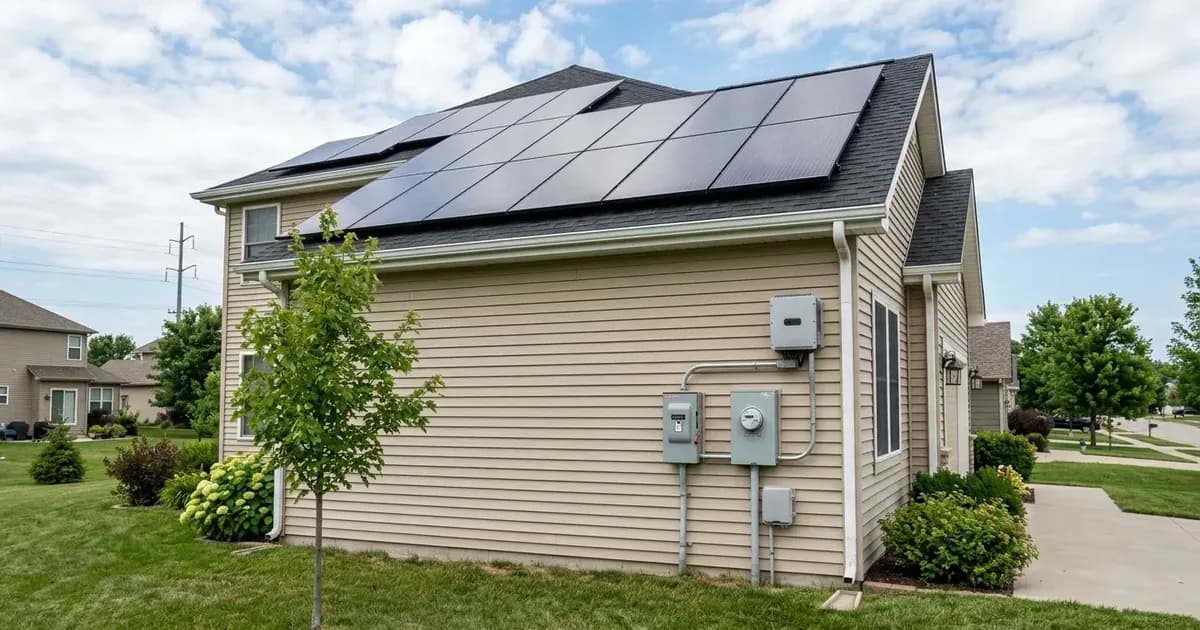
In Kansas, connecting a solar energy system to the grid and exporting excess power is governed by state statute K.S.A. 66-1,184, which outlines the framework for parallel generation service. Evergy, as an investor-owned utility, operates under these regulations, often referred to through tariffs like Schedule EGS. This guide explains the key rules for customers looking to interconnect their distributed energy systems with Evergy.
Understanding Parallel Generation in Kansas
Parallel generation service allows customers to connect their renewable energy systems, such as solar panels, to the utility grid. This enables you to use the electricity you generate and export any surplus back to the grid. The Kansas Corporation Commission (KCC) oversees these regulations to ensure fair and equitable terms for both customers and utilities.
System Sizing and Capacity
The export capacity of your renewable energy system must be appropriately sized for your anticipated electric load. To determine this, Evergy will consider your historic electricity consumption. The calculation involves dividing your historic consumption in kilowatt-hours for the previous 12-month period by 8,760, then dividing that result by a capacity factor. For customers in the service territory of an investor-owned utility like Evergy, this capacity factor is 0.144.
Utilities are required to make parallel generation service available on a first-come, first-served basis. The aggregate export capacity from all distributed energy systems connected to a utility's grid is capped. This cap increases over time:
- Commencing on July 1, 2025, the cap is 6% of the utility's historic peak demand.
- Commencing on July 1, 2026, the cap increases to 7% of the utility's historic peak demand.
- Commencing on July 1, 2027, and each year thereafter, the cap is 8% of the utility's historic peak demand.
Compensation for Exported Energy
When your system exports energy to the grid, you will receive compensation. Every contract for parallel generation service must include provisions for fair and equitable compensation. This compensation will be not less than 100% of the utility's monthly avoided cost.
Evergy has options for how it determines this compensation. It may use locational marginal price or the monthly system average cost of energy per kilowatt hour. If Evergy uses either of these methods, it must compensate you for the exported energy at least annually. The compensation you receive will be credited to your customer account, or it may be paid directly to you.
Interconnection Process and Requirements
Connecting your distributed energy system to Evergy's grid involves a formal process:
- Application Submission: You are required to submit an application to Evergy before connecting your distributed energy system.
- Processing Time: Evergy must approve or deny your application or a request for system certification within 90 calendar days of receiving it.
- Fees and Costs: Evergy may assess certain fees and costs:
- A fair and reasonable nonrefundable interconnection application fee.
- Costs incurred by the utility for any study conducted to verify and allow the requested export capacity.
- Costs associated with any related system upgrade costs, devices, and equipment required by the utility for accepting the requested export capacity.
- Metering: Evergy is responsible for furnishing, owning, and maintaining all necessary meters and associated equipment used for billing, at its own expense.
- Disconnect Switch: Evergy may install, own, and maintain a disconnecting device near your electric meter. Alternatively, it may require your distributed energy system to include a switch, circuit breaker, fuse, or other device that an authorized utility worker can access at any time to manually disconnect your system from the grid.
- Witness Testing: Before granting permission to operate, Evergy may require a witness test of your distributed energy system and interconnection facilities.
- Export-Limiting Device: You, the customer, are responsible for owning and maintaining any necessary export-limiting device.
- No Additional Fees: Evergy cannot impose any additional fees, charges, or requirements for parallel generation service unless expressly authorized by K.S.A. 66-1,184.
As a customer-generator of an investor-owned utility, you have the option of entering into a contract under these parallel generation rules or utilizing the Net Metering and Easy Connection Act.
Safety Standards and Utility Disconnection Rights
Safety is paramount when operating a distributed energy system in parallel with the grid.
- Listed Device Requirement: You must furnish, install, operate, and maintain a "listed device" suitable for parallel operation. A "listed" device means it has been tested and certified to meet the Institute of Electrical and Electronics Engineers (IEEE) safety standards specific to its intended function.
- Utility Disconnection Rights: Evergy retains the right and authority to disconnect and isolate your distributed energy system without notice and at its sole discretion under specific circumstances. These include:
- When adverse electrical effects, such as power quality problems, are occurring or are believed to be occurring on Evergy's system or the electrical equipment of other utility customers.
- When hazardous conditions on Evergy's system are occurring or are believed to be occurring as a result of your distributed energy system's operation or protective equipment.
These provisions ensure the safety and reliability of the electrical grid for all customers.
Frequently asked questions
How is my solar system sized under Kansas parallel generation rules?
Your system's export capacity is sized based on your historic electricity consumption over the previous 12 months. For investor-owned utilities like Evergy, this calculation uses a capacity factor of 0.144.
How will Evergy compensate me for excess solar energy I export to the grid?
Compensation for energy exported to the utility will be no less than 100% of the utility's monthly avoided cost. Evergy may use locational marginal price or the monthly system average cost of energy per kilowatt hour to determine this compensation.
What is the application process for connecting a solar system with Evergy?
You must submit an application before connecting your distributed energy system. Evergy has 90 calendar days to approve or deny your application or a request for system certification.
Will I be charged fees for interconnecting my solar system?
Evergy may assess a fair and reasonable nonrefundable interconnection application fee, costs for any study to verify requested export capacity, and costs for system upgrades or equipment required by the utility.
Can Evergy disconnect my solar system without notice?
Yes, Evergy has the right to disconnect your system without notice if adverse electrical effects or hazardous conditions are occurring or believed to be occurring on the utility's system due to your distributed energy system's operation.
References
- K.S.A. 66-1,184 — accessed 26 August 2026
Related guides
More from schemes, subsidies & financing.