Do Solar Panels Work in Winter? Snow, Cold, Short Days
Updated 16 September 2026 · By SolarNevs Research Desk, Dealer surveys + verified sources · 2 sources · Method ↗
Key Takeaways
- Winter's paradox: cold helps — silicon converts light more efficiently at low temperatures — while short days and snow hurt.
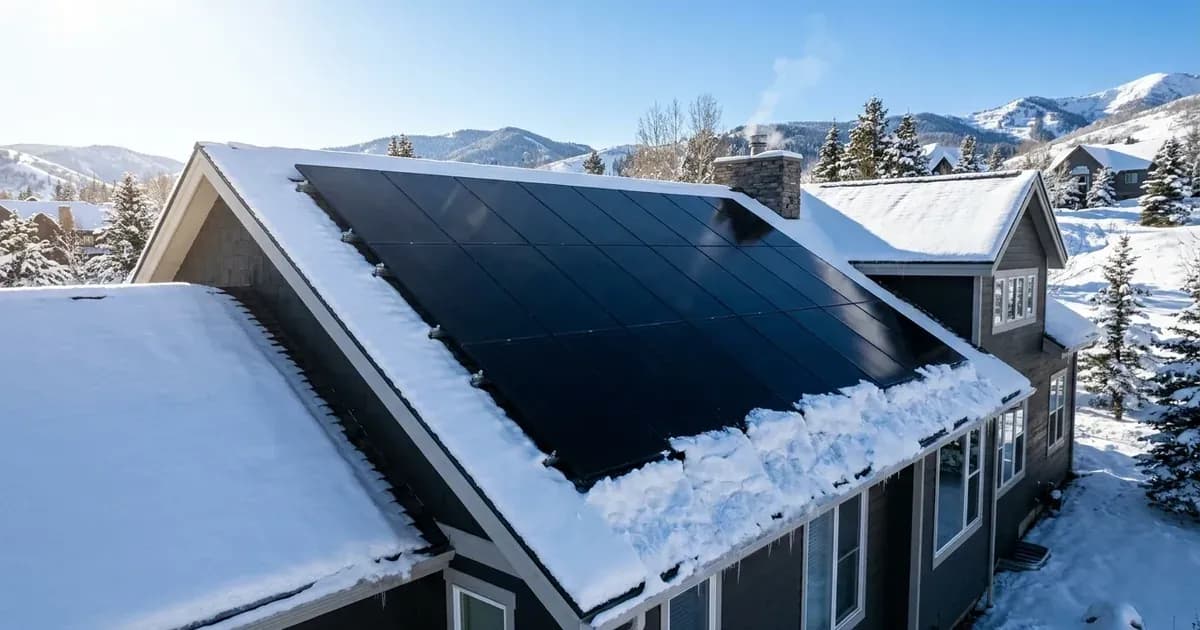
- Snow slides off panels faster than off the roof around them: dark glass, slick surface, and tilt do the clearing for free in most storms.
- December production commonly runs at a fraction of June's — and your PVWatts annual estimate already includes that.
- Don't climb an icy roof to rescue a few kilowatt-hours; design decisions (tilt, net metering, sizing) handle winter better than a broom does.
The cold-weather surprise
The intuition that panels love heat is backwards. Photovoltaic silicon has a temperature coefficient: efficiency falls as cells heat up, which is why panels are rated at a standard laboratory temperature and why a scorching July rooftop quietly underperforms its sticker. A crisp, sunny 20°F morning is close to ideal operating conditions — the cells run cool and convert a higher share of the light that reaches them. Ski-country arrays produce famously crisp winter output on clear days partly for this reason, helped by light bouncing off surrounding snow onto the panels.
Winter's real production costs come from geometry, not temperature: fewer daylight hours, and a sun that crosses the sky at a shallower angle, spreading its energy across more atmosphere and hitting your panels less squarely. Those two facts — not cold — are why December totals commonly run at a fraction of June's, a seasonal curve every honest production estimate already draws.
What snow actually does
Snow's effect depends entirely on depth. A dusting is translucent — light penetrates, generation continues at reduced strength. A few inches is an opaque blanket and production effectively pauses until it clears. The good news is that panels are self-clearing by design, if not by intention: tempered glass is slick, the dark surface warms in any sun, and installations tilt. Panels routinely shed their snow days before the surrounding shingles do, often in one dramatic afternoon slide.
Condition | Production effect | What to do |
|---|---|---|
Cold + clear | Efficiency bonus vs. hot days | Enjoy it |
Light dusting | Reduced output continues | Nothing — melts or slides quickly |
Heavy snow cover | Paused until shed | Patience; panels clear before the roof does |
Shallow sun / short days | The real seasonal reduction | Already in your annual estimate |
Directional characterization; snow behavior varies with tilt and storm type.
Should you clear snow yourself?
Run the actual trade: a few days of December production — the year's least valuable — against you, a ladder, and an ice-covered roof. For roof-mounted residential systems the answer is almost always no. Where panels are reachable from the ground, a soft foam roof rake made for solar is the one defensible tool; metal edges scratch glass and void warranties, and hot water on freezing panels risks cracking them. Ground-mount and off-grid owners have a better case for clearing — steeper need, safer access — which is why serious off-grid designs in snow country mount panels steeply or vertically to begin with.
Designing for winter instead of fighting it
The households happiest with January are the ones whose system design answered winter in advance:
- Net metering as seasonal storage. Where export credits bank generously, summer surplus pre-pays winter deficits — the annual ledger, not the December one, is what your bills follow.
- Sizing to the year. Chasing your worst month with extra panels buys costly summer overproduction; size to annual consumption and let the grid smooth the seasons.
- Tilt matters at the margins. Steeper arrays shed snow faster and catch low winter sun better — a genuine consideration in the snow belt, usually outweighed by roof geometry elsewhere.
- Batteries don't fix seasons. A home battery shifts hours, not months; nobody stores July for January at household scale. Winter strategy is a tariff-and-sizing question.
Winter, in short, is a scheduled, pre-modeled discount on production — not a malfunction. Your panels will spend the season doing quiet, efficient work on every clear cold day, disappearing under the occasional blanket, and clearing themselves while the neighbors are still shoveling their driveways.
Keep reading: how panels work · solar at night · cloudy-day output.
Frequently asked questions
Do solar panels work in winter?
Yes. Cold actually improves silicon's efficiency — panels are less efficient when hot. Winter's real costs are shorter days, lower sun angles, and snow cover, which reduce production without stopping it.
Do solar panels work with snow on them?
A light dusting lets some light through at reduced output; a thick blanket effectively pauses generation until it slides off. Panels' dark glass and tilt shed snow faster than the surrounding roof, usually within days.
Should I clear snow off my solar panels?
Usually no — roof work on ice for a few days of modest winter production is a bad trade. If ground-accessible, a soft roof rake designed for panels is the only tool worth considering; never metal tools or hot water.
Why is my winter production so much lower than summer?
Day length and sun angle. December delivers fewer daylight hours at shallower angles than June — commonly less than half the production even before any snow — and your annual estimate already accounts for it.
References
- US DOE – Solar Photovoltaic Technology Basics — accessed 5 August 2026
- NREL – PVWatts Calculator (monthly production modeling) — accessed 5 August 2026
Related guides
More from sizing, net billing & installation.