When Is the Best Time to Install Solar Panels?
Updated 17 September 2026 · By SolarNevs Research Desk, Dealer surveys + verified sources · 3 sources · Method ↗
Key Takeaways
- The seasonal answer: winter and early spring — slow-season quotes, open installer calendars, and a system live before summer's big bills.
- The policy answer: stop waiting. The federal credit ended December 31, 2025 and nothing scheduled replaces it; every month of delay is a month of full-price grid power.
- The process answer: quote-to-switch-on typically runs one to three months, so the right time to decide is a season before you want production.
- The one honest reason to wait: your state has a funded, dated incentive arriving — a real date, not a rumor.
Why the calendar favors winter shoppers
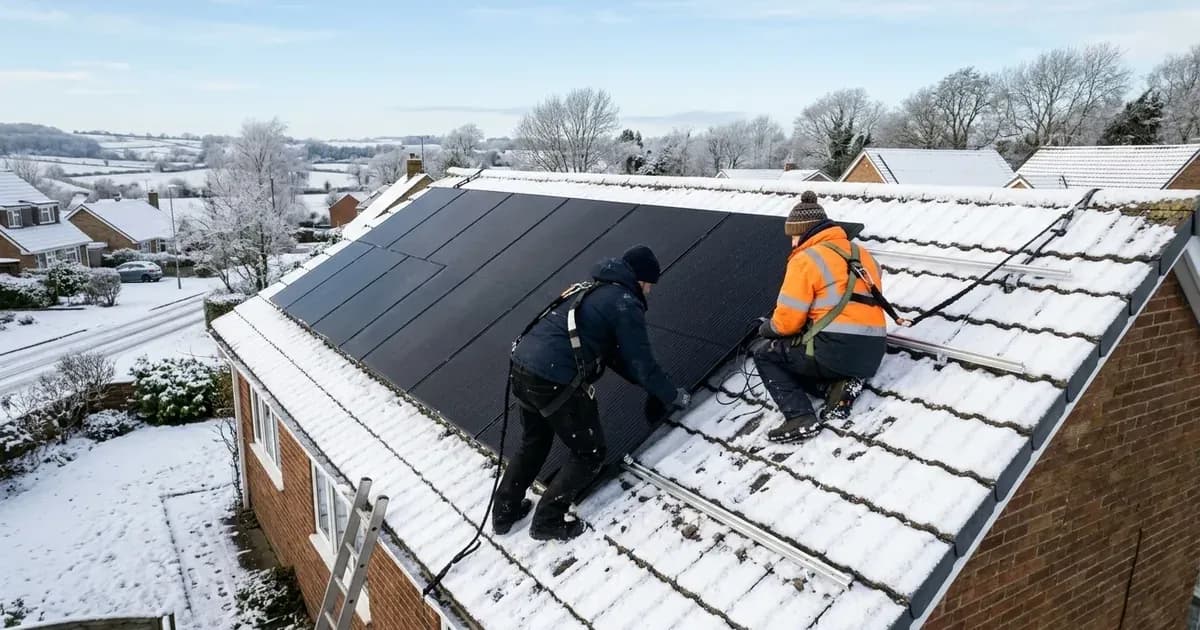
Solar installation is a seasonal trade wearing a year-round uniform. Demand surges when air-conditioning bills do — homeowners open July statements and call installers — which stacks the industry's busy season into summer and fall. Buy against that cycle and everything improves: winter and early-spring quotes come from sales teams with targets and empty calendars, crews schedule in weeks rather than months, and price negotiation has actual room. The panels don't care: cold improves photovoltaic efficiency, and installers work year-round in every state that has roofs.
The compounding trick is production timing. A system energized in March captures the entire high-production season from its first year; the same system quoted in July is often energized in October, just in time to watch winter. Same hardware, same price — one of them buys a whole summer the other one missed.
The waiting game has changed
For two decades, "should I wait?" had a real tension: prices were falling fast, and the federal credit made any year's purchase 30% cheaper anyway. Both halves of that equation are gone. The Residential Clean Energy Credit ended for expenditures after December 31, 2025 — the IRS instructions are explicit — and no successor is scheduled. Hardware prices still drift downward, but gently, while residential electricity rates have been moving the other way, up roughly 7% nationally over the past year.
That reframes waiting as a trade: a speculative future discount against known monthly savings you're not collecting. At the current national average of 18.44¢/kWh, a household offsetting 800 kWh a month leaves roughly $148 on the table for every month of "maybe next year." A year of waiting to save a hoped-for 5% on hardware is, for most systems, arithmetic that never closes.
"Wait for..." | Reality check |
|---|---|
The federal credit to return | Requires new legislation; nothing pending has a date |
Hardware prices to drop | Slow drift, offset by rising labor and rate inflation |
Better technology | Panel efficiency improves ~fractions of a percent yearly; your roof doesn't care |
A state incentive with a real start date | The one legitimate wait — verify the date and funding on the program's own page |
Framing as of August 2026.
The process timeline nobody quotes you
From signed contract to permission-to-operate, a typical residential install runs one to three months: site survey and final design, permit application (the long pole — days in easy jurisdictions, weeks in slow ones), the installation itself (usually one to three days on the roof), inspection, and the utility's interconnection approval. None of this is your labor, but all of it is your calendar. Decide in January and you're producing by spring; decide in July and you're likely watching October leaves land on brand-new panels.
Two accelerants worth asking any installer about: whether your jurisdiction uses instant online permitting (a growing number do), and whether the utility's interconnection queue has a current backlog — the honest ones will tell you both numbers unprompted.
So when should you pull the trigger?
Collapse it to three questions. Is your rate high and rising? Check your bill against the national average; if you're above it, delay is expensive. Is your state stack stable? If a funded state incentive exists today, it argues for now — programs run out of money faster than they get refilled, as this year's state-by-state incentive news keeps proving. Is your roof ready? A roof due for replacement inside five years should be re-roofed first — that sequencing beats removing and re-installing panels later.
If those answers point at yes, the best time is the unglamorous one: this winter, quoted in the slow season, energized before summer. The best time was arguably 2025, when the credit still existed — but of the times still available, early beats late in every column of the spreadsheet.
Keep reading: whether solar is worth it · what solar saves · solar and home value.
Frequently asked questions
What time of year is best to install solar panels?
Winter and early spring. Installer calendars are emptiest then, quotes are most negotiable, and the system is producing by the time peak summer bills arrive — buying in the season you'll use it is buying late.
Should I wait for solar prices or incentives to improve?
The federal credit is gone and nothing on the calendar replaces it; hardware prices drift down slowly while electricity rates have been rising. Waiting now trades known monthly savings for speculative future discounts.
How long does going solar take from quote to switch-on?
Typically one to three months end to end — site survey, design, permitting, installation, inspection, and utility permission to operate — with permitting the usual long pole. That lag is why summer decisions become fall installations.
Does winter installation hurt performance?
No. Panels are installed in every climate year-round; cold weather actually improves panel efficiency, and a winter install is simply ready earlier for the high-production months.
References
- IRS – Instructions for Form 5695 (2025) — accessed 5 August 2026
- Choose Energy – Electricity rates by state (EIA data) — accessed 5 August 2026
- NREL – PVWatts Calculator — accessed 5 August 2026
Related guides
More from sizing, net billing & installation.