Clean Energy Tax Credits: Section 25D vs. Section 48 Guide
Updated 17 September 2026 · By SolarNevs Research Desk, Dealer surveys + verified sources · 2 sources · Method ↗
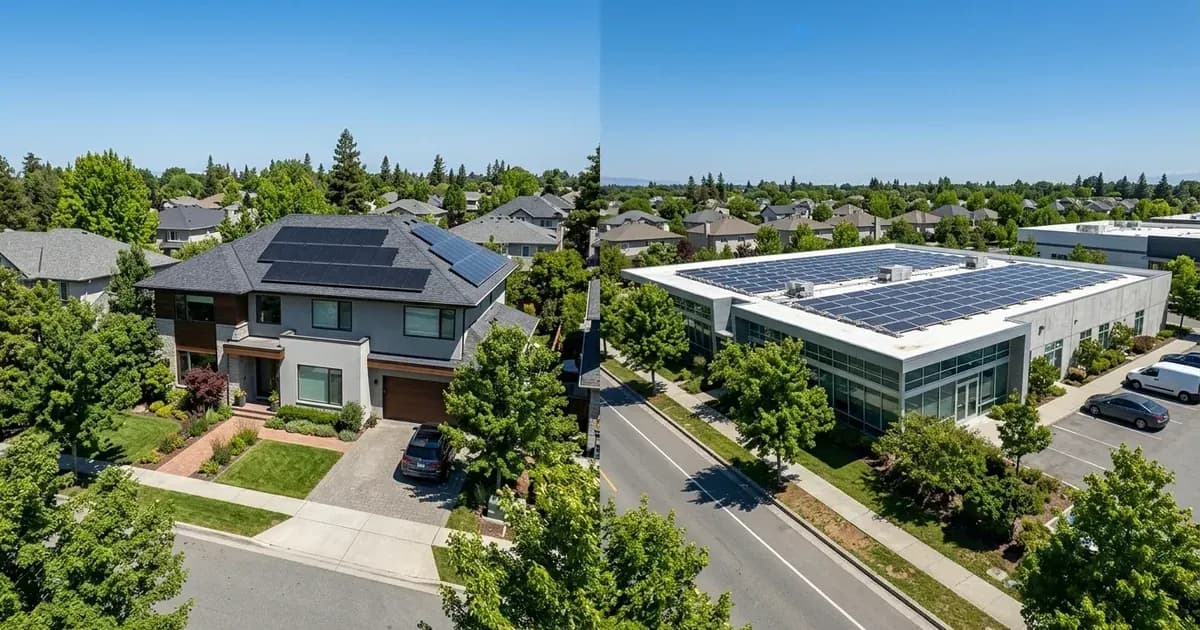
Key Takeaways
- Both Section 25D (residential) and Section 48 (commercial) offer a 30% base tax credit for clean energy property.
- Section 25D is a nonrefundable personal credit for homeowners, claimed on Form 5695, with indefinite carryforward.
- Section 48 is for commercial property owners and solar developers, claimed on Form 3468, and often requires prevailing wage and apprenticeship compliance.
- Commercial projects can qualify for additional 10% bonus adders for energy communities or domestic content, and non-profits may use elective payment.
Understanding US Federal Clean Energy Tax Credits
The United States federal government offers significant tax incentives to encourage the adoption of clean energy technologies. These incentives primarily come through two sections of the Internal Revenue Code (IRC): Section 25D for residential installations and Section 48 for commercial projects. These programmes are managed by the Internal Revenue Service (IRS) and the US Department of the Treasury.
Section 25D, known as the Residential Clean Energy Credit, allows homeowners to claim a credit against their personal federal income tax liability using IRS Form 5695. Section 48, the Energy Investment Tax Credit (ITC), is designed for commercial property owners and solar developers, who claim it on IRS Form 3468. Both sections aim to reduce the financial burden of installing solar, wind, geothermal, and other qualifying clean energy systems.
The 30% Base Rate and Key Differences
A core feature common to both Section 25D and Section 48 is the "30% tax credit for property placed in service." This means that for eligible clean energy property, taxpayers can claim a credit equal to 30% of the qualified expenditure. The credit is claimed in the tax year when the original installation of the solar energy property is fully completed.
However, the application and scope of these credits differ significantly based on the type of taxpayer and project:
- Section 25D (Residential): This credit is for homeowners. It is a direct, nonrefundable credit against personal federal income tax liability. This means the credit can reduce your tax bill to zero, but it will not result in a refund if the credit amount exceeds your tax liability. A key benefit for residential taxpayers is that "unused Section 25D tax credits carry forward to future tax years indefinitely until fully absorbed by tax liability."
- Section 48 (Commercial): This is an investment tax credit available to commercial property owners and solar developers. It is claimed on Form 3468. Unlike the residential credit, Section 48 has additional requirements and bonus adders that can increase the credit value beyond the base 30%.
Eligibility and Additional Requirements
Eligibility for these credits depends on the type of installation and specific project characteristics.
For Section 25D (Residential):
- The credit is available to homeowners for systems installed on their primary or secondary residence in the United States.
- "Battery storage technology with a minimum capacity of 3 kilowatt-hours (3 kWh) qualifies for the 30% credit under Section 25D."
- The "qualified expenditure basis must be reduced by nontaxable utility grants and government energy efficiency rebates." This means any grants or rebates you receive that are not taxable must be subtracted from the total cost before calculating the 30% credit.
For Section 48 (Commercial):
- This credit applies to commercial-scale projects.
- To claim the full 30% credit, commercial projects typically "must satisfy statutory prevailing wage and apprenticeship requirements unless exempt." This involves ensuring workers are paid certain wages and that a percentage of labour hours are performed by qualified apprentices.
- Commercial projects can also qualify for additional bonus adders:
- Energy Community 10% Bonus Adder: "Commercial projects located in designated brownfields or historic fossil fuel communities qualify for an additional 10% tax credit adder."
- Domestic Content 10% Bonus Adder: "Commercial facilities utilising certified domestic steel, iron, and manufactured components qualify for an extra 10% bonus credit."
Elective Payment and Credit Carryforward
The mechanisms for monetising and carrying forward these credits also vary:
- Elective Payment (Direct Pay): For commercial projects, "tax-exempt entities and non-profits may monetise Section 48 credits through elective payment (direct pay) under IRC Section 6417." This provision allows eligible entities that do not have a tax liability to receive the credit as a direct payment from the IRS, effectively making the credit refundable for them.
- Residential Carryforward: As noted, "unused Section 25D tax credits carry forward to future tax years indefinitely until fully absorbed by tax liability." This ensures homeowners can fully utilise their credit even if their tax liability is low in the year of installation.
Section 25D vs. Section 48: A Comparison
The table below summarises the key differences and similarities between the Residential Clean Energy Credit (Section 25D) and the Energy Investment Tax Credit (Section 48).
Parameter | Section 25D (Residential) | Section 48 (Commercial) |
|---|---|---|
Applicable Entity | Homeowners | Commercial property owners, solar developers, tax-exempt entities |
Governing Form | IRS Form 5695 | IRS Form 3468 |
Base Credit Rate | 30% for property placed in service | 30% for property placed in service |
Credit Type | Direct, nonrefundable personal income tax credit | Investment tax credit |
Key Requirements | Property must be located in the United States; battery storage must be 3 kWh minimum capacity | Prevailing wage and apprenticeship requirements (unless exempt) |
Bonus Adders | None specified | 10% for Energy Community, 10% for Domestic Content |
Credit Monetisation | Nonrefundable; reduces tax liability | Nonrefundable for taxable entities; Elective Payment (Direct Pay) for tax-exempt entities/non-profits |
Carryforward | Unused credits carry forward indefinitely | Standard tax credit carryforward rules apply (not specified as indefinite) |
Expenditure Basis | Reduced by nontaxable utility grants and government energy efficiency rebates | Reduced by nontaxable utility grants and government energy efficiency rebates |
What you can check yourself, and what you cannot
As a taxpayer, you can determine if you are a homeowner (potentially eligible for Section 25D) or a commercial entity (potentially eligible for Section 48). You can also check if your battery storage system meets the "minimum capacity of 3 kilowatt-hours (3 kWh)" for Section 25D. For commercial projects, you can research if your project location qualifies as an "Energy Community" or if your components meet "Domestic Content" requirements.
However, determining the precise application of "statutory prevailing wage and apprenticeship requirements" or navigating the complexities of "elective payment (direct pay) under IRC Section 6417" for non-profits requires professional expertise. The IRS explicitly states that "tax-exempt entities and non-profits may monetise Section 48 credits through elective payment (direct pay) under IRC Section 6417." For project-specific tax structuring and eligibility determinations, you should "consult a certified public accountant (CPA) or corporate tax attorney." This guide provides general information and is not a substitute for professional tax advice.
What the published sources do not tell you
While the IRS provides clear instructions for claiming these credits, specific details regarding the implementation of certain provisions can be complex and may not be fully detailed in public-facing documents. For instance, the exact definitions and boundaries of "designated brownfields or historic fossil fuel communities" for the Energy Community bonus adder may require consulting additional Treasury or Department of Energy guidance. Similarly, the precise certification process for "certified domestic steel, iron, and manufactured components" for the Domestic Content bonus adder can involve detailed supply chain verification that is not fully outlined in the general instructions. The specific carryforward rules for Section 48 credits are not detailed in the provided source, unlike the explicit indefinite carryforward for Section 25D. These nuanced interpretations and specific compliance pathways often require consultation with tax professionals.
Frequently asked questions
What is the base tax credit rate for clean energy installations?
Both Section 25D residential and Section 48 commercial clean energy credits provide a 30% tax credit for property placed in service.
Who can claim the Section 25D tax credit?
Under Section 25D, homeowners claiming Form 5695 receive a direct nonrefundable credit against personal federal income tax liability.
What are the requirements for commercial projects to get the full Section 48 credit?
Commercial projects claiming the full 30% credit under Section 48 must satisfy statutory prevailing wage and apprenticeship requirements unless exempt.
Can non-profit organisations benefit from these tax credits?
Tax-exempt entities and non-profits may monetize Section 48 credits through elective payment (direct pay) under IRC Section 6417.
Do unused residential clean energy credits expire?
Unused Section 25D tax credits carry forward to future tax years indefinitely until fully absorbed by tax liability.
References
- IRS Instructions for Form 5695 and Form 3468 — accessed 27 August 2026
- US Department of the Treasury Inflation Reduction Act Guidance — accessed 27 August 2026
Related guides
More from schemes, subsidies & financing.