ERCOT Battery Storage: Arbitrage, Resilience, and Tax Credits in Texas
Updated 17 September 2026 · By SolarNevs Research Desk, Dealer surveys + verified sources · 1 source · Method ↗
Key Takeaways
- Residential battery storage systems in the United States, including Texas, can qualify for a 30% federal tax credit if they have a capacity of at least 3 kilowatt-hours.
- Batteries enhance grid resilience in the ERCOT market by providing backup power during outages and participating in Virtual Power Plant (VPP) programs during heatwaves.
- Economic benefits include time-of-use rate arbitrage and, for commercial users, Four Coincident Peak (4CP) reduction.
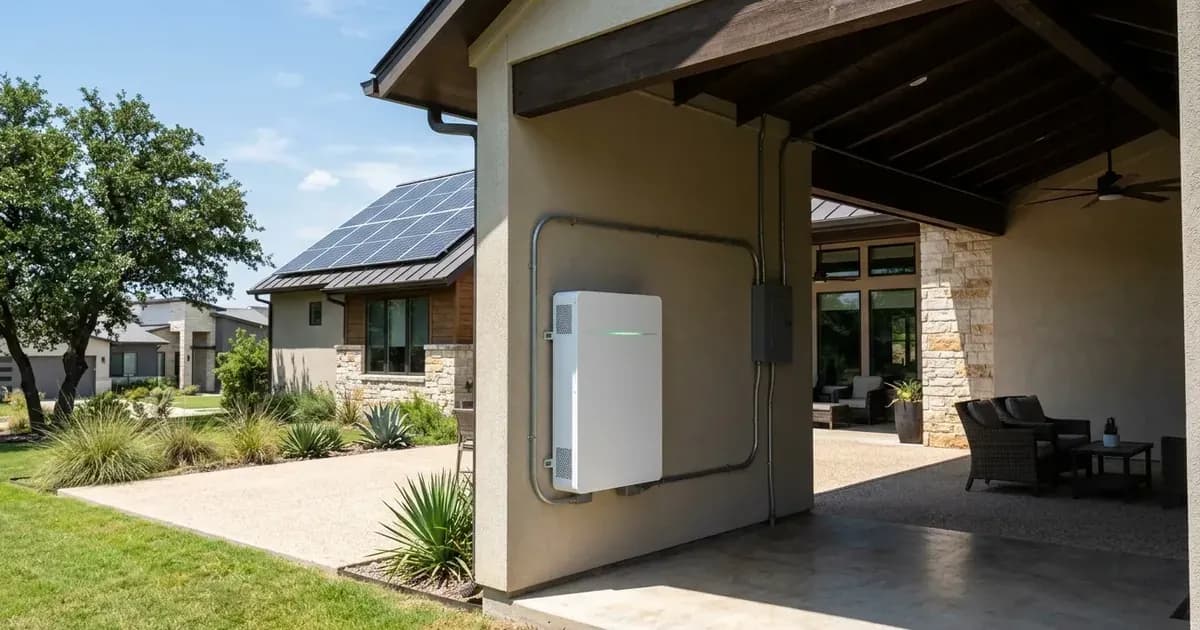
- Proper installation in shaded, climate-controlled locations is crucial to prevent thermal derating of lithium batteries in Texas's summer heat.
Understanding Battery Storage Benefits in the ERCOT Market
Residential battery energy storage systems in Texas offer significant benefits for grid resilience and economic savings. These systems operate within the ERCOT Interconnection Grid, regulated by the Public Utility Commission of Texas (PUCT), and can qualify for federal tax incentives under IRC Section 25D. This guide details how batteries provide backup power, reduce electricity costs, and integrate with grid support programs in Texas.
What is actually going on: How Batteries Interact with the Texas Grid
Battery storage systems provide multiple layers of value by managing electricity flow to and from the home and the grid. During grid outages, certified energy storage systems automatically disconnect from the grid within milliseconds to provide whole-home backup power. This capability, known as grid outage islanding, ensures essential loads remain powered.
Economically, batteries can perform time-of-use rate arbitrage. This involves charging when electricity prices are low (e.g., overnight) and discharging during high summer evening peak pricing windows to minimise expensive retail grid imports. For commercial and industrial users, battery dispatch can also reduce transmission cost allocation during ERCOT summer peak demand hours, a strategy known as Four Coincident Peak (4CP) reduction.
Furthermore, aggregated residential batteries can participate in Virtual Power Plant (VPP) programs. These programs allow batteries to support grid stability during critical periods, such as heatwaves, by discharging stored energy back to the grid or reducing demand, acting as an ERCOT emergency response resource.
Key Specifications and Regulatory Rules for Texas Battery Storage
The following table outlines the specific regulatory rules and technical specifications governing residential battery storage in the ERCOT market, including qualifications for federal incentives.
Parameter | Verbatim Regulatory Rule / Technical Specification |
|---|---|
Section 25D 30% Battery Tax Credit | "Residential battery storage systems with a capacity of at least 3 kilowatt-hours qualify for the 30% federal tax credit." |
Grid Outage Islanding Transfer | "Certified energy storage systems automatically disconnect from the grid within milliseconds to provide whole-home backup power." |
Four Coincident Peak (4CP) Reduction | "Commercial and industrial battery dispatch reduces transmission cost allocation during ERCOT summer peak demand hours." |
Time-of-Use Rate Arbitrage | "Battery storage discharges during high summer evening peak pricing windows to minimise expensive retail grid imports." |
Virtual Power Plant (VPP) Integration | "Aggregated residential batteries participate in ERCOT emergency response programs to support grid stability during heatwaves." |
Backup Reserve Configuration | "Home energy management software allows users to configure a dedicated reserve state of charge for severe weather events." |
Main Electrical Service Panel Upgrades | "Electrical panel and service upgrades necessary to install battery backup qualify as part of eligible Section 25D expenditures." |
Rapid Shutdown and Disconnect Standard | "Battery storage co-located with rooftop solar must incorporate NEC-compliant rapid shutdown and visible-break AC isolation." |
Nonrefundable Tax Credit Carryforward | "Unused Section 25D tax credit amounts carry forward to offset future federal tax liability indefinitely." |
High Temperature Battery Derating | "Install lithium battery storage in shaded, climate-controlled locations to prevent thermal derating during Texas summer heat." |
Local Utility Interconnection Approval | "Battery installations feeding back into the grid require utility technical review and formal Permission to Operate." |
United States Federal and State Scope | "Applies to residential taxpayers claiming clean energy property installed on homes located in the United States." |
What you can check yourself, and what you cannot
As a homeowner, you can configure your home energy management software to set a dedicated reserve state of charge for severe weather events, ensuring you have backup power when needed. You can also monitor your energy usage and battery discharge patterns to optimise for time-of-use arbitrage.
However, you cannot perform electrical installations or modifications yourself. Battery installations feeding back into the grid require local utility technical review and formal Permission to Operate. Any electrical panel and service upgrades, or the installation of rapid shutdown and visible-break AC isolation for systems co-located with solar, must be performed by a qualified, accredited installer. Opening the battery enclosure or attempting internal repairs is authorised-service work only. Always isolate PV, battery, and AC breakers, and wait the manual's capacitor-discharge time before any authorised service work.
What the published sources do not tell you
While federal guidelines and general specifications are clear, specific local requirements can vary. The provided sources do not detail local city building department permitting requirements regarding battery enclosure fire clearance and location restrictions. These specific details must be checked with your local city building department before installation. Additionally, specific ERCOT emergency response program details for VPP integration may vary and require direct consultation with your utility or VPP provider.
Frequently asked questions
What is the federal tax credit for residential battery storage in Texas?
Residential battery storage systems with a capacity of at least 3 kilowatt-hours qualify for the 30% federal tax credit under IRC Section 25D. This credit can offset future federal tax liability indefinitely if not fully used in one year.
How do batteries help with ERCOT grid resilience during Texas heatwaves?
Batteries provide grid outage islanding by automatically disconnecting from the grid to power homes. They also participate in Virtual Power Plant (VPP) programs, supporting grid stability during high demand periods like heatwaves.
Can battery storage reduce electricity costs in Texas?
Yes, battery storage can perform time-of-use rate arbitrage by discharging during high summer evening peak pricing windows to reduce expensive retail grid imports. Commercial and industrial batteries can also reduce transmission costs through 4CP reduction.
What are the installation considerations for batteries in Texas's hot climate?
To prevent thermal derating during Texas summer heat, lithium battery storage should be installed in shaded, climate-controlled locations. Always consult local building codes for specific fire clearance and location restrictions.
Do electrical panel upgrades qualify for the Section 25D tax credit?
Yes, electrical panel and service upgrades necessary to install battery backup qualify as part of eligible Section 25D expenditures, provided the battery system itself meets the 3 kWh capacity requirement.
References
- IRS Instructions for Form 5695 Clean Energy Storage — accessed 27 August 2026
Related guides
More from schemes, subsidies & financing.