US IRS 26 USC 25D Residential Clean Energy Credit Guide
Updated 18 September 2026 · By SolarNevs Research Desk, Dealer surveys + verified sources · 1 source · Method ↗
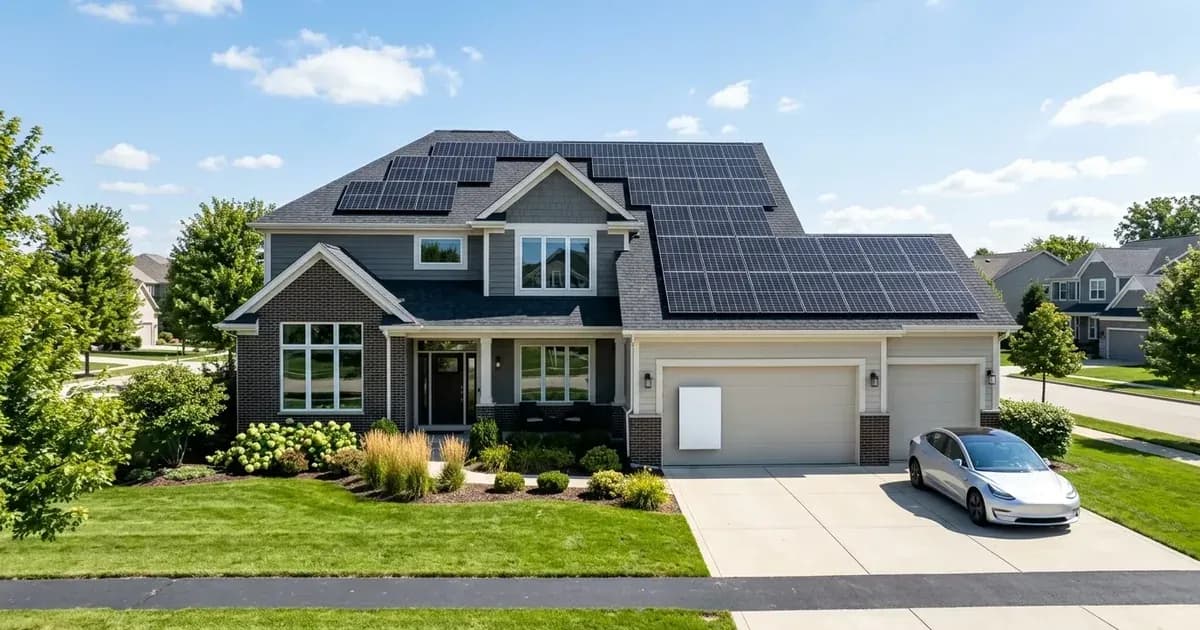
Key Takeaways
- The Residential Clean Energy Credit offers a 30 percent federal tax credit for qualified expenditures after December 31, 2021.
- Eligible battery storage systems must have a capacity of not less than 3 kilowatt hours.
- Onsite preparation, assembly, and original installation labor costs are generally included in qualified expenditures.
- Unused credit amounts can be carried forward to future tax years.
What is the US IRS 26 USC 25D Residential Clean Energy Credit?
The Residential Clean Energy Credit, established under 26 U.S. Code § 25D, is a federal income tax credit designed to encourage homeowners to invest in renewable energy technologies. It provides a nonrefundable credit for a percentage of the cost of new, qualified clean energy property for your home. For property placed in service after December 31, 2021, the credit is 30 percent of qualified expenditures.
This credit applies to various clean energy improvements made to a residential dwelling unit located in the United States. It covers not only the equipment but also certain labor costs associated with the installation. Understanding the specific requirements and eligible expenditures is key to claiming this benefit.
Determining Eligibility for the 26 USC 25D Credit
To determine if your clean energy investment qualifies for the Residential Clean Energy Credit, you need to assess both the type of property installed and specific statutory conditions. This section outlines the key checks for eligibility.
Step-by-Step Eligibility Check
- Identify Property Type: Verify if your installation falls under one of the qualified categories. These include:
- Qualified solar electric property expenditures.
- Qualified solar water heating property expenditures.
- Qualified fuel cell property expenditures.
- Qualified small wind energy property expenditures.
- Qualified geothermal heat pump property expenditures.
- Qualified battery storage technology expenditures.
- Confirm Battery Capacity (if applicable): If you installed battery storage, ensure it has a capacity of not less than 3 kilowatt hours. Systems below this threshold do not qualify.
- Verify Residential Use: The property must be installed on a residential dwelling unit located in the United States. If the property has both business and nonbusiness uses, special rules apply. If less than 80 percent of the use of an item is for nonbusiness purposes, only that portion of the expenditure may qualify.
- Review Labor Cost Inclusions: Confirm that your expenditures include costs "properly allocable to the onsite preparation, assembly, or original installation" of the property. These labor costs are generally eligible.
- Check Placed-in-Service Date: The applicable credit percentage depends on when the property was placed in service. For property placed in service after December 31, 2021, the credit is 30 percent. Historically, it was 26 percent for property placed in service after December 31, 2019, and before January 1, 2022, and 30 percent for property placed in service after December 31, 2017, and before January 1, 2020.
Common Pitfalls and How to Avoid Them
Claiming the Residential Clean Energy Credit requires careful attention to detail. Several common issues can lead to errors or missed opportunities. The table below outlines these pitfalls and how to address them.
Symptom detail | Likely cause | Fix |
|---|---|---|
Battery storage system does not qualify for the credit. | The battery storage system has a capacity below the minimum 3 kilowatt-hours threshold. | Ensure the installed battery storage system has a capacity of not less than 3 kilowatt hours. Document the nameplate capacity. |
Certain roofing costs were included but disallowed. | Claiming structural roofing materials or standard decking that primarily serves a structural support function rather than direct solar generation. | Only include costs directly related to the solar generation components, not general structural roofing. |
Eligible labor costs were not claimed. | Failing to include expenditures "properly allocable to the onsite preparation, assembly, or original installation" of the property. | Maintain itemized contractor invoices that clearly separate equipment purchases from eligible onsite installation labor costs. |
Credit amount reduced for dual-use property. | Neglecting to apportion dual-use property when less than 80 percent of property use is for nonbusiness residential purposes. | Apportion expenditures based on the percentage of nonbusiness use if it falls below the 80 percent threshold. |
Full credit could not be used in the installation year. | Overlooking the carryforward mechanism when tax liability is insufficient to absorb the full credit in the placed-in-service year. | Utilize the carryforward provision under Section 25D(c) to apply unused credit amounts to the succeeding taxable year. |
Guide to Qualified Expenditures and Credit Application
The Residential Clean Energy Credit covers a broad range of clean energy technologies for your home. Understanding what constitutes a qualified expenditure and how the credit is applied is essential for maximizing your benefit.
Qualified Property and Expenditures
The credit applies to the sum of expenditures for various types of clean energy property. These include:
- Solar Electric Property: This covers systems that generate electricity from sunlight, such as rooftop photovoltaic (PV) modules, string inverters, microinverters, and MLPE optimizers.
- Solar Water Heating Property: This includes systems that heat water for residential use using solar energy. To qualify, the equipment must be certified by the Solar Rating and Certification Corporation (SRCC) or a comparable entity.
- Fuel Cell Property: Expenditures for qualified fuel cell property are also eligible.
- Small Wind Energy Property: This refers to small wind turbines used to generate electricity for the home.
- Geothermal Heat Pump Property: Systems that use the earth's stable temperature to heat and cool a home.
- Battery Storage Technology: This includes residential battery storage systems, such as LiFePO4 storage banks and DC/AC coupled batteries. A critical requirement is that the battery system must have a capacity of not less than 3 kilowatt hours.
Inclusions and Exclusions
- Labor Costs: The credit includes costs "properly allocable to the onsite preparation, assembly, or original installation" of the qualified property. This means you can include the labor charges for setting up your solar panels, battery, or other eligible systems.
- Dual-Use Property: If an item of property is used for both business and nonbusiness purposes, special rules apply. If less than 80 percent of the use is for nonbusiness purposes, only the portion of the expenditure attributable to nonbusiness use qualifies.
- Structural Roofing: The credit generally does not cover structural roofing materials or standard decking that serve a primary structural support function rather than direct solar generation. Focus on the components directly involved in energy generation or storage.
Credit Carryforward and Special Cases
The Residential Clean Energy Credit is nonrefundable, meaning it can reduce your tax liability to zero, but it will not result in a refund beyond that. However, if your credit amount exceeds your tax liability for the year the property was placed in service, any "unused credit amounts shall be carried to the succeeding taxable year and added to the credit allowable under subsection (a) for" that year. This carryforward mechanism ensures you can eventually use the full value of the credit.
Special provisions also exist for:
- Tenant-Stockholders in Cooperative Housing Corporations: These individuals can claim a proportional share of the expenditures.
- Condominium Management Associations: Similar proportional expenditure allocations apply.
For detailed guidance on claiming the credit, including how to fill out IRS Form 5695, refer to our guide on how to claim solar tax credit form 5695. If you are considering standalone battery storage, our standalone battery storage federal tax credit guide provides specific insights. For a comparison with other tax incentives, see our article on clean energy tax credits section 25d vs section 48 guide.
Safety and Compliance for Clean Energy Installations
While the 26 USC 25D credit focuses on financial incentives, it is crucial that all clean energy installations comply with relevant safety and electrical codes. Non-compliant installations may not only be unsafe but could also jeopardize eligibility for the credit if they are not considered "qualified" property.
- Electrical Service Panels: Ensure residential electrical service panels and main breaker ratings comply with NEC 705.12 interconnection rules. Proper sizing and connection are vital for safety and system performance.
- Rapid Shutdown: For all residential rooftop solar PV installations, verify rapid shutdown compliance under NEC 690.12. This safety feature allows for quick de-energization of the PV system in emergencies.
- Battery Energy Storage Systems: Install battery energy storage systems in accordance with NFPA 855 residential separation and fire protection guidelines. This includes proper ventilation, clearances, and fire suppression measures to prevent hazards.
Always prioritize safety and adherence to local and national electrical and building codes during installation.
When to call a tax professional instead
While this guide provides an overview of the 26 USC 25D Residential Clean Energy Credit, tax law can be complex. You should consult a qualified tax professional or financial advisor in the following situations:
- Complex Financial Situations: If you have unique income sources, multiple properties, or other complex financial arrangements.
- Uncertainty on Qualified Expenditures: If you are unsure whether specific costs or components of your system qualify for the credit.
- Dual-Use Property: For properties with significant business use, determining the correct apportionment can be challenging.
- Interpreting Statutory Language: Tax professionals are best equipped to interpret the nuances of 26 U.S. Code § 25D and its amendments.
- Audits or Discrepancies: If you receive an inquiry from the IRS regarding your credit claim.
A tax professional can provide personalized advice, ensure accurate calculation, and help you navigate any specific circumstances related to your clean energy investment.
Frequently asked questions
What is the Residential Clean Energy Credit?
It is a nonrefundable federal income tax credit under 26 U.S. Code § 25D for qualified clean energy property installed on residential dwelling units in the United States. It provides a 30 percent credit for expenditures on eligible property placed in service after December 31, 2021.
What types of property qualify for the 26 USC 25D credit?
Qualified property includes solar electric property, solar water heating property, small wind energy property, geothermal heat pump property, and battery storage technology. Battery storage systems must have a capacity of not less than 3 kilowatt hours to qualify.
Are labor costs included in the credit calculation?
Yes, expenditures for onsite preparation, assembly, or original installation of the qualified property are allowable under Section 25D(e)(1). These costs contribute to the total amount eligible for the credit.
What if my tax liability is less than the credit amount?
The credit is nonrefundable. However, any unused credit amounts can be carried forward to the succeeding taxable year. This mechanism allows taxpayers to utilize the full credit over time if their tax liability is insufficient in the initial year.
Is there a minimum capacity requirement for battery storage?
Yes, battery storage technology must have a capacity of not less than 3 kilowatt hours to be eligible for the credit. Systems below this threshold do not qualify for the Residential Clean Energy Credit.
References
- 26 U.S. Code § 25D - Residential clean energy credit — accessed 23 August 2026
Related guides
More from schemes, subsidies & financing.