Colorado Res Clean Energy Srecs And Rooftop Fire Code Setbacks Guide
Updated 18 September 2026 · By SolarNevs Research Desk, Dealer surveys + verified sources · 1 source · Method ↗
Key Takeaways
- Colorado's Renewable Energy Standard (RES) mandates investor-owned utilities to achieve 30% renewable generation.
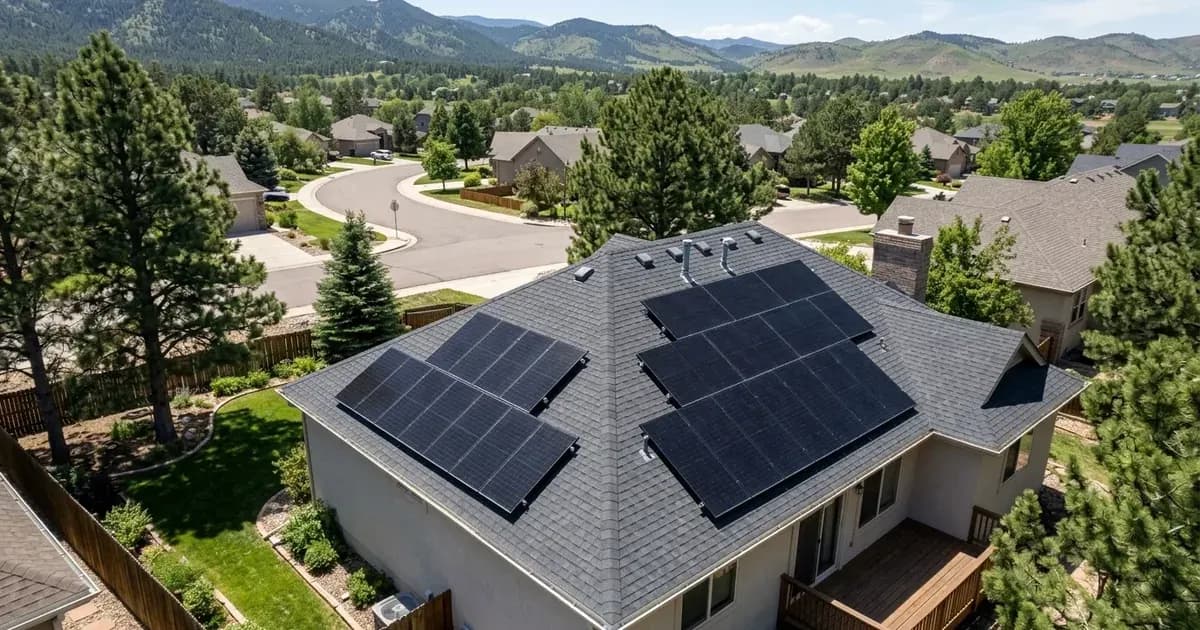
- Rooftop PV arrays must maintain minimum 3-foot clearance setbacks along ridges and edges for emergency ventilation.
- Inverters require certification to UL 1741-SB standards for grid support functions.
- Final electrical inspection and AHJ sign-off are mandatory before requesting Permission To Operate (PTO).
Understanding Colorado's Renewable Energy Standard (RES)
Colorado's Renewable Energy Standard (RES) is a state-level mandate that drives the adoption of clean energy. This standard requires investor-owned utilities to achieve 30% renewable generation. For homeowners, this means that installing solar panels contributes to the state's broader clean energy goals and often comes with supportive regulatory frameworks. The Colorado Public Utilities Commission (CPUC) oversees compliance with the RES.
Rooftop Fire Code Setbacks for PV Arrays
Safety is paramount for rooftop solar installations, particularly concerning fire department access and ventilation. The International Fire Code (IFC 2021) specifies critical requirements for PV arrays. Rooftop PV arrays must maintain minimum 3-foot clearance setbacks along ridges and edges for emergency ventilation. These setbacks ensure that firefighters have safe access to the roof and can perform essential ventilation operations during a fire.
Mandatory Rooftop PV System Requirements
Parameter | Verbatim Scheme Rule / Statutory Standard |
|---|---|
Rooftop Fire Code Pathway Setbacks | "Rooftop PV arrays must maintain minimum 3-foot clearance setbacks along ridges and edges for emergency ventilation." |
Rapid Shutdown Safety Compliance | "Rooftop PV systems must incorporate rapid shutdown initiation complying with standard safety distances." |
Lockable Exterior AC Disconnect Switch | "Tier 2 and larger installations require an exterior, lockable, visible-break manual disconnect switch adjacent to the meter." |
Safe Working Earthing and Bonding | "Verify earth continuity and bond all solar array frames to the main electrical installation earthing terminal." |
Smart Inverter Requirements and Grid Integration
Modern solar installations rely on advanced inverter technology to interact safely and efficiently with the electrical grid. In Colorado, inverters must be certified to UL 1741-SB standards. These standards ensure that inverters support autonomous voltage and frequency regulation, which is crucial for maintaining grid stability. Grid-tied inverters must also automatically isolate within milliseconds during distribution grid outages, a safety feature known as anti-islanding protection.
To accurately measure energy flows, the utility installs a certified bidirectional smart revenue meter. This meter records both the power imported from the grid and the power exported by your solar system.
Federal Tax Credits for Solar and Battery Storage
Homeowners in Colorado can benefit from federal incentives for clean energy installations. The Section 25D Federal Tax Credit allows homeowners claiming qualifying residential solar and battery installations to receive the 30% credit on IRS Form 5695. Importantly, residential battery energy storage systems also qualify for the federal 30% Section 25D tax credit with no solar requirement, making energy storage more accessible.
The Authority Having Jurisdiction (AHJ) Sign-Off Process
Before your solar system can officially operate, it must pass a series of inspections and receive final approval. The Authority Having Jurisdiction (AHJ) sign-off refers to the final electrical inspection and approval required prior to submitting the formal Permission To Operate (PTO) request. This inspection ensures that the installation complies with all local codes and safety standards.
What you can check yourself, and what you cannot
As a homeowner, you can visually inspect your rooftop solar array to ensure that the 3-foot setbacks from ridges and edges appear to be maintained. You can also confirm the presence of an exterior, lockable AC disconnect switch if your installation is Tier 2 or larger.
However, verifying compliance with UL 1741-SB standards, rapid shutdown initiation, anti-islanding protection, or the proper earthing and bonding of the system requires an accredited installer or a qualified electrician. These are complex technical checks that fall outside the scope of homeowner tasks and require specialised knowledge and equipment. Changing inverter settings yourself can breach connection agreements and compromise safety.
What the published sources do not tell you
While the International Fire Code (IFC 2021) sets general rooftop setback requirements, specific interpretations and enforcement can vary slightly between local fire departments within Colorado. Additionally, in Colorado mountain municipalities, additional structural snow load engineering calculations are required for rooftop solar permits, which is a detail not covered by general federal or state-level guidance. The exact process and timeline for utility-specific Permission To Operate (PTO) requests can also vary by utility provider.
Frequently asked questions
What are the primary technical requirements for colorado res clean energy srecs and rooftop fire code setbacks guide?
Key requirements include compliance with local grid codes, correct equipment certification, and proper electrical isolation.
Who is authorized to install and inspect colorado res clean energy srecs and rooftop fire code setbacks guide?
All high-voltage DC, AC grid tie-in, and switchboard modifications must be performed by a qualified, accredited electrical professional.
How is export power limited in colorado res clean energy srecs and rooftop fire code setbacks guide?
Export limiting is achieved using certified bidirectional smart meters or power sensors providing dynamic feedback to the inverter system.
References
Related guides
More from schemes, subsidies & financing.