What Drives Solar Battery Cost? The Four Real Factors
Updated 18 September 2026 · By SolarNevs Research Desk, Dealer surveys + verified sources · 2 sources · Method ↗
Key Takeaways
- No price printed here on purpose: battery quotes age in months, but the cost structure is durable — cells, electronics, installation, policy.
- Cells scale with kWh and set roughly half a typical quote; the inverter/electronics and the electrician split the rest.
- Quote-to-quote variance is mostly installation scope — subpanels, panel upgrades, placement — not the box.
- The federal 30% is gone (post-2025 installs), reshaping payback more than any hardware trend this year.
Factor one: the cells — capacity is the meter
Storage is priced by the kilowatt-hour because cells are the product: the same LFP chemistry story from our lifespan guide dominates cost as well as durability. This is why the sizing discipline in our battery-count guide is the real price negotiation — every kWh you shift away with habits or skip by honest evening-measurement is bought at 100% discount. Cell costs have trended down for a decade and keep drifting; that trend, not any coupon, is the patient buyer's friend.
Factor two: the electronics — the box around the box
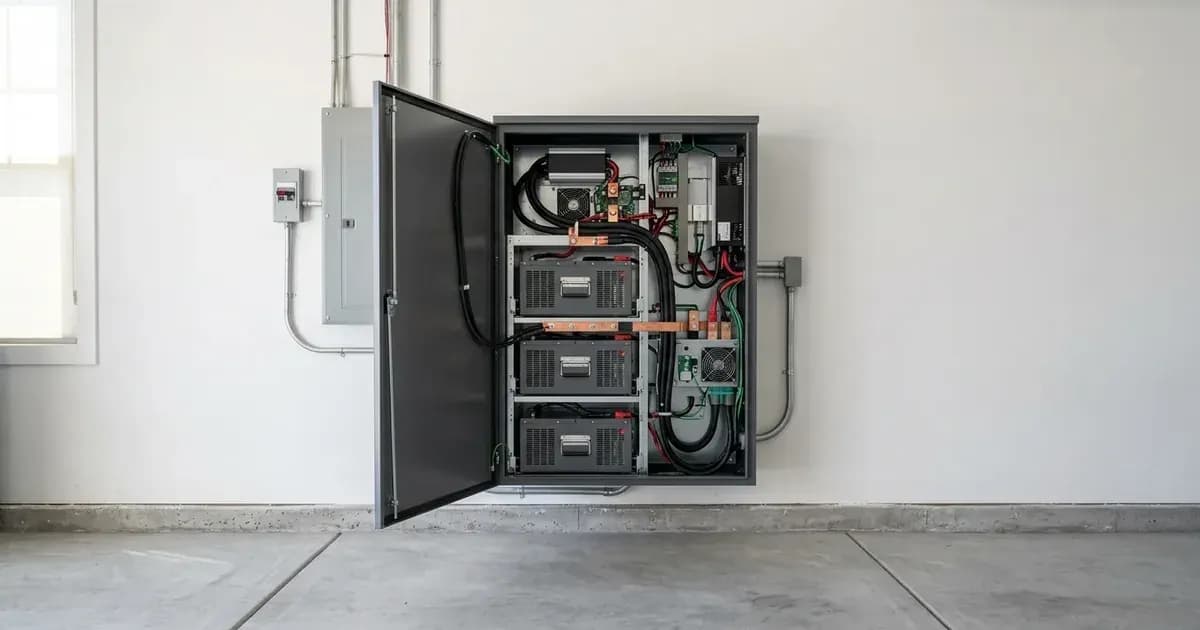
A wall battery bundles an inverter/charger, thermal management, and control — the machinery that makes cells a household appliance. It's why cost-per-kWh falls as capacity rises (one set of electronics amortizing across more cells) and why the kW output rating — the tap, not the tank — is part of what you're paying for. Backup-capable units carry more of this machinery than simple self-consumption units; matching the spec to the job (per the three-job test) trims quotes without trimming service.
Factor three: the installation — where quotes diverge
Two identical boxes, two very different invoices: the spread lives in the electrician's day. Backup wiring (an essential-loads subpanel) adds scope; main-panel upgrades add more; placement, conduit runs, and permitting vary by house and jurisdiction. Reading a quote means separating the comparable (the hardware line) from the situational (the labor lines) — and getting a second bid on the situational, which is where competition actually operates.
Quote line | Scales with | Your lever |
|---|---|---|
Cells / capacity | kWh you buy | Size the evening honestly |
Power electronics | Output kW, backup features | Match spec to job |
Installation | Panel state, backup scope, placement | Second bids; skip whole-home-backup theater |
Policy | The subsidy environment | Timing and structure (below) |
Structure over numbers; your quotes supply the numbers.
Factor four: policy — the vacuum where 30% used to be
Batteries qualified for the residential clean-energy credit until it ended for expenditures after December 31, 2025 — the same repeal our federal-credit flagship chronicles. In 2026 the homeowner subsidy layer is state-and-utility only (a few storage programs persist — check your state's page), plus the leasing asterisk: third-party-owned systems can still route storage through the business credit into 2027, the trade-off our leasing guide prices. Net effect: hardware keeps cheapening while the subsidy vanished — roughly offsetting forces that make this year's quotes the honest baseline, not last year's folklore.
How to shop it
Size first (the evening, measured), spec second (backup or not, output kW), then collect three quotes and compare the hardware lines against each other and the labor lines against your house's actual complexity. Distrust any pitch still whispering about 30% back, and remember the sequencing freedom from the worth-it test: storage retrofits cleanly, so the best-priced battery is often the one you buy a year later than the panels, when your own meter data has replaced every assumption in this article.
Frequently asked questions
How much does a solar battery cost?
We deliberately don't print a number — battery pricing moves quarterly and varies by market. The durable knowledge is the structure: cell capacity (kWh) drives roughly half a quote, power electronics and installation the rest, with no federal credit since the end of 2025.
Why do two battery quotes differ so much?
Usually installation scope: panel upgrades, subpanels for backup circuits, placement and conduit runs. The box's price is the comparable part; the electrician's day is the variable.
Is a bigger battery cheaper per kWh?
Generally yes — power electronics and installation amortize across more capacity, so cost per usable kWh falls with size. That never justifies buying evening you don't have; size first, then price.
Did battery prices go up when the tax credit ended?
The 30% federal credit's death at the end of 2025 raised net homeowner cost even as hardware prices kept drifting down. Leased systems can still route storage through the business credit until the end of 2027.
References
- IRS – Instructions for Form 5695 (2025) — accessed 5 August 2026
- NREL – Energy storage research (cost drivers) — accessed 5 August 2026
Related guides
More from schemes, subsidies & financing.