City of Cape Town SSEG Feed-In Tariff and Cash for Power Guide
Updated 8 September 2026 · By SolarNevs Research Desk, Dealer surveys + verified sources · 3 sources · Method ↗
Key Takeaways
- Residential participants receive a total feed-in rate of 92.13c/kWh + 25c/kWh incentive, credited against their monthly municipal account.
- Commercial customers receive an export credit rate of 82.06c/kWh + 25c/kWh incentive under the applicable non-residential SSEG tariff.
- Earned export credits can be used to offset your entire municipal account, not just the electricity portion.
- Cash payouts are available when accumulated credits exceed defined thresholds: one payout a year, once the amount exceeds R1000 for residential, and one payout a month, once the amount exceeds R5000 for commercial.
- Property owners apply by sending an Expression of Interest to electricity.retail@capetown.gov.za, with all applications assessed annually.
Overview of the Cash for Power Programme
The City of Cape Town operates an advanced municipal feed-in mechanism allowing property owners to sell surplus electricity generated by rooftop solar PV back to the municipality. The official programme pathway is designated apply to sell surplus sseg energy to the city.
Unlike traditional net metering schemes that merely zero out electricity units, the Cape Town programme allows net exporters to accumulate substantial financial credits: this credit can be used to offset your entire municipal account, not just the electricity portion. This means surplus solar earnings can offset water, sewerage, rates, and refuse charges on the consolidated municipal bill.
Registration itself carries no municipal application charge: there is no charge to register EG systems. A fee will only be applied if you fail to register your system.
Tariff Rates and Feed-In Structure
The feed-in tariff structure differentiates between residential and commercial electricity connections, incorporating a standard base feed-in rate and a municipal incentive adder:
Customer Category | Base Feed-In Rate | Municipal Incentive Adder | Tariff Classification | Cash Payout Minimum & Frequency |
|---|---|---|---|---|
Residential | 92.13c/kWh | +25c/kWh | Home User tariff | Exceeds R1,000 (once per year) |
Commercial | 82.06c/kWh | +25c/kWh | Non-residential SSEG tariff | Exceeds R5,000 (once per month) |
- Residential Feed-In Rate: Residential solar generators are credited at 92.13c/kWh + 25c/kWh incentive. This credit is offset against the customer monthly municipal account. Residential customers remain on or move to the Home User tariff, where excess electricity is credited at the SSEG Feed-in tariff rate.
- Commercial Feed-In Rate: Non-residential commercial participants receive 82.06c/kWh + 25c/kWh incentive. This credit is offset against the customer monthly municipal account, with the customer placed on the applicable Non-residential SSEG tariff.
Customer Category | Base Feed-In Rate | Municipal Incentive Adder | Applicable Tariff Profile | Account Credit Offset |
|---|---|---|---|---|
Residential | 92.13c/kWh | +25c/kWh | Home User tariff | Offsets total monthly municipal account |
Commercial | 82.06c/kWh | +25c/kWh | Non-residential SSEG tariff | Offsets total monthly municipal account |
Cash Payout Thresholds and Payout Frequency
When a system consistently produces more energy than the property consumes across all municipal utility services, excess credits accumulate into a cash surplus. The City provides cash disbursements once specific financial thresholds are satisfied:
- Residential Cash Payouts: For domestic participants, the City conducts one payout a year, once the amount exceeds R1000.
- Commercial Cash Payouts: For commercial entities with higher solar generation volumes, the City provides one payout a month, once the amount exceeds R5000.
To join the scheme, property owners follow the designated administrative channel: to apply for the Cash for Power programme, email electricity.retail@capetown.gov.za. Municipal administrators review candidate systems, noting that all applications for the programme will be assessed annually.
Metering and Property Boundary Requirements
Receiving feed-in credits requires specialized four-quadrant bidirectional metering to record export and import energy streams separately:
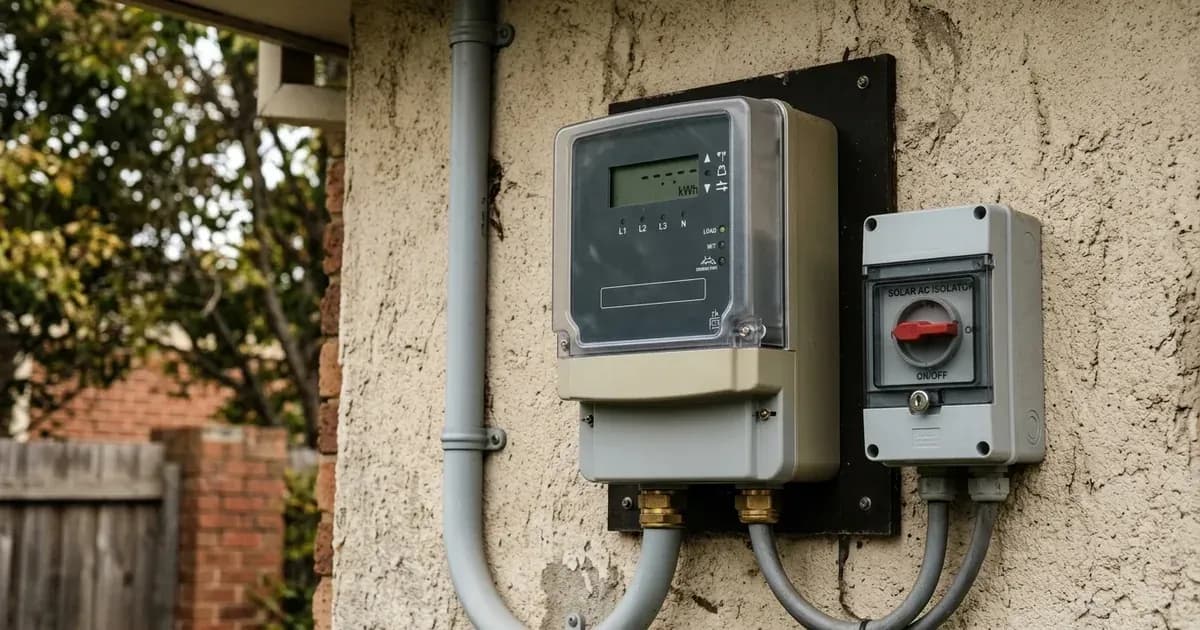
- Meter Ownership and Cost: The City will install a bi-directional meter at your own expense.
- Boundary Location Rule: Property owners must provide appropriate meter enclosure infrastructure: you are also required to install the metering accommodation for the bi-directional meter on the street-front property boundary.
Meeting these metering and boundary criteria ensures municipal meter readers and automated AMI telemetry networks can reliably verify export figures for billing reconciliation.
Frequently asked questions
What is the residential export rate under Cape Town Cash for Power?
Residential export is credited at 92.13c/kWh + 25c/kWh incentive, offset against the customer's monthly municipal account.
What is the commercial export rate under Cape Town Cash for Power?
Commercial export is credited at 82.06c/kWh + 25c/kWh incentive, offset against the customer's monthly account.
What is the minimum amount required for a Cash for Power cash payout?
For residential customers there is one payout a year, once the amount exceeds R1000, while commercial customers receive one payout a month, once the amount exceeds R5000.
How do customers apply to join the Cash for Power programme?
To apply for the Cash for Power programme, email electricity.retail@capetown.gov.za, and all applications for the programme will be assessed annually.
References
- City of Cape Town - Apply to sell surplus SSEG electricity to the City — accessed 28 August 2026
- City of Cape Town - Apply for authorisation to install an embedded generation system — accessed 28 August 2026
- City of Cape Town - Small-scale Embedded Generation FAQs — accessed 28 August 2026
Related guides
More from inverter errors & fixes.