Ethekwini Durban SSEG Solar Registration And Metering Guide
Updated 16 September 2026 · By SolarNevs Research Desk, Dealer surveys + verified sources · 1 source · Method ↗
Key Takeaways
- All grid-tied and hybrid solar PV installations in eThekwini Durban must be officially registered and approved by City Power.
- A formal SANS 10142-1-2 Certificate of Compliance (CoC) is mandatory for the entire hybrid generating installation.
- Embedded generation inverters must meet NRS 097-2-1 certification and be on an approved equipment list.
- Zero-export systems require a certified reverse power relay to prevent unauthorized grid feed-in.
Understanding SSEG Registration in eThekwini Durban
Small Scale Embedded Generation (SSEG) refers to electricity generation systems, like solar PV, connected to the grid at a customer's premises. In eThekwini Durban, all grid-tied and hybrid solar PV installations must be officially registered and approved by City Power. This process ensures that your solar system complies with local electrical standards, maintains grid stability, and operates safely.
The registration process is crucial for legal operation and, if applicable, for benefiting from any bidirectional metering arrangements that allow you to export excess electricity back to the grid. Without proper registration, your system may not be permitted to connect to the municipal electricity network.
The Mechanism of SSEG and Grid Connection
When you install a solar PV system, it generates electricity. If your system is grid-tied, it can supply electricity directly to your property. Any excess electricity can potentially be exported to the grid, or if your system is designed for zero-export, it will prevent this export. Hybrid systems combine grid connection with battery storage, offering more resilience.
For grid connection, your system needs to meet specific technical and safety standards. These standards ensure that your solar installation does not negatively impact the stability or safety of the wider electricity network. This includes requirements for inverter certification, isolation switches, and protection devices. Bidirectional metering, where available, measures both the electricity you import from the grid and the electricity you export to it, allowing for accurate billing and potential credits for exported power.
Mandatory Certifications and Equipment Standards
To ensure safety and compliance, eThekwini Electricity (Durban) requires specific certifications and adherence to equipment standards for SSEG installations. These are critical steps in the registration process.
Requirement | What it means | What to do |
|---|---|---|
Official Registration | All grid-tied and hybrid solar PV installations must be officially registered and approved by City Power. | Submit your installation plans and documentation to City Power for approval before installation. |
SANS 10142-1-2 CoC | The entire hybrid generating installation must be certified with a formal SANS 10142-1-2 CoC. | Ensure your accredited electrician provides a formal Certificate of Compliance for the complete system. |
Supplemental CoC | A registered Master Installation Electrician must issue a supplemental SANS 10142-1-2 CoC. | Your Master Installation Electrician must provide this additional CoC specifically for the embedded generation component. |
NRS 097-2-1 Inverter Certification | Embedded generation inverters must be certified to NRS 097-2-1 and listed on the approved equipment register. | Select inverters that are certified to this standard and appear on the approved list to ensure grid compatibility. |
Zero-Export Relay | Zero-export installations must incorporate a certified reverse power relay that blocks unauthorized feed-in. | Install a certified reverse power relay if your system is designed not to export electricity to the grid. |
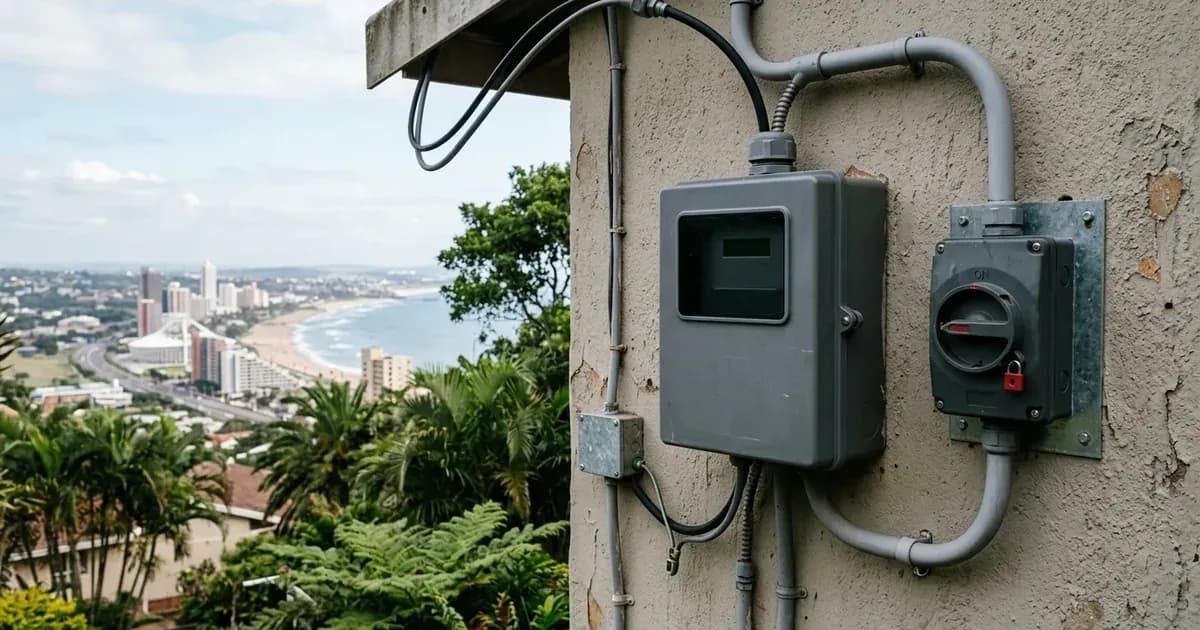
AC Isolation Switch | A lockable double-pole AC isolation switch must be positioned near the consumer distribution board. | Install a clearly marked, lockable isolation switch for safety and maintenance access. |
Surge Arresters | Class I and Class II surge arresters must protect all DC string inputs and main AC distribution panels. | Integrate appropriate surge protection devices to safeguard your system and property from electrical surges. |
Neutral-Earth Bonding Relays | The installation must include automatic neutral-earth bonding relays during off-grid islanding operation. | For hybrid systems capable of off-grid operation, ensure these relays are installed for safety. |
What you can check yourself, and what you cannot
As a homeowner, you can perform initial checks and gather necessary documentation, but the technical installation and certification require accredited professionals.
What you can check yourself:
- Documentation: Ensure you have all equipment datasheets, warranties, and any existing electrical Certificates of Compliance for your property.
- Physical Location: Confirm that there is suitable space for inverters, batteries (if applicable), and the required isolation switches, as specified by your installer.
- System Type: Understand if your system is grid-tied with export, grid-tied with zero-export, or a hybrid system, as this dictates specific requirements.
What you cannot check yourself:
- Electrical Compliance: Only a registered Master Installation Electrician can issue the formal SANS 10142-1-2 CoC and supplemental CoC. Do not attempt to verify electrical wiring or connections yourself.
- Inverter Certification: You cannot certify an inverter. This requires manufacturer certification to NRS 097-2-1 and listing on an approved equipment register.
- Relay Functionality: The proper functioning and certification of reverse power relays or neutral-earth bonding relays must be verified by an accredited professional.
- Surge Arrester Installation: The correct installation and sizing of Class I and Class II surge arresters require electrical expertise.
- Grid Connection Approval: Only City Power can officially approve your installation for connection to the grid.
Always rely on accredited electricians and installers for the technical aspects of your SSEG system to ensure safety and compliance.
What the published sources do not tell you
The provided information outlines key regulatory and equipment standards for SSEG in eThekwini Durban. However, it does not detail the step-by-step application process, specific forms required by City Power, or the exact timeline for approvals. It also does not provide information on the current export tariff rates or the financial mechanisms for bidirectional metering, beyond stating that zero-export systems block unauthorized feed-in.
Specific connection capacity limits, detailed engineering drawing requirements, or the exact process for pre-commissioning checks, insulation resistance testing, and polarity verification are not included. These details often vary and are typically provided by the local utility (City Power) or through an accredited installer familiar with the local procedures. For precise application steps and current tariff information, direct consultation with eThekwini Electricity (Durban) or a local, accredited solar installer is necessary.
```
Frequently asked questions
What are the primary technical requirements for ethekwini durban sseg solar registration and metering guide?
Key requirements include compliance with local grid codes, correct equipment certification, and proper electrical isolation.
Who is authorized to install and inspect ethekwini durban sseg solar registration and metering guide?
All high-voltage DC, AC grid tie-in, and switchboard modifications must be performed by a qualified, accredited electrical professional.
How is export power limited in ethekwini durban sseg solar registration and metering guide?
Export limiting is achieved using certified bidirectional smart meters or power sensors providing dynamic feedback to the inverter system.
References
- Eskom Distribution: Small-Scale Embedded Generators (SSEG) registration and connection requirements — accessed 15 September 2026
Related guides
More from inverter errors & fixes.