Ethekwini Grid Tied Solar Technical Standards And CoC Guide
Updated 15 September 2026 · By SolarNevs Research Desk, Dealer surveys + verified sources · 1 source · Method ↗
Key Takeaways
- All grid-tied and hybrid solar PV installations in eThekwini require official registration and approval by City Power.
- A formal SANS 10142-1-2 Certificate of Compliance (CoC) is mandatory, issued by a Master Installation Electrician.
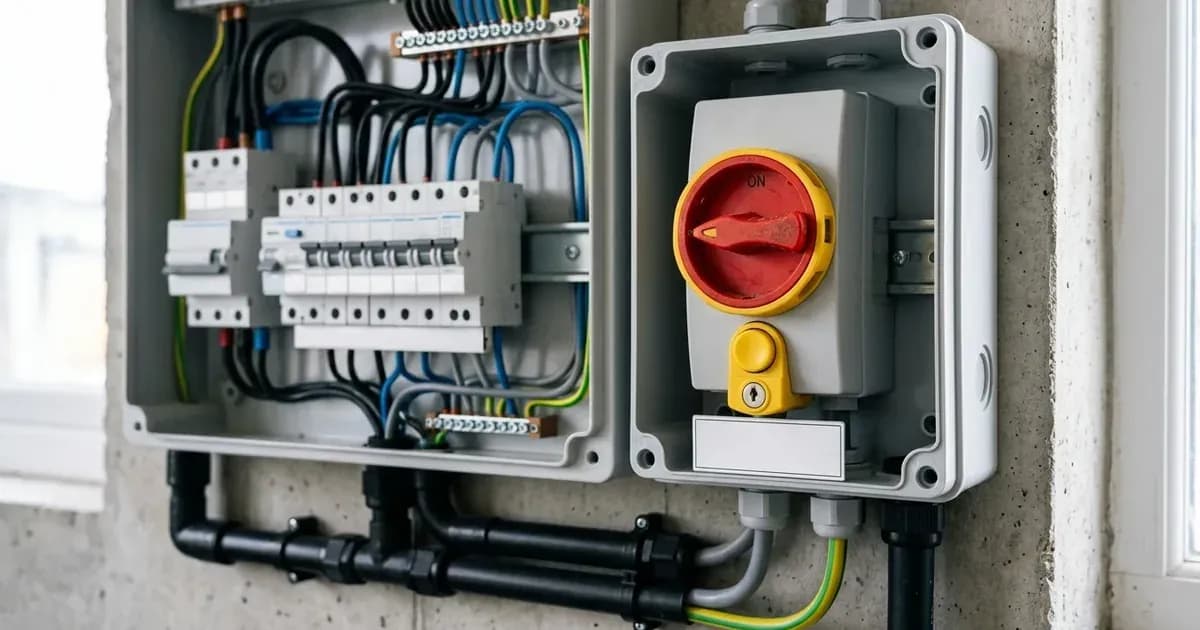
- Essential equipment includes a lockable double-pole AC isolation switch and automatic neutral-earth bonding relays for islanding.
- Embedded generation inverters must be certified to NRS 097-2-1 and listed on an approved register.
Navigating eThekwini's Grid-Tied Solar Regulations
For homeowners and businesses in the eThekwini Municipality considering grid-tied solar, understanding the local technical standards and certification processes is crucial. All grid-tied and hybrid solar PV installations must be officially registered and approved by City Power. This ensures safety, grid stability, and compliance with national electrical codes.
What is actually going on: The Regulatory Framework
The eThekwini Municipality, through City Power, enforces specific technical standards to integrate solar photovoltaic (PV) systems safely and reliably into the electricity grid. These standards are largely based on national South African norms, primarily SANS 10142-1-2 for electrical installations and NRS 097-2-1 for grid interconnection of embedded generation. The core purpose is to prevent unsafe conditions, protect the grid from uncontrolled power injection, and ensure that installations meet a minimum quality threshold.
A key component of this framework is the Certificate of Compliance (CoC). This document confirms that an electrical installation adheres to the safety standards outlined in SANS 10142-1-2. For solar PV systems, this is not a simple tick-box exercise; it involves specific requirements for equipment, wiring, and operational safety.
Essential Requirements for eThekwini Solar Installations
Meeting eThekwini's technical standards involves several specific components and certifications. The following table outlines key requirements:
Requirement | What it means | What to do |
|---|---|---|
Regulatory Standard Compliance | "All grid-tied and hybrid solar PV installations must be officially registered and approved by City Power." | Ensure your installer handles registration with City Power before commissioning. |
Equipment Listing and Safety | "A registered Master Installation Electrician must issue a supplemental SANS 10142-1-2 CoC." | Engage a Master Installation Electrician for design, installation, and certification. |
Overcurrent Protection Sizing | "Embedded generation inverters must be certified to NRS 097-2-1 and listed on the approved equipment register." | Verify your chosen inverter model is NRS 097-2-1 certified and approved for use in South Africa. |
System Rapid Shutdown Architecture | "Zero-export installations must incorporate a certified reverse power relay that blocks unauthorized feed-in." | If your system is designed for zero export, ensure a certified reverse power relay is installed. |
Main Electrical Bonding Standard | "A lockable double-pole AC isolation switch must be positioned near the consumer distribution board." | Install this switch for safe and complete AC disconnection from the grid. |
Commissioning Sign-Off Protocol | "Class I and Class II surge arresters must protect all DC string inputs and main AC distribution panels." | Ensure surge protection devices are installed on both DC and AC sides of the system. |
Circuit Arc-Fault Protection | "The installation must include automatic neutral-earth bonding relays during off-grid islanding operation." | Confirm these relays are part of your hybrid system's design for safe islanding. |
Switchboard Ampacity Rules | "The entire hybrid generating installation must be certified with a formal SANS 10142-1-2 CoC." | The final CoC must cover all aspects of the solar and electrical system. |
Energy Storage Interconnection | "All agricultural solar pumping installations require a valid Certificate of Compliance signed by an electrician." | For agricultural pumping, ensure a CoC is obtained, even if direct-drive. |
System Disconnect Requirements | "The farm microgrid must be inspected and certified under SANS 10142-1-2 by an accredited electrician." | Farm microgrids have specific inspection and certification requirements under SANS 10142-1-2. |
What you can check yourself, and what you cannot
As a homeowner, you can check that your chosen installer is accredited and that they plan to use certified equipment. You can also verify that a Master Installation Electrician will be responsible for issuing the Certificate of Compliance. Ensure that the proposed system design includes a lockable double-pole AC isolation switch and, for hybrid systems, automatic neutral-earth bonding relays.
However, you cannot perform the technical checks yourself. Tasks such as insulation resistance testing, polarity verification, or verifying inverter certification against NRS 097-2-1 require specialized knowledge and equipment. Changing inverter settings yourself is not recommended, as grid-protection settings are set by an accredited installer and altering them can breach the connection agreement and compromise safety. Any work involving opening electrical enclosures or making connections must be done by a qualified and accredited electrician.
What the published sources do not tell you
While the Eskom source provides critical regulatory statements, it does not detail specific sizing methodologies for PV systems, nor does it provide exact wiring diagrams or cable specifications. These aspects are determined by site-specific engineering drawings, local utility connection capacity, and manufacturer equipment ratings.
The source also does not provide a comprehensive list of approved equipment, beyond stating that inverters must be NRS 097-2-1 certified and listed on an approved register. This register is typically maintained by the utility or a national standards body, and its contents can change. Furthermore, the document does not specify precise pre-commissioning checks or insulation resistance testing thresholds, which are part of standard electrical practice but not explicitly detailed in the provided regulatory statements.
Finally, while it mentions "accelerated 100% tax depreciation" for commercial and agricultural solar investments, it does not provide specific tax advice, eligibility criteria, or application procedures for these incentives. For such details, consultation with a tax professional is necessary.
Frequently asked questions
What are the primary technical requirements for ethekwini grid tied solar technical standards and coc guide?
Key requirements include compliance with local grid codes, correct equipment certification, and proper electrical isolation.
Who is authorized to install and inspect ethekwini grid tied solar technical standards and coc guide?
All high-voltage DC, AC grid tie-in, and switchboard modifications must be performed by a qualified, accredited electrical professional.
How is export power limited in ethekwini grid tied solar technical standards and coc guide?
Export limiting is achieved using certified bidirectional smart meters or power sensors providing dynamic feedback to the inverter system.
References
- Eskom Distribution: Small-Scale Embedded Generators (SSEG) registration and connection requirements — accessed 15 September 2026
Related guides
More from inverter errors & fixes.