Eskom Small-Scale Embedded Generation (SSEG) Connection Rules for South Africa
Updated 7 September 2026 · By SolarNevs Research Desk, Dealer surveys + verified sources · 2 sources · Method ↗
Key Takeaways
- All applications to connect small-scale embedded generation (SSEG) to the Eskom grid must be submitted through the Eskom Customer Application Tool (CAT).
- Your inverter must comply with NRS 097-2-1, and the entire installation requires a valid Certificate of Compliance (CoC) under SANS 10142-1.
- Systems designed for zero export must include an Eskom-approved reverse power protection relay, and older pre-paid meters are incompatible with SSEG.
- Eskom customers are responsible for all costs related to network evaluation, metering changes, and connection upgrades.
- All electrical work on grid-connected systems must be performed by a registered electrical contractor.
How to Connect Your Solar System to the Eskom Grid
If you are an Eskom direct-supply customer in South Africa and wish to connect a small-scale embedded generator (SSEG), such as a solar photovoltaic system, to the national grid, you must follow a specific application process. All customers wishing to connect a small-scale embedded generator (SSEG) to the Eskom grid must apply via the Eskom Customer Application Tool (CAT). This online platform is the official channel for submitting your connection request and associated documentation.
The application process through the CAT ensures that your proposed installation meets Eskom's technical and safety standards before it is energised and connected to the distribution network. This is a mandatory step to ensure grid stability and safety for both your property and the wider electricity network.
Understanding Eskom's Technical Requirements for SSEG
Connecting an SSEG system to the Eskom grid involves adherence to specific technical standards and equipment requirements. These are in place to ensure the safe and reliable operation of your system in conjunction with the national grid.
Mandatory Standards and Equipment
Requirement | Technical Specification / Eskom Distribution Rule | What to do |
|---|---|---|
Application Submission | All customers wishing to connect a small-scale embedded generator (SSEG) to the Eskom grid must apply via the Eskom Customer Application Tool (CAT). | Submit your application and all required documents through the official Eskom CAT platform. |
Inverter Certification | Inverters must comply with NRS 097-2-1 and be certified by an accredited testing facility before grid connection approval is granted. | Ensure your chosen inverter model has the necessary NRS 097-2-1 certification. Your installer can provide this documentation. |
Installation Certificate | A valid Certificate of Compliance (CoC) issued by a registered electrical contractor under SANS 10142-1 is mandatory for all solar and storage installations. | Obtain a CoC from a registered electrical contractor for your complete solar and storage installation. This is a legal requirement. |
Zero Export | Systems connecting under zero-export arrangements must incorporate an Eskom-approved reverse power protection relay to guarantee zero backfeed. | If your system is designed not to export power, ensure an Eskom-approved reverse power protection relay is installed and correctly configured. |
Maximum Capacity | Standard single-phase residential SSEG connections are capped according to network capacity, typically up to 4.6kVA. | Consult with your installer to ensure your system's capacity does not exceed the typical 4.6kVA limit for single-phase residential connections. |
Islanding Protection | Inverters must feature automatic anti-islanding protection that disconnects generation within 2 seconds of a grid outage. | Verify that your inverter has automatic anti-islanding protection that meets the 2-second disconnection requirement. This is a critical safety feature. |
Off-Grid Segregation | Pure off-grid systems must maintain complete physical and galvanic separation from the Eskom grid via a certified break-before-make changeover switch. | If you have a purely off-grid system that you might sometimes connect to the grid, ensure it has a certified break-before-make changeover switch for complete separation. |
Safety Labelling | Warning labels indicating dual supply must be affixed to the main distribution board, meter box, and point of common coupling. | Ensure your installer affixes the required dual supply warning labels in the specified locations for safety. |
Essential Equipment and Metering for SSEG
The type of SSEG system you install and whether you intend to export surplus power to the grid will determine the specific metering and protection equipment required.
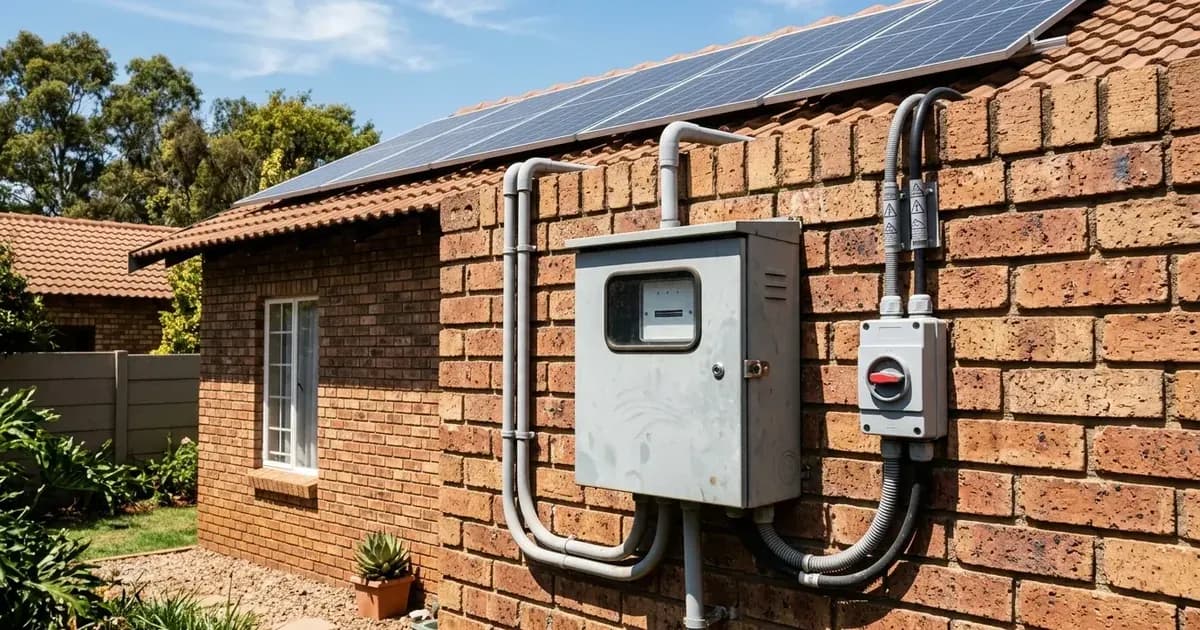
For systems designed to prevent any export of electricity to the grid, an Eskom-approved reverse power protection relay is mandatory. This device ensures that your system does not feed power back into the Eskom network, which is crucial for grid stability and safety.
If you plan to export surplus electricity to Eskom, you will need a dedicated metering point. Exporting customers must have an Eskom-approved four-quadrant bidirectional smart meter installed at the point of supply. This meter accurately measures both the electricity you draw from the grid and the electricity you feed into it.
A significant consideration for many homeowners is their existing pre-paid meter. Older split pre-paid meters will register reverse power export as forward consumption or register a tamper state. For this reason, replacement is mandatory if you are connecting SSEG and have such a meter. This ensures accurate billing and avoids system lockouts.
Tariffs and Costs for Eskom SSEG Customers
Eskom offers specific tariff structures for customers with SSEG installations, particularly those who export power. Eskom offers the Homeflex tariff for residential grid-tied SSEG customers, providing time-of-use pricing and energy export credits. This tariff allows you to potentially earn credits for the surplus electricity you feed back into the grid, based on different time-of-use rates.
It is important to understand that connecting SSEG to the Eskom grid involves certain financial responsibilities. The customer is responsible for all costs associated with network evaluation, metering changes, and point of connection upgrades. These costs can include assessments by Eskom engineers, the installation of new smart meters, and any necessary upgrades to the local network infrastructure to accommodate your system safely.
What You Can Check Yourself, and What You Cannot
As a homeowner, you can take several steps to prepare for and monitor your SSEG installation, but direct electrical work on grid-connected systems must be left to professionals.
You can verify that your chosen inverter is NRS 097-2-1 compliant by asking your installer for the certification documents. You can also ensure that your installer plans to affix the required warning labels indicating dual supply to your main distribution board, meter box, and point of common coupling. If you have an older pre-paid meter, you can anticipate the need for its replacement if you intend to connect SSEG.
However, any work involving the physical connection of your SSEG system to the Eskom grid, or modifications to your main electrical distribution board, must be performed by a registered electrical contractor. A valid Certificate of Compliance (CoC) issued by a registered electrical contractor under SANS 10142-1 is mandatory for all solar and storage installations. This CoC certifies that the installation meets national safety standards and is a legal requirement for grid connection. Attempting to perform this work yourself is dangerous and illegal.
What the Published Sources Do Not Tell You
The Eskom connection rules detailed here apply strictly to Eskom direct supply zones. This means if your electricity is supplied by a municipality, such as City Power in Johannesburg, eThekwini in Durban, or Tshwane, these specific Eskom rules do not apply to you. Municipal electricity distributors maintain separate municipal bylaws and application processes for SSEG connections. You must contact your local municipality directly to understand their specific requirements, which may differ significantly from Eskom's. Official utility documentation does not provide details for any municipal SSEG programmes.
Frequently asked questions
How do I apply to connect SSEG to the Eskom grid?
All customers wishing to connect a small-scale embedded generator (SSEG) to the Eskom grid must apply via the Eskom Customer Application Tool (CAT).
What technical standards must my SSEG inverter meet for Eskom connection?
Inverters must comply with NRS 097-2-1 and be certified by an accredited testing facility before grid connection approval is granted by Eskom.
Do I need a Certificate of Compliance (CoC) for my solar installation with Eskom?
Yes, a valid Certificate of Compliance (CoC) issued by a registered electrical contractor under SANS 10142-1 is mandatory for all solar and storage installations connecting to Eskom.
What happens if I have an older pre-paid meter and want to connect SSEG?
Older split pre-paid meters will register reverse power export as forward consumption or register a tamper state. Replacement is mandatory if you are connecting SSEG to the Eskom grid.
What is the Homeflex tariff for Eskom SSEG customers?
Eskom offers the Homeflex tariff for residential grid-tied SSEG customers, providing time-of-use pricing and energy export credits for those who qualify and have the necessary metering.
References
- Eskom Small Scale Embedded Generation Guide — accessed 27 August 2026
- SANS 10142-1 (Ed 3:2020) — The wiring of premises Part 1: Low-voltage installations (SABS) — accessed 27 August 2026
Related guides
More from sizing, net billing & installation.