City Power Johannesburg SSEG And Battery Peak Shaving Guide
Updated 15 September 2026 · By SolarNevs Research Desk, Dealer surveys + verified sources · 1 source · Method ↗
Key Takeaways
- All grid-tied and hybrid solar PV installations in Johannesburg require official registration and approval from City Power.
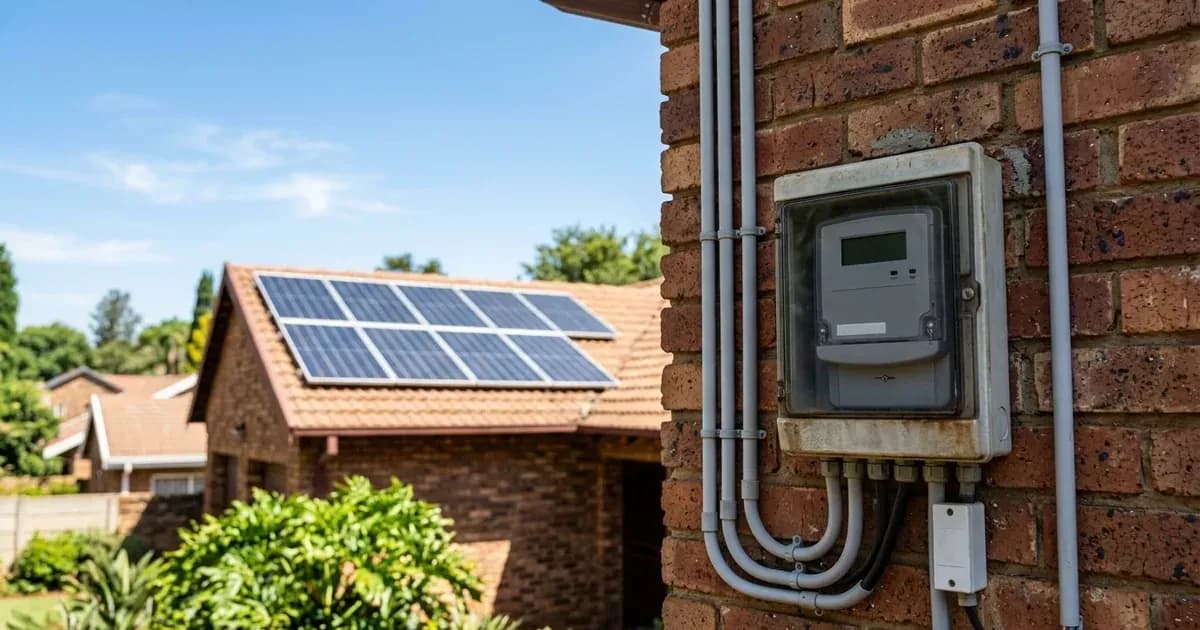
- A bi-directional four-quadrant smart meter is mandatory for accurate measurement of energy flow.
- Your entire installation, including embedded generation, needs a formal SANS 10142-1-2 Certificate of Compliance (CoC).
- Inverters must be certified to NRS 097-2-1 and appear on City Power's approved equipment list.
Navigating City Power Johannesburg's SSEG Requirements
Connecting a solar PV or hybrid system to the municipal grid in Johannesburg requires adherence to specific regulations set by City Power. These rules ensure the safety and stability of the electrical network. This guide explains the key technical and regulatory steps for Small Scale Embedded Generation (SSEG) and how battery systems can help manage electricity costs through peak shaving.
What is actually going on: The Framework for Grid Connection
City Power Johannesburg, as the municipal distributor, operates under its own SSEG Policy and Tariff Schedule. This framework dictates how embedded generation systems, such as solar PV with or without battery storage, can connect to and interact with the local grid. The primary goal is to ensure that any electricity generated on your property does not negatively impact the wider network or pose safety risks.
The technical standards governing these connections include NRS 097-2-1, NRS 097-2-3, and SANS 10142-1-2. These standards cover aspects from inverter certification to the overall electrical installation safety. A critical component of this system is the smart meter, which allows City Power to accurately monitor energy consumption and generation, especially for time-of-use tariffs.
Key Technical Metrics for City Power SSEG
The following table outlines the specific requirements and benchmarks for SSEG installations within City Power's jurisdiction. Each requirement is derived directly from municipal policy or engineering benchmarks.
Parameter | What it means for your installation | What to do |
|---|---|---|
City Power SSEG Registration Mandate | "All grid-tied and hybrid solar PV installations must be officially registered and approved by City Power." | Ensure your installer manages the full registration process with City Power before commissioning. |
Bi-directional Four-Quadrant Smart Metering | This meter measures both import and export of active and reactive power. | City Power will typically install or upgrade your meter as part of the SSEG approval process. Verify your property holds an active prepaid or post-paid account prior to smart meter replacement. |
Time-of-Use Peak Demand Shaving | Using batteries to reduce electricity drawn from the grid during peak tariff periods. | Design your battery system to discharge during peak hours, reducing reliance on the grid when electricity is most expensive. |
NRS 097-2-1 Inverter Standard | "Embedded generation inverters must be certified to NRS 097-2-1 and listed on the approved equipment register." | Select an inverter model that is certified to NRS 097-2-1 and confirmed to be on City Power's approved list. |
SANS 10142-1-2 Certificate of Compliance (CoC) | "The entire hybrid generating installation must be certified with a formal SANS 10142-1-2 CoC." "A registered Master Installation Electrician must issue a supplemental SANS 10142-1-2 CoC." | Ensure your Master Installation Electrician provides a comprehensive SANS 10142-1-2 CoC for the entire system, including the embedded generation components. |
Reverse Power Flow Export Limitation | "Zero-export installations must incorporate a certified reverse power relay that blocks unauthorized feed-in." | If your system is designed for zero export, confirm it includes a certified reverse power relay to prevent unintended grid feed-in. |
Dedicated AC Disconnect Lockable Switch | "A lockable double-pole AC isolation switch must be positioned near the consumer distribution board." | Install a clearly labelled, lockable double-pole AC isolation switch in an accessible location near your main distribution board. This allows for safe isolation of the system. |
Class I/II Surge Protective Devices | "Class I and Class II surge arresters must protect all DC string inputs and main AC distribution panels." | Ensure your installation includes appropriate surge protective devices on both the DC side (solar strings) and the AC side (main distribution panel) to protect against lightning and other surges. |
Neutral-Earth Bonding in Islanded Mode | "The installation must include automatic neutral-earth bonding relays during off-grid islanding operation." | For hybrid systems capable of islanded (off-grid) operation, confirm the inclusion of automatic neutral-earth bonding relays for safety during power outages. |
What you can check yourself, and what you cannot
As a homeowner, you can verify several aspects of your SSEG installation, but certain tasks require a qualified professional.
What you can check yourself:
- Documentation: Ensure you receive a copy of the formal SANS 10142-1-2 CoC for your entire installation.
- Inverter Model: Confirm that your installed inverter model is certified to NRS 097-2-1. You can often find this information on the inverter's datasheet or label.
- Isolation Switch: Visually confirm the presence of a lockable double-pole AC isolation switch near your distribution board. Ensure it is clearly labelled.
- Meter Type: After City Power's intervention, check if your meter has been replaced with a bi-directional smart meter.
What you cannot check yourself (requires an accredited installer or electrician):
- Internal Wiring and Connections: Do not open your distribution board or inverter to inspect internal wiring. This is hazardous and requires a qualified electrician.
- Surge Arrester Functionality: While you can confirm their presence, testing surge arresters requires specialised equipment and knowledge.
- Reverse Power Relay Calibration: The calibration and functionality of a reverse power relay for zero-export systems must be verified by a certified professional.
- Neutral-Earth Bonding Relays: The correct operation of these relays in islanded mode is a critical safety function that only an accredited electrician can test.
- SSEG Registration Status: While you can follow up with City Power, the technical submission and approval process is handled by your installer.
Any work involving opening electrical enclosures, testing live circuits, or modifying grid connection settings must be performed by a registered Master Installation Electrician to ensure safety and compliance.
What the published sources do not tell you
While official documentation provides critical technical and regulatory details, it does not cover every practical aspect of an SSEG installation in Johannesburg.
For instance, the specific process and timelines for City Power's SSEG registration and approval are not detailed. These can vary based on the complexity of the installation and the current workload of the municipal department. The sheet mentions verifying an active prepaid or post-paid account prior to smart meter replacement, but does not elaborate on potential delays or issues if an account is not in good standing.
Furthermore, while "Eskom Megaflex / City Power Tariff Arbitrage" is listed as a parameter, the specific time-of-use tariff rates (e.g., peak, standard, off-peak rates) are not provided. These tariffs are dynamic and published separately by City Power. Understanding these rates is crucial for optimising battery peak shaving strategies. The sheet also does not provide details on the approved equipment register for NRS 097-2-1 certified inverters, which would require consulting City Power's official lists directly.
Finally, the document does not specify the exact requirements for the professional engineer sign-off mentioned for some installations, or the detailed safety protocols for battery room ventilation beyond the general mention of "Safe Battery Room Fire Ventilation." These specifics would typically be found in detailed engineering guidelines or local building codes.
Frequently asked questions
What are the primary technical requirements for city power johannesburg sseg and battery peak shaving guide?
Key requirements include compliance with local grid codes, correct equipment certification, and proper electrical isolation.
Who is authorized to install and inspect city power johannesburg sseg and battery peak shaving guide?
All high-voltage DC, AC grid tie-in, and switchboard modifications must be performed by a qualified, accredited electrical professional.
How is export power limited in city power johannesburg sseg and battery peak shaving guide?
Export limiting is achieved using certified bidirectional smart meters or power sensors providing dynamic feedback to the inverter system.
References
- Eskom Distribution: Small-Scale Embedded Generators (SSEG) registration and connection requirements — accessed 15 September 2026
Related guides
More from inverter errors & fixes.