REC Solar Panels Review Australia: Alpha Pure-R & Heterojunction (HJT)
Updated 19 September 2026 · By SolarNevs Research Desk, Dealer surveys + verified sources · 2 sources · Method ↗
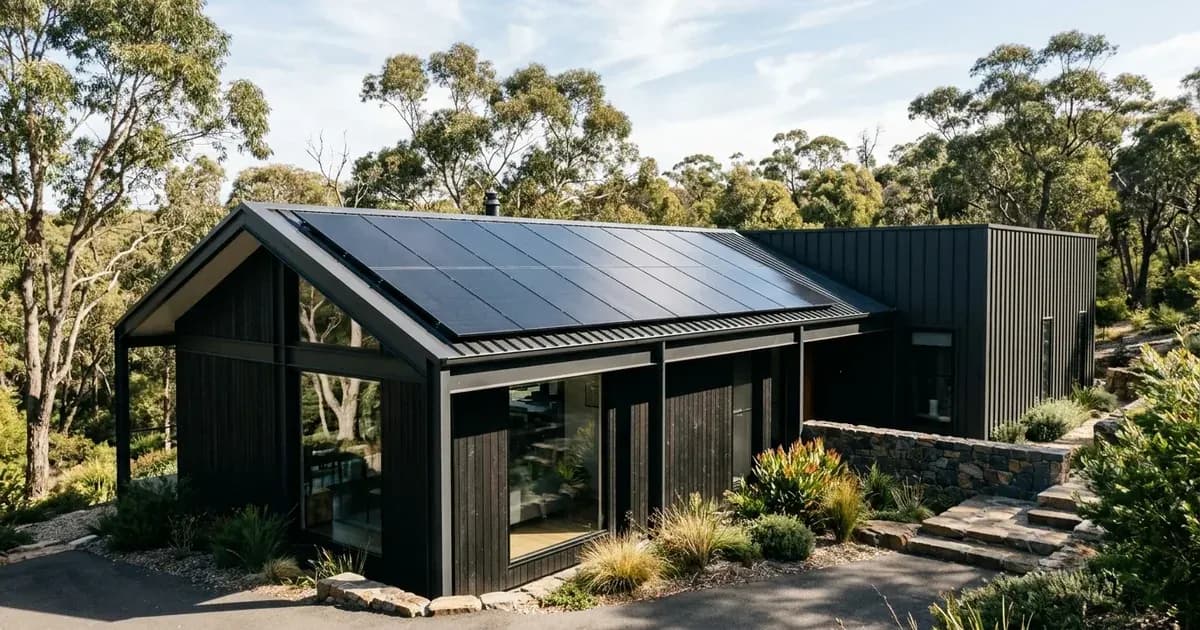
REC Group is widely recognized across the Australian solar industry as a premium benchmark for photovoltaic hardware. Founded in Norway in 1996, the company combines European engineering traditions with advanced, highly automated manufacturing centered in Singapore.
In Australia, REC has built an enviable reputation among accredited installers and discerning homeowners. Its flagship Alpha Pure and Alpha Pure-R series showcase advanced Heterojunction (HJT) cell architecture, class-leading thermal stability, and an exceptionally low annual degradation rate.
Brand Heritage & Tier 1 Ranking
REC Group were ranked on the Bloomberg tier 1 list as of Q4 2020. In utility-scale and commercial development, Bloomberg New Energy Finance (BNEF) Tier 1 classification measures bankability, confirming that institutional financiers have backed major projects using the brand's technology without third-party insurance backing.
Rather than competing in the ultra-low-cost commodity volume segment, REC focuses on high-efficiency, premium-durability modules manufactured in Singapore under strict European quality controls.
Reliability & Australian Operations
In Australia, REC maintains a direct corporate and technical presence based in Melbourne. A local operational footprint provides tangible security under Australian Consumer Law: REC have a very clearly documented process to claim a warranty directly if your solar installer is no longer around to help you.
Regarding third-party testing, REC did not submit panels to the 2024 testing round conducted by PV Evolution Labs (PVEL). Instead, REC conducts extensive internal qualification testing—including testing modules to three times the stringency of standard IEC certification requirements—to validate mechanical wind load tolerance and thermal endurance.
Heterojunction Technology Explained
The core technical differentiator of REC's premium modules is Heterojunction (HJT) cell architecture. The Alpha Pure-R series incorporates half-cut heterojunction solar cells utilising n-type silicon.
HJT technology layers thin films of amorphous silicon on either side of an N-type crystalline silicon wafer. This hybrid structure delivers two major operational advantages:
- Superior Temperature Coefficient: HJT cells experience significantly less power loss as ambient rooftop temperatures rise. During scorching Australian summer heatwaves, REC panels maintain higher operating efficiency than standard P-type or basic TOPCon alternatives.
- Ultra-Low Degradation: N-type HJT silicon is fundamentally immune to light-induced degradation (LID) and potential-induced degradation (PID).
Furthermore, the Alpha Pure series features lead-free construction, complying with European RoHS environmental standards and simplifying eventual recycling.
Product Lineup: Alpha Pure-R vs TwinPeak 5
REC's Australian product portfolio is divided between its flagship HJT line and its high-efficiency monocrystalline platform:
1. REC Alpha Pure-R
The Alpha Pure-R represents REC's apex residential technology. Utilizing 80 half-cut HJT cells, it outputs 410Wp from a compact 1.93 m² footprint. Notably, the Alpha Pure-R operates at a high nominal voltage of 49.4V and a lower operating current, reducing internal resistive thermal losses across the module circuitry.
2. REC TwinPeak 5
The TwinPeak 5 series is REC’s other solar panel model sold in Australia. Built on 132 half-cut P-type monocrystalline cells with multi-busbar technology, the TwinPeak 5 provides a reliable, slightly more accessible price point for homeowners seeking REC build quality without the HJT premium.
Specifications Comparison Table
The following technical data contrasts the electrical and physical parameters of REC's primary Australian module offerings:
Specification Parameter | REC TwinPeak 5 (410Wp) | REC Alpha Pure-R (410Wp) |
|---|---|---|
Cell Architecture | Monocrystalline Cells | Heterojunction Cells |
Cell Layout | 132 half-cut cells | 80 half-cut cells |
Power Output | 410Wp | 410Wp |
Nominal Power Voltage | 38.3V | 49.4V |
Panel Efficiency | 20.8% | 21.2% |
Annual Power Degradation | 0.5% | 0.25% |
Module Dimensions | 1899 x 1040 x 30 mm (1.97 m²) | 1730 x 1118 x 30 mm (1.93 m²) |
Module Weight | 21.6kg | 21.5kg |
Operational Temperature Range | -40°C to 85°C | -40°C to 85°C |
Manufacturing Location | Made in Singapore | Made in Singapore |
Australian Warranties & Durability
REC offers one of the most comprehensive warranty frameworks in the Australian solar sector. Its warranty duration spans 20-25 Years across product lines depending on installer accreditation:
- Product Warranty: Standard installations receive a 20-year product warranty. When installed by an accredited REC Certified Solar Professional, this coverage automatically extends to 25 years, covering manufacturing defects and material failures.
- Performance Warranty: The Alpha Pure-R features an industry-benchmark 0.25% annual power degradation guarantee after year one. This guarantees that at year 25, the panels will still generate at least 92% of their original nameplate power output. In comparison, the TwinPeak 5 guarantees 0.5% annual degradation.
Pricing & Installation Costs in Australia
REC modules occupy the premium tier of the Australian residential solar market. Their advanced HJT cell chemistry, lead-free construction, and Singapore manufacturing result in higher upfront hardware costs compared to mass-market Chinese alternatives.
Based on Solar Choice market indexing across Australian capital cities, average fully installed turnkey costs for systems utilizing REC panels (inclusive of premium inverter, mounting hardware, and installation net of federal STC discounts) are:
- 5kW System: Average fully installed cost of $7,379
- 6.6kW System: Average fully installed cost of $8,547
- 10kW System: Average fully installed cost of $12,860
- 15kW System: Average fully installed cost of $17,482
While the upfront cost is higher, the superior temperature coefficient and 0.25% degradation rate yield higher cumulative kilowatt-hours over a 25-year asset life, especially on roofs with limited usable space.
Rebate Eligibility & Standards Compliance
To qualify for upfront federal financial incentives under the Clean Energy Regulator's Small-scale Renewable Energy Scheme (SRES), residential installations must adhere to mandatory guidelines:
- System Thresholds: Installations must have a capacity less than 100 kW and have a total annual electricity output less than 250 MWh to generate Small-scale Technology Certificates (STCs).
- Accreditation: Installers must list its panels and inverter on the Clean Energy Council list of approved products, confirming all hardware meets Australian and New Zealand electrical safety standards.
- Serial Authentication: To help protect you from purchasing non-genuine solar panels, the Solar Panel Validation Initiative gives you an easy way to check and confirm that solar panels installed on your roof are genuine units validated against manufacturer ledgers.
- STC Financial Offsets: STCs trade on open markets typically between $33 and $38 per certificate, providing an immediate point-of-sale deduction off the invoice.
To compare REC against alternative high-efficiency technologies, explore our SunPower solar panels review Australia and our guide on how to compare solar quotes Australia guide.
Frequently asked questions
What is the warranty period for REC solar panels in Australia?
REC offers a warranty duration of 20 to 25 years. Standard installations carry 20 years, extendable to 25 years when installed by an REC Certified Solar Professional.
How much does an installed REC solar system cost in Australia?
Based on Solar Choice market indexing, average fully installed turnkey costs net of STCs are $7,379 for 5kW, $8,547 for 6.6kW, $12,860 for 10kW, and $17,482 for 15kW.
What is the annual degradation rate of REC Alpha Pure-R solar panels?
The REC Alpha Pure-R features an industry-leading annual power degradation rate of just 0.25% after year one, guaranteeing at least 92% retained output at year 25.
What makes REC Heterojunction (HJT) cells superior in Australian weather?
HJT combines N-type crystalline silicon with amorphous thin films, delivering exceptional thermal coefficients that minimize power loss during intense Australian summer heatwaves.
References
- Solar Choice - REC Solar Panels Independent Review — accessed 28 August 2026
- Clean Energy Regulator - Rooftop Solar SRES Rules — accessed 28 August 2026
Related guides
More from what to buy — and how not to get cheated.