LONGi Solar Panels Review Australia: Hi-MO X6 & HPBC Technology
Updated 19 September 2026 · By SolarNevs Research Desk, Dealer surveys + verified sources · 2 sources · Method ↗
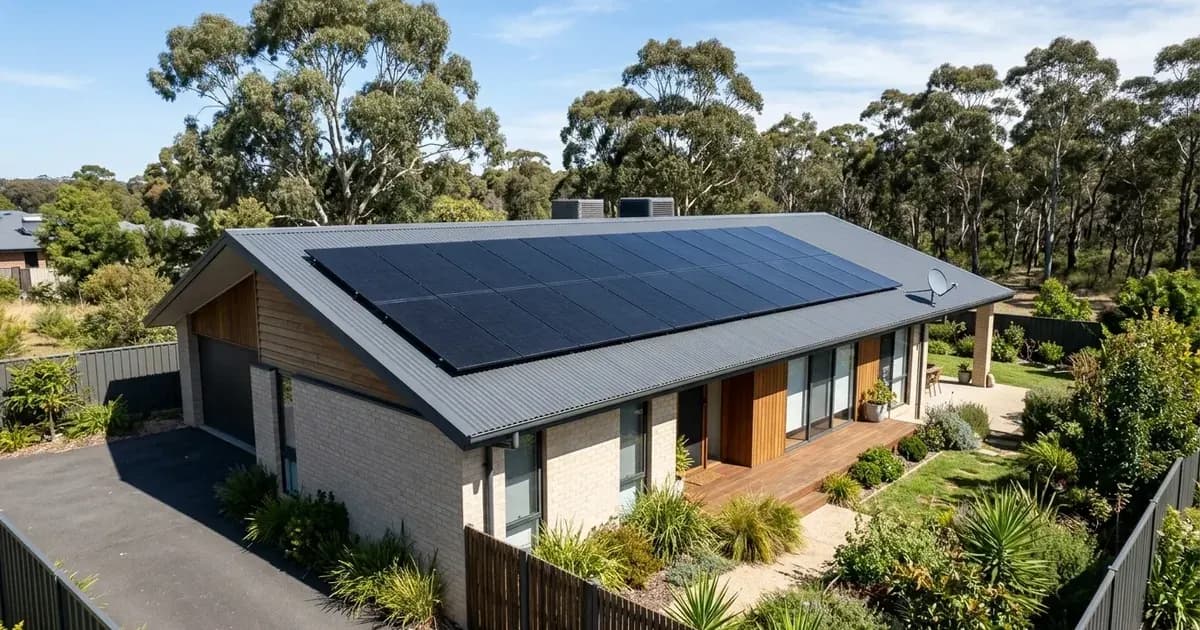
LONGi Solar is one of the dominant forces in the global photovoltaic industry. As the world's leading manufacturer of monocrystalline silicon wafers, LONGi controls the underlying material supply chain from raw ingot production through to finished solar panels.
In Australia, LONGi has transitioned from an entry-level volume player to a technology innovator, highlighted by its Hi-MO 6 and Hi-MO X6 series. Homeowners evaluating Australian solar quotes frequently encounter LONGi modules, making an independent analysis of their cell architecture, warranty terms, and real-world degradation essential.
Bankability & Tier 1 Ranking
LONGi holds a Bloomberg Tier 1 Ranking Tier 1 position. In solar industry procurement, Bloomberg New Energy Finance (BNEF) Tier 1 classification measures financial bankability—confirming that commercial banks have provided non-recourse debt financing for major projects using the manufacturer's modules.
While Tier 1 is not a measure of residential build quality in isolation, it confirms LONGi's substantial scale and balance sheet strength, providing confidence that the manufacturer will remain solvent to honour long-term warranty commitments.
PVEL Reliability Scorecard & Local Australian Support
Beyond theoretical bankability, independent durability testing validates module survivability under accelerated mechanical and thermal stress.
In independent laboratory evaluations, LONGi achieved top performer status across six out of seven tests in the 2024 testing scorecard conducted by PV Evolution Labs (PVEL) with DNV GL support. These tests evaluate resistance against thermal cycling, damp heat exposure, mechanical load, potential-induced degradation (PID), and light-induced degradation (LID).
Furthermore, LONGi maintains a registered Australian subsidiary and technical office located in Sydney. An established domestic presence ensures Australian consumer guarantee protections under Australian Consumer Law remain directly enforceable if an installation company ceases trading.
Technical Cell Architecture: Gallium Doping & HPBC
LONGi's module evolution reflects progressive technological refinements across silicon wafer doping and front-side cell architecture:
1. Gallium Doping for LID Mitigation
Standard P-type silicon wafers historically suffered from light-induced degradation caused by boron-oxygen complexes activating upon initial solar exposure. LONGi uses gallium-doped silicon cells which improves the solar panels resistance to LID. This chemical modification ensures panels maintain higher generation yields throughout their initial operational months.
2. Electrical Current Matching
As cell sizes expanded across the solar industry, higher operational currents created compatibility challenges with older residential inverters. On its Hi-MO 5 series, LONGi increased working current within the panels to ~13amps (from 11amps in earlier generations), optimizing electrical matching with contemporary multi-MPPT string inverters and minimizing inverter clipping.
3. HPBC Back-Contact Technology
LONGi's flagship residential development is Hybrid Passivated Back Contact (HPBC) technology. By relocating all electrical contact ribbons and busbars to the rear of the cell, HPBC eliminates front-side metal grid shading, expands the active light-absorbing surface area, and creates a sleek, uniform black aesthetic on residential rooftops.
Product Portfolio: Hi-MO 6 & Hi-MO X6
The Australian residential lineup centers on the Hi-MO 6 family and its advanced variants:
- Hi-MO 6 (Explorer & Scientist): Balanced residential models featuring front-contact-free cell aesthetics and high conversion efficiency.
- Hi-MO X6: Improves on the standard features with better durability and slightly higher efficiency.
- Hi-MO X6 MAX: Offers the higher performance and efficiency in the series, designed for environments requiring maximum energy output.
Specifications Comparison Table
The following specifications detail the electrical performance across LONGi's residential module tiers:
Parameter | Hi-MO 6 Explorer | Hi-MO 6 Scientist | Hi-MO X6 MAX |
|---|---|---|---|
Panel Efficiency | 22.5% | 23.0% | 23.3% |
Annual Power Degradation | 0.4% | 0.4% | 0.4% |
Product Warranty | 15 Years | 25 Years | 25 Years |
Temperature Coefficient Pmax | -0.290%/°C | -0.290%/°C | -0.280%/°C |
Cell Architecture | Monocrystalline HPBC | Monocrystalline HPBC | Monocrystalline HPBC |
In hot Australian climates, the low temperature coefficient of -0.280%/°C on the Hi-MO X6 MAX ensures minimal thermal derating during peak summer midday temperatures compared to standard panels that derate at -0.35%/°C or higher.
Australian Warranties & Degradation Guarantees
Solar warranties in Australia consist of two separate legal protections: product warranties (covering physical construction defects) and performance warranties (guaranteeing minimum power output over time).
LONGi typically offers 15 years for their product warranty, however some of the Hi-MO 6 panels have a 25 year product warranty. In Australia's competitive rooftop market, a product warranty of 25-years is quickly becoming the norm in the Australian market. Homeowners should verify that their written quotation specifies a model carrying the full 25-year product term rather than the entry 15-year baseline.
Regarding electrical performance, LONGi guarantees that their solar panels will degrade no more than 1% in the first year and then no more than 0.4% for the following 24 years. This guarantees that at year 25, the system continues to generate at least 88.9% of its original rated output.
Pricing & Installation Costs in Australia
LONGi modules are priced competitively within the mainstream tier of the Australian solar market, offering high cell efficiency without the price premium associated with boutique niche brands.
Based on Solar Choice market indexing across Australian capital cities, average fully installed turnkey costs for residential systems utilizing LONGi panels (inclusive of standard inverter, roof mounting, and standard installation net of federal STC discounts) are:
- 5kW System: Average fully installed cost of $5,244
- 6.6kW System: Average fully installed cost of $5,971
- 10kW System: Average fully installed cost of $8,216
- 15kW System: Average fully installed cost of $11,923
Final costs vary depending on roof pitch, tile versus tin mounting brackets, switchboard capacity, and whether the system is paired with a single-phase or three-phase solar inverter.
Rebate Eligibility & Standards Compliance
To qualify for upfront federal financial incentives under the Australian Government's Small-scale Renewable Energy Scheme (SRES), residential installations must satisfy mandatory Clean Energy Regulator (CER) standards:
- System Thresholds: Installations must have a capacity less than 100 kW and have a total annual electricity output less than 250 MWh to generate Small-scale Technology Certificates (STCs).
- Product Accreditation: The installer must list its panels and inverter on the Clean Energy Council list of approved products, confirming that all components meet Australian and New Zealand standards.
- Anti-Counterfeit Checks: To help protect you from purchasing non-genuine solar panels, the Solar Panel Validation Initiative gives you an easy way to check and confirm that solar panels installed on your property are authentic units verified against manufacturer databases.
- STC Value Realization: STCs typically trade between $33 and $38 per certificate on the open market, and are applied as a point-of-sale discount by the solar retailer on the final quote.
To assess how LONGi compares to competing module brands in warranty and thermal performance, explore our guides on Jinko Solar panels review Australia and best solar panels Australia buying guide.
Frequently asked questions
What warranty does LONGi offer on solar panels in Australia?
LONGi typically offers 15 years for their product warranty, however some of the Hi-MO 6 panels have a 25 year product warranty. In Australia, a product warranty of 25-years is quickly becoming the norm in the Australian market.
How much does a LONGi solar system cost in Australia?
Based on Solar Choice market indexing, average fully installed turnkey costs net of STCs are $5,244 for 5kW, $5,971 for 6.6kW, $8,216 for 10kW, and $11,923 for 15kW.
What is LONGi HPBC cell technology?
HPBC stands for Hybrid Passivated Back Contact. By moving all busbars to the rear of the cell, it eliminates front-side metal grid shading and maximizes module efficiency up to 23.3%.
How do LONGi solar panels perform in hot Australian climates?
The Hi-MO X6 MAX features a low temperature coefficient Pmax of -0.280%/°C, ensuring lower thermal output losses during high-temperature summer days compared to standard modules.
References
- Solar Choice - LONGi Solar Panels Independent Review — accessed 28 August 2026
- Clean Energy Regulator - Rooftop Solar SRES Rules — accessed 28 August 2026
Related guides
More from what to buy — and how not to get cheated.