Jinko Solar Panels Review Australia: Tiger Neo & Eagle Compared
Updated 19 September 2026 · By SolarNevs Research Desk, Dealer surveys + verified sources · 2 sources · Method ↗
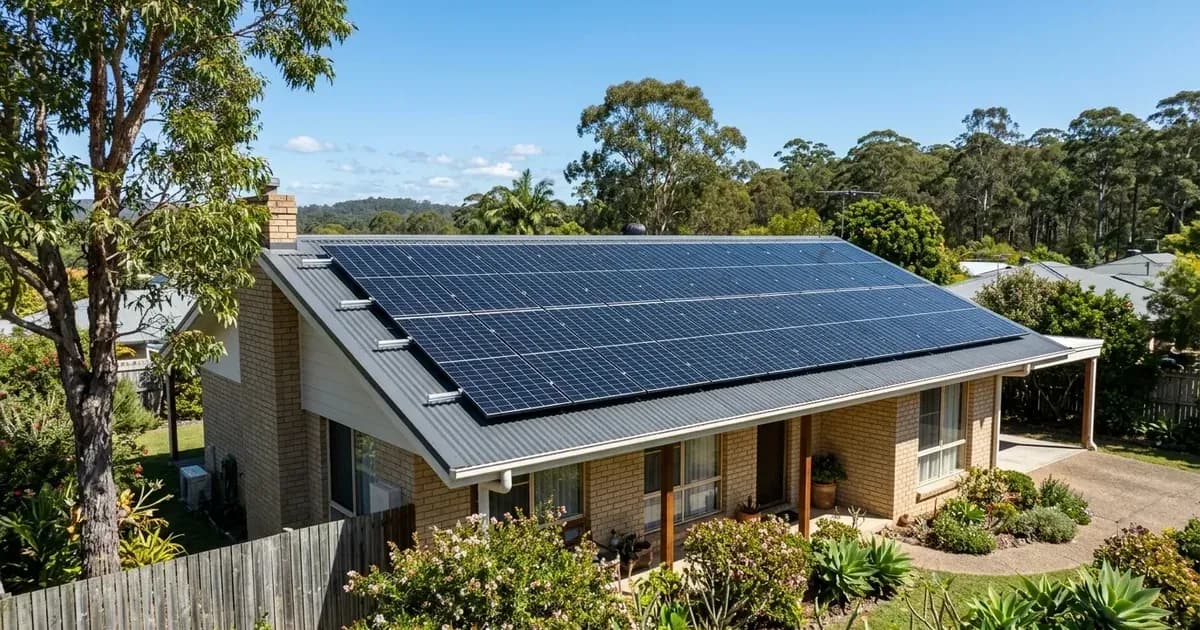
Jinko Solar is one of the most prolific photovoltaic module manufacturers on Australian rooftops. From entry-level suburban installations to multi-megawatt remote commercial arrays, the brand's high-volume production and aggressive pricing have made it a fixture of Australian solar quotes.
However, selecting Jinko requires understanding the technical divergence between its legacy Mono PERC product lines and its contemporary N-type TOPCon offerings, particularly regarding warranty coverage, long-term degradation rates, and local warranty support.
Company Heritage & Australian Operations
Founded in 2006, Jinko Solar, a Chinese enterprise, initially focused on producing silicon wafers. The company quickly evolved into a vertically integrated manufacturer encompassing ingot pulling, wafer slicing, cell manufacturing, and module assembly.
In Australia, Jinko has maintained an established commercial presence for more than a decade. The manufacturer operates an Australian office located in Sydney, providing local customer support and direct warranty processing. Maintaining an active Australian office is crucial for consumers, ensuring statutory consumer rights remain enforceable even if an original retail installer ceases trading.
Bankability & Bloomberg Tier 1 Status
Jinko Solar panels are in the Bloomberg Tier 1. In the solar industry, Bloomberg New Energy Finance (BNEF) Tier 1 status is strictly an indicator of bankability—measuring whether institutional lending banks have financed utility-scale projects using the manufacturer's products without recourse.
While Tier 1 status does not directly measure individual module manufacturing quality or panel durability, it reflects robust financial scale and balance sheet stability, reducing the risk of manufacturer insolvency over the 25-year to 30-year lifetime of a solar asset.
PVEL Independent Reliability Testing
Beyond financial bankability, independent laboratory stress testing evaluates real-world module durability. Jinko Solar panels have consistently been a top performer for the past 10 years, according to the PV Evolution Labs scorecard.
PV Evolution Labs (PVEL), testing in partnership with DNV GL, subjects commercial modules to rigorous accelerated stress sequences. In the 2024 testing scorecard, Jinko achieved top-performer rankings across five out of seven test categories, demonstrating high resilience against thermal cycling, damp heat, mechanical stress, hail impact, and potential-induced degradation (PID).
Product Lineup: Tiger Neo vs Eagle Series
Australian installers primarily quote two distinct Jinko module architectures: the modern Tiger Neo family and the legacy Eagle Series.
1. Tiger Neo Series (N-type TOPCon)
The Tiger Neo line represents Jinko's current flagship residential technology. Built on N-type Tunnel Oxide Passivated Contact (TOPCon) cell architecture, Tiger Neo modules eliminate the boron-oxygen defects that historically caused light-induced degradation (LID) in standard P-type wafers.
Tiger Neo series does offer above average characteristics and is priced a little higher than entry-level alternatives. Module efficiency reaches 20.43% on standard residential formats (and higher on commercial formats), featuring multi-busbar designs that shorten electrical current pathways and reduce internal resistive losses.
2. Eagle Series (Mono PERC)
The Eagle Series represents Jinko's established cost-effective platform. The Eagle Plus module conversion efficiency (up to 18.57%) is boosted by PERC technology, utilizing passivated emitter and rear cell chemistry on P-type monocrystalline silicon. While offering proven reliability, Eagle panels exhibit slightly higher operating temperature derating and greater first-year degradation compared to modern TOPCon cells.
Specifications Comparison Table
The following specifications illustrate the key physical and electrical differences between Jinko's module generations:
Specification Parameter | Legacy Mono PERC (Eagle) | Modern N-type (Tiger Neo) |
|---|---|---|
Cell Architecture | Mono PERC | N-type Monocrystalline |
Panel Efficiency | 19.56% | 20.43% |
Product Warranty | 12 Years | 25 Years |
Operational Temperature Range | -40°C to 85°C | -40°C to 85°C |
Temperature Performance | Standard derating | Enhanced low-light & heat yield |
Australian Warranties & Degradation Curves
When evaluating solar panel warranties in Australia, consumers must distinguish between product warranties (protecting against material and manufacturing defects) and performance warranties (guaranteeing electrical output over time).
Their N-type mono-crystalline solar panels come with a 25-year warranty, while some other models have a 12-year warranty. For residential homeowners, choosing the 25-year product warranty available on the Tiger Neo series is highly recommended, aligning panel protection with premium European and Korean competitors.
In terms of power generation retention, Jinko's N-type modules carry a 30-year performance warranty with an annual degradation rate of only 0.4% after the first year. In contrast, standard PERC models exhibit degradation at 1% in the first year and 0.4% annually until year 30 and a product warranty of 15 years on select commercial lines. Over a 25-year operational life, the lower degradation of N-type silicon yields significantly more cumulative kilowatt-hours under intense Australian ultraviolet irradiance.
Australian Projects & Commercial Field History
Jinko's deployment record in Australia includes harsh desert operating environments. In March 2016, Voyages Ayers Rock Resort saw the commissioning of a substantial 1.8 MW solar system. Jinko Solar played a pivotal role, supplying 1.6MW of EAGLE PID free modules to the project. Operating reliably in Central Australia's high-temperature, high-dust environment demonstrates robust balance-of-system sealing and PID resistance.
Pricing & Installation Costs in Australia
Jinko panels occupy the mid-range value tier in the Australian market, sitting below boutique options like SunPower or REC but offering higher verified testing benchmarks than unbranded entry-level hardware.
Based on national market indexing, average fully installed turnkey costs for residential systems utilizing Jinko panels (inclusive of standard string inverter, roof mounting hardware, and standard single-storey installation net of federal STC discounts) are:
- 5kW System: Average fully installed cost of $4,510
- 6.6kW System: Average fully installed cost of $5,512
- 10kW System: Average fully installed cost of $7,798
- 15kW System: Average fully installed cost of $11,510
Final installed pricing fluctuates depending on whether the system is paired with a budget single-phase inverter or a premium hybrid battery-ready unit, as well as specific switchboard upgrade requirements.
Rebate Eligibility & Standards Compliance
To qualify for federal rebates under the Australian Government's Small-scale Renewable Energy Scheme (SRES), residential solar systems must comply with strict Clean Energy Regulator (CER) standards:
- Capacity Ceilings: Systems must have a capacity less than 100 kW and have a total annual electricity output less than 250 MWh to generate Small-scale Technology Certificates (STCs).
- Product Listing: Installers must list its panels and inverter on the Clean Energy Council list of approved products, confirming that all components meet Australian and New Zealand standards.
- Serial Verification: To help protect you from purchasing non-genuine solar panels, the Solar Panel Validation Initiative gives you an easy way to check and confirm that solar panels installed on your roof are authentic units verified directly against manufacturer ledgers.
- STC Market Value: STCs are assigned to the registered installer at the point of sale, with market value trading typically between $33 and $38 per certificate, providing an immediate discount off the gross invoice total.
Homeowners comparing quotes can cross-reference our guides on how to compare solar quotes in Australia and our comprehensive best solar panels Australia buying guide to evaluate whether Jinko Tiger Neo represents the optimal balance of price and performance for their household energy consumption.
Frequently asked questions
What is the warranty period for Jinko Solar panels in Australia?
Their N-type mono-crystalline solar panels come with a 25-year warranty, while some other models have a 12-year warranty. Performance warranties guarantee 30 years with an annual degradation rate of only 0.4% after the first year.
How much does a Jinko solar system cost in Australia?
Based on Solar Choice indexing, average fully installed turnkey costs net of STCs are $4,510 for a 5kW system, $5,512 for a 6.6kW system, $7,798 for a 10kW system, and $11,510 for a 15kW system.
How did Jinko Solar perform in PVEL independent reliability testing?
Jinko Solar Panels have consistently been a top performer for the past 10 years, according to the PV Evolution Labs, achieving top performer status across 5 tests in the 2024 scorecard.
What is the difference between Jinko Tiger Neo and Eagle series?
Tiger Neo features N-type monocrystalline cells with 20.43% efficiency and a 25-year warranty, while the Eagle Series features Mono PERC with 19.56% efficiency boosted by PERC technology and a 12-year warranty.
References
- Solar Choice - Jinko Solar Panels Independent Review — accessed 28 August 2026
- Clean Energy Regulator - Rooftop Solar SRES Rules — accessed 28 August 2026
Related guides
More from what to buy — and how not to get cheated.