Canadian Solar Panels Review Australia: HiKu & BiHiKu Compared
Updated 19 September 2026 · By SolarNevs Research Desk, Dealer surveys + verified sources · 2 sources · Method ↗
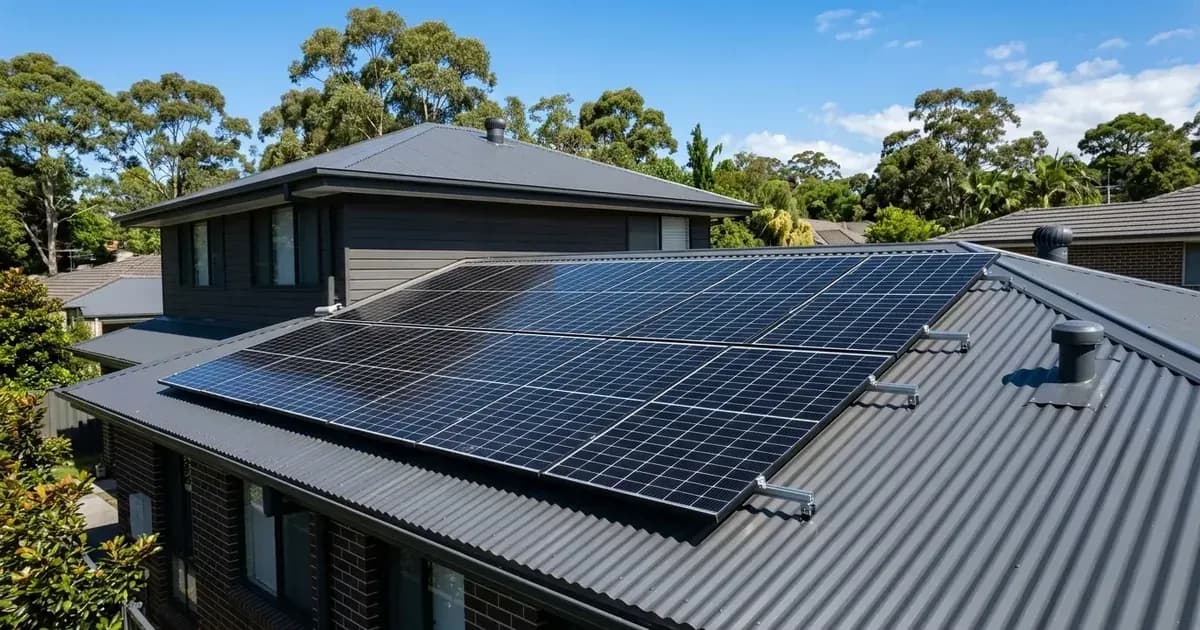
Canadian Solar is one of the most recognized global brands in renewable energy generation. Operating across residential rooftop, commercial and utility-scale sectors in Australia for well over a decade, the brand represents a prominent benchmark for bankable, mid-tier photovoltaic hardware.
For Australian homeowners and commercial property owners comparing solar quotes, understanding Canadian Solar requires evaluating its module series differences—specifically the monofacial HiKu range versus the dual-glass BiHiKu bifacial platform—and assessing its warranty protections under Australian Consumer Law.
Bankability & Tier 1 Ranking
Canadian Solar was listed as a tier 1 panel in the latest Bloomberg NEF report. In the renewable infrastructure sector, Bloomberg New Energy Finance (BNEF) Tier 1 classification measures bankability, confirming that commercial banking institutions have provided non-recourse project finance for large-scale developments using Canadian Solar equipment.
While Tier 1 status evaluates manufacturer balance-sheet strength rather than individual module residential craftsmanship, it indicates financial durability, providing confidence that the manufacturer will remain solvent to honour warranty obligations over the multi-decade lifespan of an installation.
PVEL Reliability Testing & Australian Office
Beyond financial bankability, independent laboratory reliability testing provides objective evidence of module durability under accelerated mechanical, electrical, and thermal stress.
In the 2024 reliability scorecard published by PV Evolution Labs (PVEL), Canadian Solar achieved top performer status across six out of seven test categories. The solar panels were tested via a visual inspection, STC power, electroluminescence, wet leakage and potential induced degradation. This comprehensive testing protocol confirms strong resistance against micro-cracking, moisture ingress, cell delamination, and PID power loss under harsh environmental cycling.
In Australia, Canadian Solar operates a direct technical and customer service office located in Melbourne. Maintaining a local operational presence ensures that warranty claims and technical inquiries can be resolved domestically, protecting consumers even if the original installation entity ceases trading.
Manufacturing Footprint
Founded in Ontario, Canada in 2001, Canadian Solar has diversified its manufacturing footprint across global production hubs. The brand manufactures its module ranges in China, Thailand, and Vietnam, allowing flexible supply chain logistics and compliance with international trade requirements.
Product Lineup: HiKu vs BiHiKu Series
Canadian Solar's Australian market presence is structured around two primary modular architectures:
1. HiKu Monofacial Series
The HiKu family is Canadian Solar's workhorse residential module. Built on half-cut cell architecture with multi-busbar ribbons, HiKu panels reduce resistive cell losses and operate at lower internal temperatures under high solar irradiance. These panels feature an opaque backsheet, making them suitable for standard flush-mounted pitched metal or tiled roofs where rear-side light capture is unavailable.
2. BiHiKu Bifacial Series
The BiHiKu series features a dual-glass bifacial architecture. By incorporating transparent rear glass and bifacial solar cells, BiHiKu captures reflected albedo irradiance from roof or ground surfaces beneath the array. While bifacial gain on standard flush-mounted residential rooftops is minimal, BiHiKu modules excel on commercial tilt-leg frames and light-coloured metal roofs. Furthermore, the dual-glass encapsulation provides superior resistance to moisture permeation and potential-induced degradation.
Specifications Comparison Table
The following technical data illustrates the electrical characteristics of Canadian Solar's commercial and residential module configurations:
Parameter | BiHiKu Bifacial Mono | BiHiKu Bifacial Poly | HiKu Poly PERC |
|---|---|---|---|
Cell Architecture | Mono-crystalline | Poly-crystalline | Poly-crystalline |
Cell Layout | 144 half-cut cells | 144 half-cut cells | 144 half-cut cells |
Power Output | 420Wp | 420Wp | 425Wp |
Nominal Power Voltage | 39.9V | 39.5V | 39.7V |
Panel Efficiency | 18.8% | 18.8% | 19.2% |
Annual Power Degradation | 0.45% | 0.45% | 0.55% |
Product Warranty | 12 years | 12 years | 12 years |
Performance Warranty | 30 years | 30 years | 25 years |
Operational Temperature Range | -40°C to 85°C | -40°C to 85°C | -40°C to 85°C |
Australian Warranties & Durability
When reviewing quotes featuring Canadian Solar, homeowners must distinguish between product and performance warranties:
- Product Warranty: Standard baseline Canadian Solar panels carry a 12 years product warranty covering manufacturing and material defects. Premium residential lines offered by select network partners extend this coverage up to 25 years.
- Performance Warranty: The performance warranty guarantees electrical output over time. Standard monofacial HiKu models carry a 25 years performance warranty with an annual degradation rate of 0.55%. In contrast, dual-glass BiHiKu bifacial modules carry an extended 30 years performance warranty with an annual degradation rate limited to 0.45%, guaranteeing higher retained energy production over three decades.
Pricing & Installation Costs in Australia
Canadian Solar panels sit in the cost-effective, value-oriented segment of the Australian solar market. They deliver high bankability and proven engineering without the premium cost associated with boutique European brands.
Based on Solar Choice market indexing across Australian capital cities, average fully installed turnkey costs for systems utilizing Canadian Solar modules (inclusive of standard inverter, mounting rails, and installation net of federal STC discounts) are:
- 5kW System: Average fully installed cost of $4,803
- 6.6kW System: Average fully installed cost of $6,046
- 10kW System: Average fully installed cost of $8,472
- 15kW System: Average fully installed cost of $12,770
Turnkey costs vary based on site complexity, switchboard compliance upgrades, and whether the system is paired with a standard string inverter or a hybrid battery-ready unit.
Rebate Eligibility & Standards Compliance
To qualify for federal financial incentives under the Clean Energy Regulator's Small-scale Renewable Energy Scheme (SRES), residential installations must adhere to strict regulatory guidelines:
- Capacity Ceilings: Installations must have a capacity less than 100 kW and have a total annual electricity output less than 250 MWh to generate Small-scale Technology Certificates (STCs).
- Accreditation: Installers must list its panels and inverter on the Clean Energy Council list of approved products, confirming all hardware satisfies Australian and New Zealand electrical safety standards.
- Serial Authentication: To help protect you from purchasing non-genuine solar panels, the Solar Panel Validation Initiative gives you an easy way to check and confirm that solar panels installed on your roof are genuine units validated against manufacturer serial databases.
- STC Financial Offsets: STCs trade on open markets typically between $33 and $38 per certificate, providing an upfront point-of-sale deduction that reduces out-of-pocket invoice costs.
To explore how Canadian Solar compares with alternative Tier-1 options, review our Jinko Solar panels review Australia and our LONGi Solar panels review Australia.
Frequently asked questions
What is the warranty period for Canadian Solar panels in Australia?
Standard Canadian Solar modules carry a 12 years product warranty, with premium lines extending to 25 years. Performance warranties guarantee 25 years for monofacial HiKu panels and 30 years for dual-glass BiHiKu bifacial panels.
How much does an installed Canadian Solar system cost in Australia?
Based on Solar Choice market data, average turnkey costs net of STCs are $4,803 for a 5kW system, $6,046 for a 6.6kW system, $8,472 for a 10kW system, and $12,770 for a 15kW system.
What is the difference between Canadian Solar HiKu and BiHiKu panels?
HiKu is a monofacial module designed for standard flush-mounted roofs. BiHiKu is a dual-glass bifacial module that captures light from both sides, suited for commercial tilt frames and carrying an extended 30-year performance warranty.
How did Canadian Solar rank in PVEL reliability testing?
Canadian Solar achieved Top Performer status across 6 out of 7 tests in the 2024 PVEL reliability scorecard, confirming high resistance against thermal cycling, damp heat, and potential induced degradation.
References
- Solar Choice - Canadian Solar Panels Independent Review — accessed 28 August 2026
- Clean Energy Regulator - Rooftop Solar SRES Rules — accessed 28 August 2026
Related guides
More from what to buy — and how not to get cheated.