Australian SWER Line Solar Inverter Synchronisation Guide
Updated 19 September 2026 · By SolarNevs Research Desk, Dealer surveys + verified sources · 1 source · Method ↗
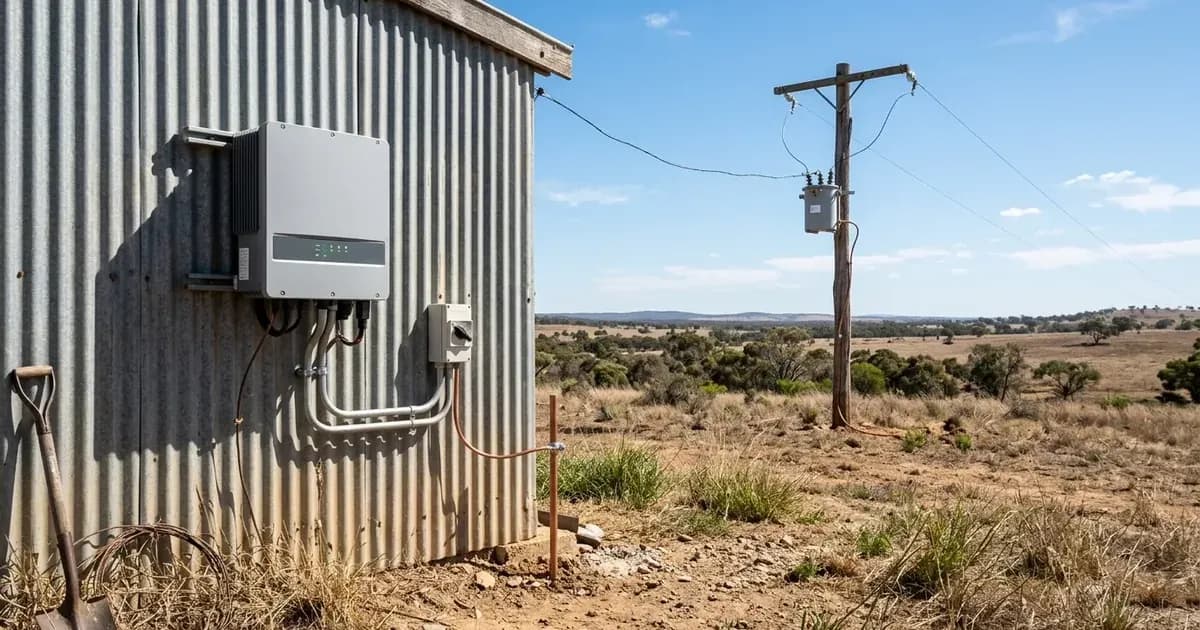
Key Takeaways
- Integrating solar inverters with Single Wire Earth Return (SWER) networks presents specific challenges, primarily related to voltage rise and synchronisation.
- Your local electricity network distributor must be consulted early in the planning process for any solar installation on a SWER line.
- SWER lines have unique electrical characteristics, such as higher impedance, which significantly impact how solar power can be exported to the grid.
- Attempting to modify inverter settings or grid connection without professional guidance can breach connection agreements and compromise safety.
Understanding Solar Inverter Synchronisation on Australian SWER Lines
Integrating solar photovoltaic (PV) systems into Australia's Single Wire Earth Return (SWER) electricity networks requires careful consideration of inverter synchronisation and voltage management. These rural networks, designed for cost-effective power delivery over long distances to sparsely populated areas, present unique electrical characteristics that differ from conventional three-phase grids. The technical scope for solar installations on these lines specifically addresses "Single Wire Earth Return (SWER) rural line solar inverter synchronization and voltage rise management," as noted by the Clean Energy Council.
When a solar inverter connects to the grid, it must synchronise its output with the grid's voltage and frequency. This ensures stable power flow and prevents disruptions. On SWER lines, the inherent electrical properties of the network can complicate this process, leading to potential issues with power quality and grid stability if not properly managed.
The Unique Challenges of Single Wire Earth Return (SWER) Networks
SWER networks are characterised by using a single conductor for the active phase and the earth as the return path for current. This design reduces infrastructure costs but results in higher electrical impedance compared to multi-wire systems. This higher impedance has several implications for solar inverter integration:
- Voltage Rise: When a solar inverter exports power into a SWER line, the current flowing through the line's impedance causes a voltage increase at the point of connection. Due to the higher impedance of SWER lines, this voltage rise can be more pronounced than on conventional grids. If the voltage at the connection point exceeds the limits set by Australian Standard AS/NZS 4777.2, the inverter may automatically disconnect to protect itself and the grid.
- Power Quality: The unique earthing arrangement and higher impedance of SWER lines can lead to greater voltage fluctuations and harmonic distortions, impacting overall power quality. Solar inverters must be able to operate stably within these variable conditions.
- Inverter Synchronisation: For an inverter to export power, it must precisely match the grid's voltage waveform (frequency, phase angle, and amplitude). On SWER lines, the more dynamic voltage environment can make maintaining this synchronisation more challenging, potentially leading to more frequent disconnections or reduced export capacity.
- Limited Export Capacity: Due to the voltage rise constraints, the amount of solar power that can be reliably exported to a SWER line may be limited, even if the inverter's nominal capacity is higher. This is a common issue in rural areas with weak grid connections.
Specialised Equipment and Design Considerations
Given the challenges, integrating solar with SWER lines often requires specialised design and, in some cases, additional equipment. While technical documentation does not specify particular fault codes or universal settings for SWER line integration, general approaches may include:
Engineering Strategy / Equipment | Primary Function on SWER Line | Grid Stability & Power Quality Impact |
|---|---|---|
Export Power Limiting | Restricts active power export ceiling | Prevents line voltage from exceeding AS/NZS 4777.2 disconnect limits |
Reactive Power Voltage Control | Modulates Volt-VAr and Volt-Watt inverter response | Dynamically stabilizes local grid voltage fluctuations under variable load |
Isolation Transformers | Provides galvanic isolation from the SWER earth-return | Mitigates earthing noise and stabilizes the inverter connection interface |
Harmonic Filtering | Suppresses frequency and waveform distortions | Improves power quality across high-impedance rural conductors |
Battery Storage Integration | Absorbs peak solar generation during low-demand periods | Minimizes direct export during midday peaks, avoiding overvoltage curtailment |
- Export Limiting: Inverters can be configured to limit the amount of power they export to the grid, preventing excessive voltage rise. This ensures the system remains connected and stable, even if it means not all generated power can be sent to the grid.
- Voltage Control Functions: Modern inverters often include advanced grid support functions, such as reactive power control, which can help manage local grid voltage. These functions must be configured by an accredited installer according to the network distributor's requirements.
- Isolation Transformers: In some instances, an isolation transformer may be used to provide galvanic isolation between the solar system and the SWER network. This can help mitigate power quality issues and provide a more stable connection point for the inverter.
- Filters: Harmonic filters may be employed to reduce harmonic distortions introduced by the inverter or present on the SWER line, further improving power quality.
- Battery Storage: Integrating battery energy storage can help manage voltage by storing excess solar generation during periods of high production and discharging it when grid demand is higher or solar production is low. This reduces direct export to the SWER line, mitigating voltage rise.
The specific requirements and permissible solutions will vary depending on the local electricity network distributor and the characteristics of the individual SWER line.
What You Can Check Yourself, and What You Cannot
As a solar system owner on a SWER line, there are limits to what you can safely and legally check or modify yourself.
What you can check yourself:
- System Performance Monitoring: You can regularly check your inverter's display or monitoring app for its operational status, power generation, and any reported alerts or fault indicators.
- Basic Visual Inspection: You can visually inspect the area around your inverter and solar panels for any obvious physical damage or obstructions.
- Electricity Bills: Monitor your electricity bills to understand your consumption and export patterns, which can indicate if your system is performing as expected.
What you cannot check or change yourself:
- Inverter Settings: You must never attempt to change grid-protection settings, voltage limits, or export limits on your inverter. These settings are configured by an accredited installer according to the requirements of your electricity network distributor and Australian Standards like AS/NZS 4777.2. Unauthorised changes can breach your connection agreement, compromise grid stability, and create safety hazards.
- Electrical Wiring or Components: Do not attempt to inspect, repair, or modify any electrical wiring, connections, or components of your solar system or the SWER line infrastructure. This work must only be performed by a licensed electrician or an accredited solar installer.
- Network Equipment: Do not interfere with any equipment belonging to your electricity network distributor, including poles, wires, or transformers.
If you suspect an issue with your solar system or its interaction with the SWER line, contact your accredited solar installer or your electricity network distributor. They have the expertise and authorisation to diagnose and resolve such problems safely and compliantly.
What the Published Sources Do Not Tell You
The specific details for integrating solar inverters with Single Wire Earth Return (SWER) networks are complex and highly dependent on local conditions and network operator requirements. While the Clean Energy Council identifies "Single Wire Earth Return (SWER) rural line solar inverter synchronization and voltage rise management" as a technical scope, the publicly available information does not provide:
- Specific Voltage Limits or Trip Thresholds: Australian Standard AS/NZS 4777.2 sets the framework for grid connection, but the precise voltage limits and inverter trip thresholds are not publicly detailed. These are typically configured by your installer based on distributor requirements. Always consult your installer or electricity network distributor for the exact parameters configured for your system.
- Detailed Network Rules for Each Distributor: Australia has numerous electricity network distributors, and each may have specific technical requirements and connection policies for solar systems on SWER lines. These rules are not universally published in a single, accessible source. Your distributor, named on your electricity bill, is the definitive source for these specifics.
- Proprietary Inverter Settings for SWER Optimisation: While inverters have advanced grid support functions, the specific settings or programs for optimising performance on SWER lines are not generally published by manufacturers for end-users. These are part of the accredited installer's expertise and configuration process.
- Specific Fault Codes Related to SWER Line Instability: There are no universally published fault codes directly linking to SWER line-specific instability issues. Inverters will typically report general grid-related faults (e.g., over-voltage, under-frequency) when issues arise.
- Mandatory Equipment Lists for SWER Connections: There is no single, mandatory list of isolation transformers, filters, or other specialised equipment required for all SWER solar installations. The need for such equipment is determined on a case-by-case basis by the network distributor and the accredited installer.
The absence of these specifics underscores the critical importance of engaging with an accredited solar installer who has experience with SWER networks and consulting your local electricity network distributor throughout the planning and installation process.
Frequently asked questions
What is the primary challenge for solar inverters on Australian SWER lines?
The primary challenge involves managing voltage rise and ensuring proper synchronisation of solar inverters with the Single Wire Earth Return (SWER) rural electricity network.
Are there specific rules for connecting solar to SWER lines in Australia?
Yes, connecting solar to SWER lines requires specific design and adherence to local network distributor requirements, which address the unique characteristics of these networks.
What is inverter synchronisation in the context of SWER lines?
Inverter synchronisation refers to the process where a solar inverter matches its output voltage and frequency to the grid's parameters. On SWER lines, this is complicated by higher impedance and voltage fluctuations.
Why does voltage rise occur more significantly on SWER lines with solar?
Voltage rise is exacerbated on SWER lines due to their higher electrical impedance compared to conventional three-phase networks. When solar inverters export power, this impedance causes a greater voltage increase at the connection point.
Who should I consult before installing solar on a SWER line?
Before installing solar on a SWER line, you must consult your local electricity network distributor and an accredited solar installer experienced with SWER network connections.
References
- Clean Energy Council – Compliance Toolkit: Standards — accessed 26 August 2026
Related guides
More from schemes, subsidies & financing.