Best Solar Panels in Pakistan 2026
Updated 2 August 2026 · By SolarNevs Research Desk, Dealer surveys + verified sources · 4 sources · Method ↗
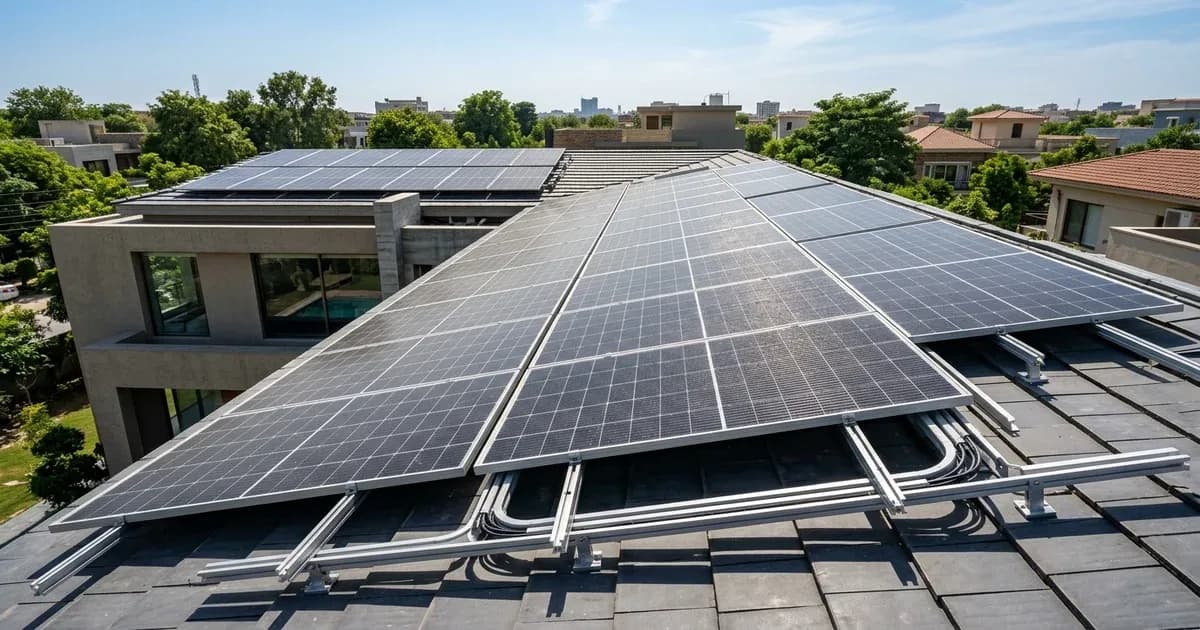
Best Solar Panels in Pakistan 2026
{/* visual_plan: stat_block */}
Key Takeaways
- Tier-1 N-type TOPCon modules dominate the Pakistani market in 2026 with average retail prices from Rs 39 to Rs 46 per watt (July 2026).
- Jinko Solar Tiger Neo and LONGi Hi-MO X7 represent the top choices for high temperature tolerance and cell degradation protection.
- The 10% GST introduced under the Finance Act 2025 is included in standard distribution rates across Lahore, Karachi, and Islamabad.
- Panel efficiency ratings for top modules range between 22.0% and 23.2%, yielding higher output per square meter.
- Selecting verified barcode modules prevents warranty rejections from grey market imports.
Which solar panels are the best in Pakistan for 2026?
The best solar panels in Pakistan for 2026 are Tier-1 N-type TOPCon modules manufactured by Jinko Solar, LONGi Solar, Canadian Solar, JA Solar, and Trina Solar. N-type TOPCon technology has replaced older P-type PERC panels as the industry benchmark across domestic and commercial installations. These modules deliver higher conversion efficiency, lower annual power degradation, and superior performance in high heat environments.
Local buyers evaluate solar panels based on per-watt retail cost, temperature coefficient, and distributor warranty backing. Standard Tier-1 N-type panels retail between Rs 39 and Rs 46 per watt (July 2026). A premium 585W panel costs between Rs 22,815 and Rs 26,910 (July 2026) depending on the exact brand and import documentation.
Brand & Series | Technology | Cell Efficiency | Panel Price (585W) | Per-Watt Rate |
|---|---|---|---|---|
Jinko Tiger Neo | N-Type TOPCon | 22.6% | Rs 25,418 | Rs 43.45 |
LONGi Hi-MO X7 | N-Type TOPCon / HPBC | 23.0% | Rs 26,796 | Rs 45.80 |
Canadian Solar HiKu7 | N-Type TOPCon | 22.5% | Rs 26,680 | Rs 45.60 |
JA Solar DeepBlue 4.0 | N-Type TOPCon | 22.4% | Rs 24,650 | Rs 42.10 |
Trina Vertex N | N-Type TOPCon | 22.5% | Rs 24,657 | Rs 42.15 |
Figures as of July 2026.
How do Jinko Solar and LONGi Solar compare in performance?
Jinko Solar and LONGi Solar hold the largest market share in Pakistan due to extensive distribution channels and consistent product reliability. The Jinko Tiger Neo 585W module uses tunnel oxide passivated contact cell technology to achieve lower degradation rates over a thirty-year operating period. Jinko panels exhibit a temperature coefficient of -0.30% per degree Celsius, preserving generation output during extreme summer heat in Punjab and Sindh.
LONGi Solar Hi-MO series panels focus on structural strength and cell stability. The Hi-MO X7 585W panel incorporates hybrid passivated back contact architecture, reducing front-surface shading loss. LONGi panels maintain an active power warranty guarantee of 87.4% performance at year thirty. Both brands provide strong options, though Jinko typically maintains a slight cost advantage in wholesale distribution markets.
Why is N-type TOPCon technology superior to P-type PERC panels?
N-type TOPCon panels offer three main advantages over legacy P-type PERC panels in the Pakistani climate. First, N-type silicon wafers eliminate light-induced degradation caused by boron-oxygen complexes, preserving maximum output during the first year of operation. P-type panels suffer up to 2% initial loss, whereas N-type panels experience less than 1% initial degradation.
Second, N-type TOPCon modules provide better low-light generation during morning hours and cloudy days. Third, the lower temperature coefficient allows TOPCon modules to generate more kilowatt-hours per installed peak watt during hot summer afternoons when ambient temperatures exceed 40 degrees Celsius. These efficiency gains lower the levelized cost of energy across the installation lifecycle.
What is the cost of top solar panels in major Pakistani cities?
Solar panel retail pricing varies slightly between import hubs like Karachi and regional trade centers like Lahore or Rawalpindi. In Karachi, proximity to sea ports keeps container transport costs minimal, keeping wholesale rates near Rs 39.3 per watt (July 2026). Retail dealers in Lahore, operating out of Hall Road, add small transportation margins, bringing standard 585W module prices to Rs 25,418 (July 2026) for Jinko and Rs 26,796 (July 2026) for LONGi.
Tax compliance also affects final invoice pricing. Under the Finance Act 2025, a 10% general sales tax applies to solar panel import shipments. Verified tax-paid document panels carry full distributor warranty guarantees. Non-documented or grey market panels sell at a discount of Rs 2 to Rs 4 per watt (July 2026), but lack valid local warranty support from official brand representatives.
How to verify authentic Tier-1 solar panels before buying?
Counterfeit and B-grade panels present financial risks to Pakistani consumers. Fraudulent importers sometimes replace serial numbers or re-label lower-wattage modules as premium 585W panels. Buyers can protect their investment by following four verification steps during purchase.
- Check the barcode inside the glass matrix. Authentic Tier-1 modules embed a QR code and serial number directly under the top glass layer during factory lamination. Exterior stickers can be altered, but internal barcodes cannot be tampered with.
- Scan the serial number on the manufacturer's official warranty portal. Brands like Jinko, LONGi, and Canadian Solar provide web portals where buyers can confirm factory origin and test reports.
- Request flash test reports from the distributor. Genuine panels include individual flash test data matching the specific serial number, detailing actual voltage and current output under standard test conditions.
- Inspect frame construction and corner protectors. Authentic Tier-1 modules feature anodized aluminum frames with clean corner joints and uniform silicone sealants.
What factors should guide your solar panel selection?
Selecting the right solar panel requires matching module specifications with site constraints and system requirements. Roof area plays a primary role. High-efficiency modules rated at 22.5% or higher generate more power per square meter, allowing property owners with restricted roof space to maximize total peak system capacity.
System owners must also consider inverter compatibility. Modern high-power panels produce short-circuit currents exceeding 13 amperes. System designers must verify that the selected inverter MPPT tracker supports the module current limits to avoid thermal throttling during peak solar hours.
Finally, local environmental factors like dust accumulation require attention. Anti-soiling glass coatings reduce dust adhesion, helping maintain generation levels between maintenance washing cycles.
Frequently Asked Questions
Which solar panel brand is best in Pakistan for 2026?
Jinko Solar and LONGi Solar lead the Pakistani market in 2026 due to high N-type TOPCon efficiency, established distributor networks, and competitive pricing.
How much do top solar panels cost per watt in Pakistan?
Tier-1 N-type TOPCon solar panels cost between Rs 39 and Rs 46 per watt (July 2026) in local retail markets.
Are bifacial solar panels better for residential rooftops in Pakistan?
Bifacial solar panels provide 5% to 15% additional energy yield on light-colored roofs or elevated frames, though monofacial panels remain standard on dark roofs.
References
Frequently asked questions
Which solar panel brand is best in Pakistan for 2026?
Jinko Solar and LONGi Solar lead the Pakistani market in 2026 due to high N-type TOPCon efficiency, established distributor networks, and competitive pricing.
How much do top solar panels cost per watt in Pakistan?
Tier-1 N-type TOPCon solar panels cost between Rs 39 and Rs 46 per watt (July 2026) in local retail markets.
Are bifacial solar panels better for residential rooftops in Pakistan?
Bifacial solar panels provide 5% to 15% additional energy yield on light-colored roofs or elevated frames, though monofacial panels remain standard on dark roofs.
References
- Solar Citizen — accessed 25 July 2026
- W11Stop — accessed 25 July 2026
- FBR — accessed 25 July 2026
- NEPRA — accessed 25 July 2026
Related guides
More from what to buy — and how not to get cheated.