How to Spot Fake B-Grade Solar Panels in Pakistan
Updated 2 August 2026 · By SolarNevs Research Desk, Dealer surveys + verified sources · 4 sources · Method ↗
How to Spot Fake B-Grade Solar Panels in Pakistan
{/* visual_plan: stat_block */}
Key Takeaways
- Authentic Tier-1 panels embed an immutable barcode under the top glass layer during lamination, preventing serial tampering.
- B-grade panels sell for Rs 3 to Rs 6 per watt (July 2026) below official retail prices of Rs 39 to Rs 46 per watt (July 2026), but lack factory warranty coverage.
- Importers in Lahore and Karachi report that altered exterior stickers are the most common form of retail solar fraud.
- Manufacturer web portals allow buyers to match panel serial numbers with factory flash test output data.
- DISCO inspectors in Pakistan reject net billing applications for systems installed with non-verifiable or grey market serial numbers.
How to spot fake B-grade solar panels in local Pakistani markets?
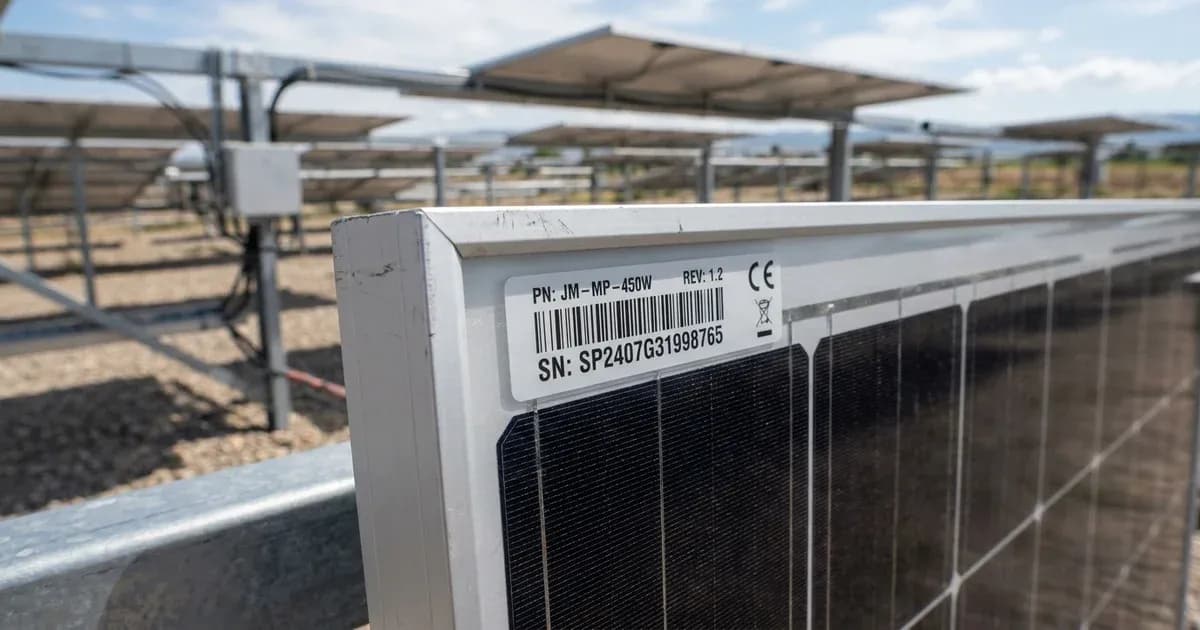
To spot fake B-grade solar panels, buyers must inspect the barcode embedded inside the glass matrix, check frame lamination quality, and verify serial numbers on official manufacturer portals. Fraudulent traders in major electronics markets often take rejected B-grade panels or unbranded modules and affix counterfeit Tier-1 stickers to sell them at inflated rates.
Authentic Tier-1 N-type panels retail between Rs 39 and Rs 46 per watt (July 2026). In contrast, counterfeit or defective B-grade modules are offered at tempting discounts of Rs 3 to Rs 6 per watt (July 2026) below market averages. Identifying physical, electrical, and documentation discrepancies helps buyers avoid purchasing sub-standard panels.
Verification Method | Authentic A-Grade Panel | Fake or B-Grade Panel |
|---|---|---|
Glass Barcode | Encapsulated under glass layer | Sticker applied to exterior glass or backsheet |
Serial Number | Matches factory portal database | Unregistered or duplicate serial number |
Flash Test Data | Complete power and voltage curves | Missing or generic printed sheet |
Busbar Alignment | Straight, solder-free cell contacts | Uneven busbars, solder splashes, alignment drift |
Frame Seals | Clean corner joints with structural silicone | Gap-filled corners with loose rubber gaskets |
What is the difference between A-grade, B-grade, and re-labeled solar panels?
A-grade solar panels pass all factory quality control tests, including electroluminescence imaging and flash testing under standard laboratory conditions. These modules deliver their rated power output within tight tolerances and carry full 12-to-15 year product warranties alongside 30-year linear performance guarantees.
B-grade panels exhibit minor defects during manufacturing, such as cell color mismatching, micro-cracks, or power output variance exceeding 3%. Manufacturers sell B-grade stock at liquidations without official warranty backing. Re-labeled panels represent outright fraud, where sellers change the nameplate sticker of a 540W panel to claim a 585W rating.
How does the inside-glass barcode protect buyers from fraud?
The inside-glass barcode serves as the primary anti-counterfeiting measure for Tier-1 solar manufacturers like Jinko, LONGi, Trina, and JA Solar. During assembly, the factory places a barcoded serial slip directly between the EVA encapsulant layer and the front tempered glass sheet before lamination.
Because lamination fuses the glass, EVA, and solar cells into a single sealed unit, removing or replacing the internal barcode without destroying the panel is impossible. If a panel only has a paper sticker on the backsheet or outer frame without a matching barcode behind the front glass, the panel is likely counterfeit or re-labeled.
How to verify solar panel serial numbers on official manufacturer portals?
Leading Tier-1 solar brands maintain online serial verification portals accessible to distributors and retail buyers. Consumers can verify panel origin by entering the serial number printed on the internal barcode or scanning the QR code with a smartphone camera.
First, locate the unique 16-to-18 digit serial number inside the top left corner of the module glass. Second, visit the manufacturer verification page. Third, input the serial number to view factory manufacturing records. The portal will display the exact model number, production date, wattage output, and destination country. If the portal returns an invalid result or shows a different destination market, the module may be grey market stock or a counterfeit product.
Why are flash test reports essential for high-capacity installations?
A flash test report documents the precise electrical parameters of a solar module recorded under standard test conditions of 1000 watts per square meter irradiance at 25 degrees Celsius. Authentic Tier-1 distributors supply flash test sheets linked directly to panel serial numbers.
Flash test reports verify short-circuit current, open-circuit voltage, and maximum power output. Defective B-grade panels often show voltage drops under load tests, reducing total energy yield when connected in series strings. Verifying flash test reports prevents mismatch losses across solar inverter strings.
How do grey market panels impact warranty claims and net billing?
Grey market panels are genuine panels imported through unauthorized channels without paying applicable customs duties or sales taxes. Under the Finance Act 2025, official imports carry a 10% general sales tax. Unofficial imports bypass official Pakistani distributors, resulting in lower retail prices but creating major warranty liabilities.
When a grey market panel suffers diode failure or cell degradation, official Pakistani warranty centers reject claim requests. In addition, electric distribution companies like LESCO, K-Electric, and IESCO check equipment serial numbers during net billing inspections under NEPRA regulations. DISCO inspectors reject net billing applications if serial numbers fail verification checks.
Frequently Asked Questions
What is the difference between A-grade and B-grade solar panels?
A-grade panels meet full factory flash test specifications without physical or electrical defects, while B-grade panels exhibit cell micro-cracks, color variations, or lower power output.
How can I verify if my solar panel serial number is genuine?
Scan the QR code or enter the 16-to-18 digit serial number on the manufacturer's official verification portal, such as Jinko, LONGi, or Canadian Solar.
Why are B-grade solar panels sold cheaper in Pakistan?
B-grade panels are sold at Rs 3 to Rs 6 per watt (July 2026) below standard Tier-1 rates because factories reject them for official warranty support.
References
Frequently asked questions
What is the difference between A-grade and B-grade solar panels?
A-grade panels meet full factory flash test specifications without physical or electrical defects, while B-grade panels exhibit cell micro-cracks, color variations, or lower power output.
How can I verify if my solar panel serial number is genuine?
Scan the QR code or enter the 16-to-18 digit serial number on the manufacturer's official verification portal, such as Jinko, LONGi, or Canadian Solar.
Why are B-grade solar panels sold cheaper in Pakistan?
B-grade panels are sold at Rs 3 to Rs 6 per watt (July 2026) below standard Tier-1 rates because factories reject them for official warranty support.
References
- Solar Citizen — accessed 25 July 2026
- W11Stop — accessed 25 July 2026
- FBR — accessed 25 July 2026
- NEPRA — accessed 25 July 2026
Related guides
More from what to buy — and how not to get cheated.