Electricity Slab Tariffs Explained + How Solar Changes Your Slab
Updated 2 August 2026 · By SolarNevs Research Desk, Dealer surveys + verified sources · 4 sources · Method ↗
Electricity Slab Tariffs Explained + How Solar Changes Your Slab
{/* visual_plan: stat_block */}
Key Takeaways
- NEPRA net billing framework (July 2026) establishes a buyback export tariff of Rs 11 (July 2026) per kWh.
- Unprotected residential grid imports cost between Rs 50 and Rs 65 (July 2026) per kWh.
- Pairing solar with lithium battery storage optimizes evening peak shaving and shortens payback to ~3.2 years.
- All net billing applications require AEDB-certified installer documentation and official DISCO clearance.
Introduction
Understanding the net billing regulations and DISCO processes in Pakistan is essential for optimizing solar investment returns under the 2026 NEPRA policy framework.
How do residential electricity tariff slabs work in Pakistan?
Residential electricity tariffs in Pakistan operate on a progressive slab structure established by NEPRA and enforced across LESCO, MEPCO, FESCO, IESCO, GEPCO, and K-Electric. Under this framework, consumers are divided into two main categories - Protected Consumers and Unprotected Consumers.
The fundamental distinction lies in monthly unit consumption. Protected consumers maintain monthly consumption under 200 kilowatt-hours (units) for six consecutive months. Unprotected consumers exceed 200 units in any single billing cycle. Once a household crosses into the unprotected category, higher base unit tariffs apply across all consumed units, accompanied by increased Fuel Price Adjustments (FPA), Electricity Duty, and General Sales Tax.
What are the specific per-unit rates across protected and unprotected slabs?
Comparing protected and unprotected tariff slabs illustrates why utility bills increase dramatically when consumption exceeds the 200-unit threshold.
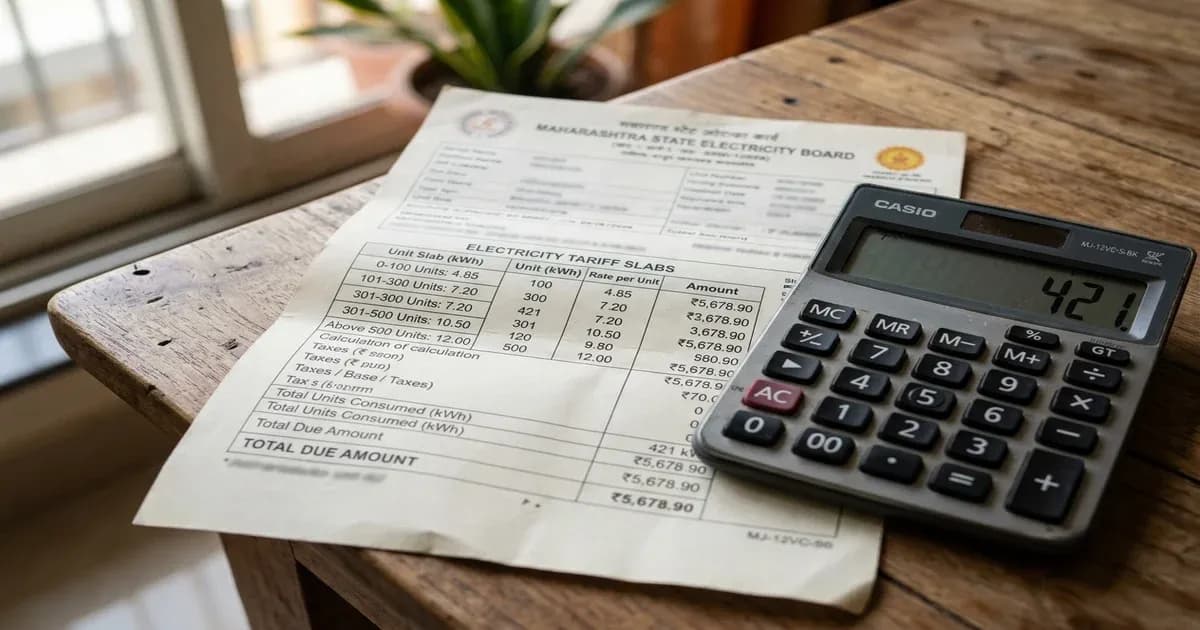
Residential Tariff Slab Breakdown.
Slab Category | Monthly Unit Range | Base Rate Range | Total Effective Rate with Taxes & FPA |
|---|---|---|---|
Protected Slab 1 | 1 - 100 Units | Rs 14 / kWh | Rs 20 / kWh |
Protected Slab 2 | 101 - 200 Units | Rs 22 / kWh | Rs 29 / kWh |
Unprotected Slab 1 | 1 - 100 Units | Rs 35 / kWh | Rs 48 / kWh |
Unprotected Slab 2 | 101 - 200 Units | Rs 40 / kWh | Rs 54 / kWh |
Unprotected Slab 3 | 201 - 300 Units | Rs 45 / kWh | Rs 60 / kWh |
Unprotected Upper | 301+ Units | Rs 50 / kWh | Rs 65 / kWh |
Figures as of July 2026.
Moving from Protected Slab 2 into Unprotected Upper slabs doubles your effective cost per unit from Rs 29 to Rs 65 (July 2026) per kWh.
How does installing rooftop solar drop your household into a lower slab?
Installing a residential solar system directly reduces the volume of electricity imported from the utility grid. A typical 5kW or 10kW solar system generates daytime power to meet household loads, power inverter air conditioners, and charge lithium battery storage.
By self-consuming solar power, a household that previously imported 700 units per month from the grid can reduce its monthly grid imports to under 150 units. Maintaining grid imports below 200 units for six consecutive months allows the household to re-qualify for Protected Consumer status.
This shift delivers compound savings - not only do you import fewer units, but the remaining units you do import are billed at the lower protected rate of Rs 20 to Rs 29 (July 2026) per kWh rather than Rs 65 (July 2026) per kWh.
What additional taxes and surcharges are reduced when your slab drops?
Utility bills in Pakistan include several secondary taxes and surcharges calculated as percentages of the base energy bill. Lowering your tariff slab reduces these secondary charges proportionately.
Secondary Taxes Reduced by Solar Generation.
- Fuel Price Adjustment (FPA) - Variable monthly surcharge applied per imported unit. Lower import unit volume directly reduces FPA charges.
- General Sales Tax (GST) - Charged at 18% on total energy bill value. Reducing base bill value reduces absolute GST paid.
- Electricity Duty - State tax charged on energy consumption.
- TV Fee - Fixed monthly utility surcharge.
What strategy should prosumers follow to maximize slab reduction benefits?
To maximize slab reduction benefits under 2026 net billing rules, follow an integrated load management strategy.
- Size Solar Array to Cover Daytime Load - Ensure solar generation fully powers daytime appliances and air conditioning.
- Install Lithium Battery Storage - Use a 10kWh battery bank to shift stored solar power to evening peak hours, preventing grid imports during high-tariff periods.
- Monitor Grid Import Volume - Track green meter Code 01 imports monthly to ensure grid imports remain below 200 units.
- Maintain Off-Peak Usage Habits - Run high-wattage heavy loads during peak solar generation hours.
Frequently Asked Questions
What is the difference between protected and unprotected electricity slabs in Pakistan?
Protected consumers maintain monthly consumption under 200 units for 6 consecutive months and pay lower base rates of Rs 14 to Rs 22 (July 2026) per kWh. Unprotected consumers exceeding 200 units pay higher base rates of Rs 35 to Rs 50 (July 2026) per kWh plus full taxes and Fuel Price Adjustments (FPA).
How does installing solar panels change your electricity tariff slab?
Rooftop solar reduces grid electricity imports below the 200-unit monthly threshold, allowing your household to re-qualify for protected consumer tariff status and lower unit rates.
What is the total per-unit cost of electricity in unprotected residential slabs?
When including base tariffs, Fuel Price Adjustments (FPA), Electricity Duty, and GST, total per-unit costs in unprotected slabs range from Rs 50 to Rs 65 (July 2026) per kWh.
References
Frequently asked questions
What is the difference between protected and unprotected electricity slabs in Pakistan?
Protected consumers maintain monthly consumption under 200 units for 6 consecutive months and pay lower base rates of Rs 14 to Rs 22 (July 2026) per kWh. Unprotected consumers exceeding 200 units pay higher base rates of Rs 35 to Rs 50 (July 2026) per kWh plus full taxes and Fuel Price Adjustments (FPA).
How does installing solar panels change your electricity tariff slab?
Rooftop solar reduces grid electricity imports below the 200-unit monthly threshold, allowing your household to re-qualify for protected consumer tariff status and lower unit rates.
What is the total per-unit cost of electricity in unprotected residential slabs?
When including base tariffs, Fuel Price Adjustments (FPA), Electricity Duty, and GST, total per-unit costs in unprotected slabs range from Rs 50 to Rs 65 (July 2026) per kWh.
References
- NEPRA — accessed 25 July 2026
- LESCO — accessed 25 July 2026
- Solar Citizen — accessed 25 July 2026
- W11Stop — accessed 25 July 2026
Related guides
More from sizing, net billing & installation.