Esb Networks Nc7 Mini Generation Connection Application Guide
Updated 19 September 2026 · By SolarNevs Research Desk, Dealer surveys + verified sources · 1 source · Method ↗
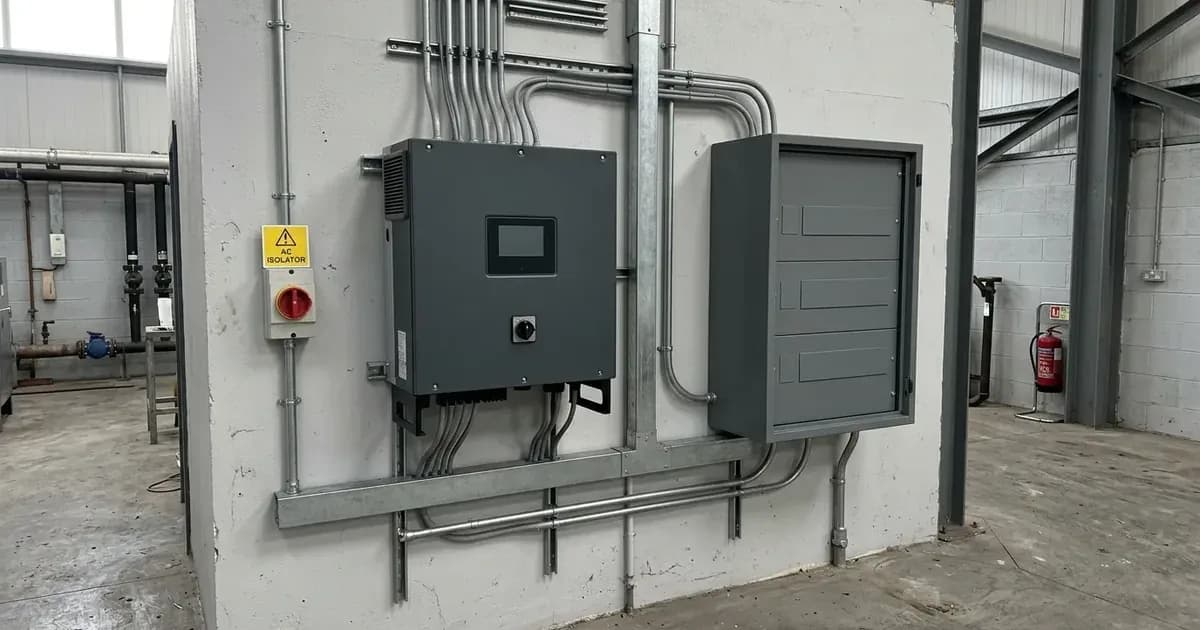
<!-- visual_plan -->
Key Takeaways
- Mini-generation applies to inverter installations between 6 kVA to 17 kVA on single-phase connections and 11 kVA to 50 kVA on three-phase supplies.
- The Maximum Export Capacity (MEC) is not permitted to be greater than the Maximum Import Capacity (MIC) for the premises.
- An application is only deemed complete when the associated application fee invoice has been paid within 30 days payment terms.
- Technical review and connection offer issuance average 8 to 10 weeks from payment of the application fee.
- Inverters must hold accredited type test certification proving compliance with standard EN 50549-1:2019.
- Following installation, the confirmation certificate must be submitted no longer than twelve months from the offer issue date.
What is Mini-Generation under ESB Networks Rules?
In the Irish electricity distribution system, mini generation is the term for when an electricity customer installs inverter connected generation, within the range covered in the definition below, at a premises, to produce electricity. These systems bridge the gap between domestic micro-generation and large commercial generation plants. As ESB Networks specifies, these generators are generally installed to produce clean electricity, targeting high on-site self-consumption to displace commercial retail purchases.
Connection Specification | Single-Phase Supply | Three-Phase Supply |
|---|---|---|
Current Threshold | 25 A to 72 A | 16 A to 72 A |
Capacity Range | 6 kVA to 17 kVA | 11 kVA to 50 kVA |
Maximum Export Limit | Must not exceed premises MIC | Must not exceed premises MIC |
Equipment Standard | EN 50549-1:2019 type test | EN 50549-1:2019 type test |
Statutory capacity ranges for mini-generation are defined as follows:
- Single-Phase Connections: 25 amperes (6kVA) to 72 amperes (17kVA), when the connection is single-phase.
- Three-Phase Connections: 16 amperes (11kVA) to 72 amperes (50kVA), when the connection is three-phase.
All installations must adhere to the technical document, Conditions governing connection operation mini-generation. Systems incorporating dynamic export curtailment must additionally satisfy Conditions Governing the Connection and Operation of Export Limiting Scheme at LV and MV.
Sizing Rules: MEC and MIC Interlocking
Commercial premises in Ireland must navigate strict capacity interlocking when sizing solar PV arrays:
- Capacity Ceiling: For Mini-generation connections, the Maximum Export Capacity (MEC) is not permitted to be greater than the Maximum Import Capacity (MIC).
- Statutory Definition: The Maximum Export Capacity (MEC) is defined as the maximum power, expressed in kVA, that is permitted by ESB Networks to transfer from the Customer’s Point of Connection to the Distribution System Operator (DSO) Network.
- MIC Adjustment: If a commercial business requires an export capacity higher than its existing import capacity, an MIC increase application must be processed in parallel.
Application Workflow and Technical Documentation
Connecting mini-generation requires formal engineering review via Form NC7 rather than the informal inform-and-fit process used for residential solar:
- Submission Requirements: Applicants submit the NC7 form accompanied by an equipment block diagram, manufacturer datasheets, and type test certificates proving equipment is compliant with standard EN 50549-1:2019. Hand-drawn SLD's will not be accepted.
- Fee Invoicing and Payment Terms: The application is reviewed commercially and a non-refundable invoice (inclusive of VAT at 23%) will issue within 10 business days. Crucially, an application is only deemed complete when the associated application fee invoice has been paid. If payment is not received within the 30 days payment terms, your application will be deemed withdrawn and you will need to reapply.
- Assessment Turnaround: On receipt of payment, ESB Networks conducts a distribution network study. The average timeframe for the connection offer documents to issue is 8 to 10 weeks from payment of the application fee.
Commissioning, Confirmation, and Islanding Safety
Once the connection offer is accepted and solar equipment installed:
- Post-Installation Certificate: The customer must submit the mini-generation installation confirmation certificate as soon as the generator is connected and no longer than twelve months from the issue date on the connection offer documentation.
- Islanding and Outage Protection: Mini-generators are engineered to automatically switch off during power cuts. For facilities requiring backup power during outages, this is a safety requirement under the NSAI Wiring Regulations and requires a changeover switch to isolate internal circuits from the distribution grid.
Frequently asked questions
What generation capacities qualify for Form NC7 mini-generation in Ireland?
Mini-generation covers inverter installations between 25A (6kVA) to 72A (17kVA) single-phase, and 16A (11kVA) to 72A (50kVA) three-phase.
Can Maximum Export Capacity (MEC) exceed import capacity under NC7?
No, under ESB Networks rules, the Maximum Export Capacity (MEC) is not permitted to be greater than the Maximum Import Capacity (MIC).
What is the processing timeframe for an NC7 connection offer?
The average timeframe for connection offer documents to issue is 8 to 10 weeks from payment of the application fee.
How long does an applicant have to submit the installation confirmation certificate?
The completed NC7-01-R1 confirmation certificate must be submitted as soon as connected and no longer than twelve months from the connection offer issue date.
References
- ESB Networks Mini-Generation Connection Guidance — accessed 28 August 2026
Related guides
More from schemes, subsidies & financing.