Ireland Building Regulations Part L Dwellings NZEB Solar PV Guide: Compliance for New Builds and Major Renovations
Updated 18 September 2026 · By SolarNevs Research Desk, Dealer surveys + verified sources · 2 sources · Method ↗
Key Takeaways
- Ireland's S.I. No. 183 of 2019 introduced the European Union (Energy Performance of Buildings) Regulations 2019, effective from 1 November 2019.
- These regulations define a Nearly Zero-Energy Building (NZEB) as one with very high energy performance, significantly covered by renewable sources.
- A major renovation is defined as one where more than 25% of the building envelope surface undergoes renovation.
- Compliance is assessed using the Dwelling Energy Assessment Procedure (DEAP), and technical guidance documents provide prima facie compliance.
Understanding Ireland's Part L Building Regulations for Dwellings
Ireland's building regulations, specifically Part L, govern the energy performance of residential dwellings. These regulations ensure that new builds and major renovations meet stringent energy efficiency standards, aligning with the Nearly Zero-Energy Building (NZEB) mandate. For you, this means that any new home construction or significant upgrade must integrate energy-saving measures, including the consideration of on-site renewable energy sources like solar PV.
The primary legislative instruments are the European Union (Energy Performance of Buildings) Regulations 2019, cited as S.I. No. 183 of 2019, and the European Union (Energy Performance of Buildings No. 2) Regulations 2019, cited as S.I. No. 292 of 2019. These regulations came into operation on 1 November 2019.
What is a Nearly Zero-Energy Building (NZEB)?
The concept of a Nearly Zero-Energy Building (NZEB) is central to Ireland's Part L regulations. An NZEB is defined as a building that has a very high energy performance. The nearly zero or very low amount of energy required should be covered to a very significant extent by energy from renewable sources, including energy from renewable sources produced on-site or nearby.
Renewable sources, as defined by the regulations, encompass a broad range of non-fossil options. These include wind, solar, aerothermal, geothermal, hydrothermal, and ocean energy. Hydropower, biomass, landfill gas, sewage treatment plant gas, and biogases are also classified as renewable energy sources. This broad definition allows for various approaches to meeting the NZEB requirement, with solar PV being a prominent on-site solution.
Major Renovations and Energy Performance Requirements
The regulations extend beyond new constructions to include major renovations. A "major renovation" is specifically defined as the renovation of a building where more than 25% of the surface of the building envelope undergoes renovation.
When a dwelling undergoes such a major renovation, the minimum energy performance requirement for the dwelling or its renovated part must be upgraded. This upgrade aims to meet the cost-optimal level of energy performance, provided it is technically, functionally, and economically feasible. This means that if you are undertaking a significant renovation project, you will need to assess and improve your home's energy efficiency to comply with current standards.
The Role of Solar PV in NZEB Compliance
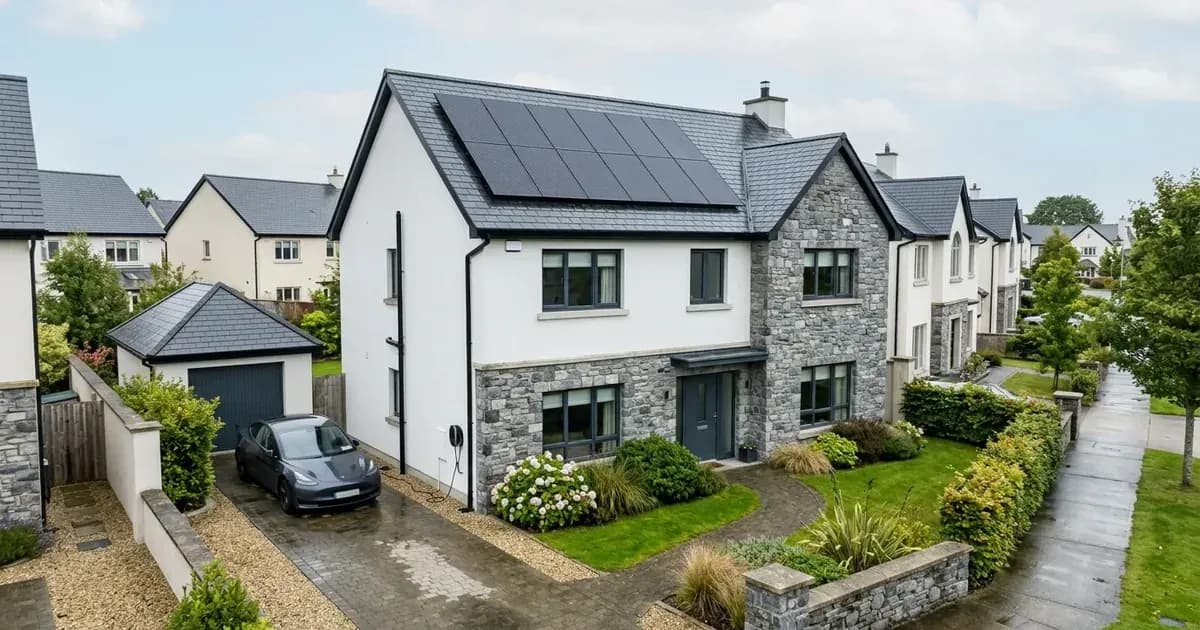
Solar PV systems contribute directly to meeting the NZEB requirement by providing on-site renewable energy. The regulations mandate that the nearly zero or very low amount of energy required is covered to a very significant extent by energy from renewable sources, including those produced on-site or nearby. Installing solar PV panels helps achieve this by generating clean electricity directly at the point of consumption, reducing reliance on grid energy and lowering the dwelling's overall energy demand from non-renewable sources.
Dwelling Energy Assessment Procedure (DEAP)
Compliance with Part L regulations is assessed using the Dwelling Energy Assessment Procedure (DEAP). This procedure, published by the Sustainable Energy Authority of Ireland (SEAI), is used to calculate both energy consumption and carbon dioxide emissions for dwellings. When designing or renovating a home, you will need to ensure that the energy performance calculations, including the contribution from any solar PV system, are carried out using the DEAP methodology.
Technical Guidance Documents and Compliance
The regulations state that where works or a building are designed and constructed in accordance with any guidance contained in a technical guidance document, this shall, prima facie, indicate compliance with the relevant requirements of these Regulations. This means that following the recommendations in official Technical Guidance Documents (TGDs) can simplify the compliance process. We have not verified the specific contents of these documents, so we don't publish them here.
Exemptions from Part L Regulations
Certain structures are exempt from these energy performance regulations. These include:
- A national monument for the purposes of the National Monuments Act 1930 (No. 2 of 1930), including a recorded monument under the provisions of Section 12 of the National Monuments (Amendment) Act 1994.
- A protected structure or proposed protected structure within the meaning of the Planning and Development Act 2000 (No. 30 of 2000).
If your property falls under one of these categories, you may not be subject to the same energy performance requirements.
Related Regulations: S.I. No. 292 of 2019
S.I. No. 292 of 2019 further amends Part L of the Second Schedule of the Building Regulations, specifically as it relates to dwellings. This instrument removes Part L3 for dwellings and inserts Part L6, which states: "L6 Energy performance of buildings requirements as set out in the European Union (Energy Performance of Buildings) Regulations 2019". This clarifies that the energy performance requirements for major renovations in dwellings are now governed by the broader European Union (Energy Performance of Buildings) Regulations 2019.
Frequently asked questions
What are the primary regulations governing dwelling energy performance in Ireland?
The primary regulations are the European Union (Energy Performance of Buildings) Regulations 2019, cited as S.I. No. 183 of 2019, and the European Union (Energy Performance of Buildings No. 2) Regulations 2019, cited as S.I. No. 292 of 2019 (August 2026).
What is the definition of a Nearly Zero-Energy Building (NZEB) under these regulations?
A Nearly Zero-Energy Building (NZEB) is defined as a building with very high energy performance, where the nearly zero or very low amount of energy required is covered to a very significant extent by energy from renewable sources, including those produced on-site or nearby (August 2026).
When did the European Union (Energy Performance of Buildings) Regulations 2019 come into effect?
These Regulations, S.I. No. 183 of 2019, came into operation on 1 November 2019 (August 2026).
What defines a 'major renovation' for the purpose of these regulations?
A major renovation is defined as the renovation of a building where more than 25% of the surface of the building envelope undergoes renovation (August 2026).
What types of energy are considered 'renewable sources' under the regulations?
Energy from renewable sources includes wind, solar, aerothermal, geothermal, hydrothermal, ocean energy, hydropower, biomass, landfill gas, sewage treatment plant gas, and biogases (August 2026).
References
- S.I. No. 183 of 2019 — accessed 23 August 2026
- S.I. No. 292 of 2019 — accessed 23 August 2026
Related guides
More from schemes, subsidies & financing.