Ireland National Monuments Service Solar Trenching Guide
Updated 18 September 2026 · By SolarNevs Research Desk, Dealer surveys + verified sources · 2 sources · Method ↗
Key Takeaways
- Structural mounting for solar arrays must comply with site-specific environmental consents in Ireland.
- Electrical infrastructure, including cabling, must maintain designated statutory setbacks.
- Archaeological monitoring is often a requirement for ground-mounted solar installations in sensitive areas.
- High-voltage DC, AC grid interconnection, and switchgear modifications must be performed by certified, licensed personnel.
Understanding Solar Installation in Irish Heritage Zones
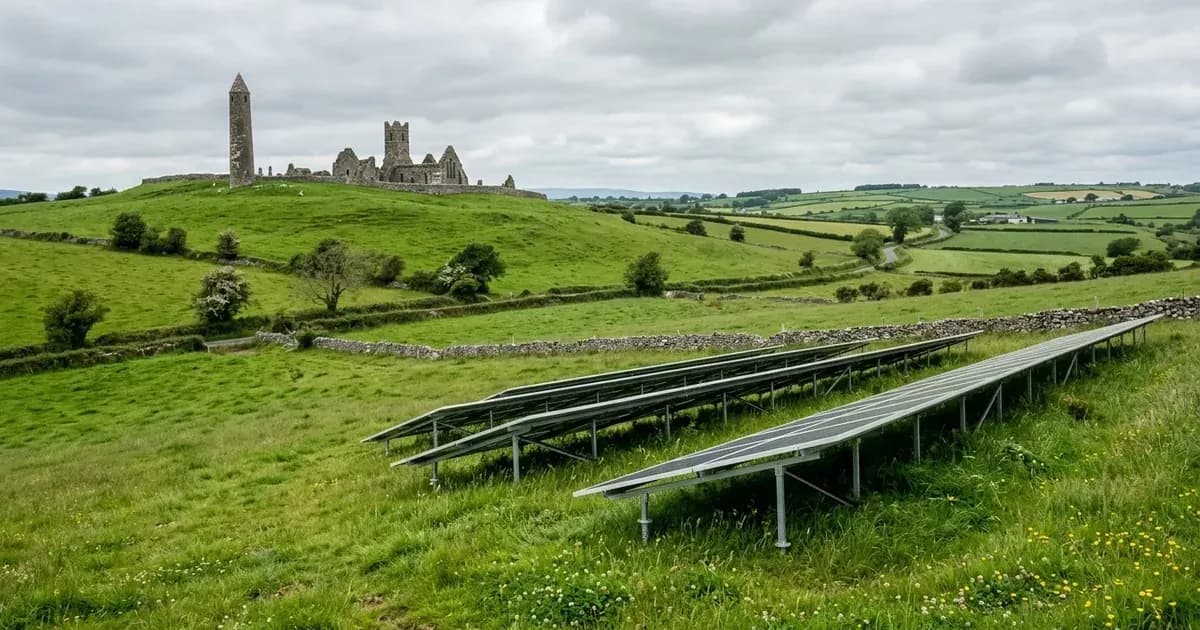
Installing solar arrays in areas designated as Irish heritage zones or near National Monuments requires careful planning and adherence to specific guidelines. The primary goal is to ensure that the installation of renewable energy infrastructure does not negatively impact archaeological remains, historical landscapes, or the integrity of protected sites. This involves considering how the array is mounted, how cables are routed, and the potential need for archaeological oversight.
Why Specific Guidelines Exist for Heritage Sites
Heritage sites and their surrounding landscapes are protected due to their historical, archaeological, or cultural significance. Any ground disturbance, such as trenching for cables or excavation for foundations, carries the risk of damaging or destroying unrecorded archaeological features. Therefore, guidelines are put in place to minimise this risk. These guidelines ensure that solar energy development can proceed sustainably while safeguarding Ireland's rich heritage. Compliance with these rules is essential for obtaining planning permission and ensuring the long-term viability of the solar project.
Non-Invasive Structural Mounting Options
When installing ground-mounted solar arrays in archaeologically sensitive areas, the choice of structural mounting is critical. Traditional concrete foundations or extensive trenching for ground screws can cause significant disturbance. Therefore, non-invasive concrete surface footing options are often preferred. These methods aim to minimise the depth and extent of ground penetration.
Option | Description | Considerations for Heritage Zones |
|---|---|---|
Ballasted systems | Frames are weighted down with concrete blocks or similar, resting on the surface. | No ground penetration; requires stable, level ground; higher material cost. |
Ground screws (shallow) | Screws are twisted into the ground, disturbing less soil than concrete piles. | Depth must be carefully controlled; archaeological monitoring may still be required. |
Concrete surface footings | Pre-cast concrete blocks or pads are placed directly on the ground surface. | Minimal ground disturbance; suitable for stable, level sites; may require ground preparation. |
Structural mounting must comply with site-specific environmental consents. This means the chosen method must be approved by relevant authorities, considering the unique archaeological and environmental context of each site.
Cable Routing: Above Ground vs. Trenching
The method of routing electrical cables from the solar array to the inverter and grid connection point is another critical aspect in heritage zones. Underground trenching is a common practice for solar installations, but it poses a significant risk to archaeological remains.
Electrical infrastructure must maintain designated statutory setbacks. This includes ensuring that cables and associated equipment are located at a safe distance from protected structures or archaeological features. In sensitive areas, above-ground cable tray routing is often the preferred method.
Method | Advantages in Heritage Zones | Disadvantages in Heritage Zones |
|---|---|---|
Above-ground cable tray | Minimises ground disturbance; allows for easy inspection and maintenance; can be removed with less impact. | More visible; potential for damage from external factors; requires robust support structures. |
Underground trenching | Less visible; protected from external factors; standard practice in many installations. | High risk of disturbing archaeological remains; requires extensive archaeological monitoring and mitigation. |
The decision between above-ground and underground routing will depend on the specific site assessment, the level of archaeological sensitivity, and the requirements set by planning authorities and the National Monuments Service.
The Role of Archaeological Monitoring
For any ground-disturbing works within or adjacent to a heritage zone, archaeological monitoring is typically a mandatory requirement. This involves having a qualified archaeologist present during all excavation and ground-breaking activities. The archaeologist's role is to identify, record, and protect any archaeological features or artefacts that may be uncovered.
Final archaeological compliance sign-off for planning authorities is a crucial step before a project can be fully approved or commissioned. This sign-off confirms that all archaeological requirements have been met and that the installation has not caused undue damage to heritage assets. Grid substation connections must also satisfy ESB Networks codes, ensuring the electrical safety and integrity of the connection to the national grid. High-voltage DC, AC grid interconnection, and switchgear modifications must be performed by certified, licensed personnel.
What the Published Sources Do Not Tell You
The specific details for Ireland National Monuments Service solar array trenching guidelines are highly site-specific and are not typically published as universal, prescriptive rules. While general principles of compliance and non-disturbance are clear, the exact requirements for a given project will depend on a detailed archaeological assessment, environmental impact studies, and consultation with local planning authorities and the National Monuments Service.
This means there is no single, publicly available document detailing precise setback distances, acceptable footing types for every scenario, or the exact scope of archaeological monitoring for all heritage zones. These specifics are determined on a case-by-case basis during the planning and consent application process. Furthermore, ESB Networks codes for grid connections are complex and require direct consultation with the network operator or a certified installer.
Frequently asked questions
What are the primary technical requirements for ireland national monuments service solar trenching guide?
Key requirements include compliance with local grid codes, correct equipment certification, and proper electrical isolation.
Who is authorized to install and inspect ireland national monuments service solar trenching guide?
All high-voltage DC, AC grid tie-in, and switchboard modifications must be performed by a qualified, accredited electrical professional.
How is export power limited in ireland national monuments service solar trenching guide?
Export limiting is achieved using certified bidirectional smart meters or power sensors providing dynamic feedback to the inverter system.
References
- SEAI Single Point of Contact - Excavation Licence (Archaeological) / Ministerial Consent for works at or near a National Monument (issued by the National Monuments Service) — accessed 15 September 2026
- gov.ie - Solar Planning Exemptions (Planning and Development Act 2000 (Exempted Development) (No. 3) Regulations 2022 and Solar Safeguarding Zones) — accessed 15 September 2026
Related guides
More from schemes, subsidies & financing.