Ireland Solar Farm Archaeological Impact Assessments Guide
Updated 18 September 2026 · By SolarNevs Research Desk, Dealer surveys + verified sources · 5 sources · Method ↗
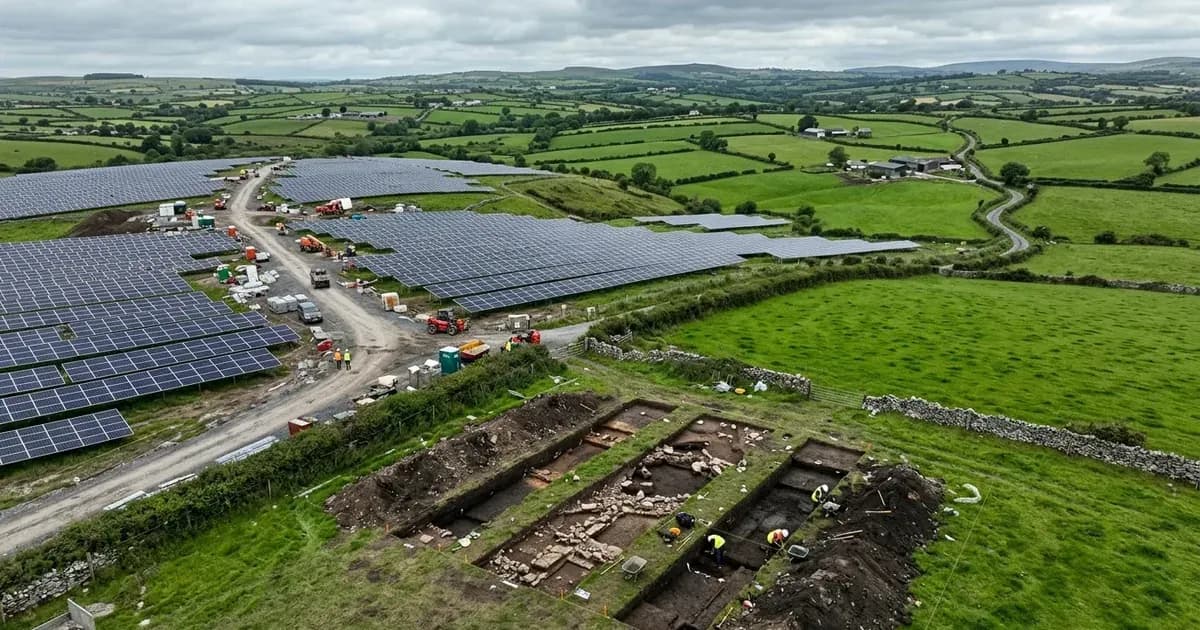
Key Takeaways
- Utility solar farm development in Ireland requires statutory consultation to protect cultural heritage.
- Geophysical magnetometry surveys, conducted by licensed archaeologists, are mandatory for proposed sites.
- Buffer zones must be established around National Monuments and recorded ringforts.
- Ground intrusive work, such as cable trenching, requires archaeological monitoring.
Understanding Archaeological Impact Assessments for Irish Solar Farms
Utility-scale solar farm projects in Ireland must undergo archaeological impact assessments to ensure the protection of national cultural heritage assets. This involves statutory consultation with relevant authorities and specific survey requirements. The aim is to identify, evaluate, and mitigate potential impacts on archaeological sites and monuments before development proceeds.
The Mechanism of Cultural Heritage Protection
Ireland's rich historical landscape necessitates careful consideration during large-scale developments. The National Monuments Service (NMS) plays a key role in safeguarding archaeological heritage. The process typically begins with early engagement with the NMS, followed by detailed surveys and the implementation of protective measures. This structured approach ensures that significant archaeological remains are not inadvertently damaged or destroyed during construction.
Key Requirements for Solar Farm Development in Ireland
The development of utility-scale solar farms in Ireland involves several specific archaeological requirements. These are designed to protect the country's cultural heritage.
Requirement | What it means | What to do |
|---|---|---|
National Monuments Service statutory consultation | Utility development must protect national cultural heritage assets. | Engage early with the National Monuments Service for guidance and statutory consultation. |
Geophysical magnetometry surveys | Field surveys must be conducted by licensed archaeologists. | Commission a licensed archaeologist to perform comprehensive geophysical magnetometry surveys across the entire proposed solar site. |
Buffer zones around National Monuments and recorded ringforts | Ground intrusive cable trenching must have archaeological monitoring. | Establish and respect buffer zones around identified National Monuments and recorded ringforts. Ensure all ground intrusive work within these areas, such as cable trenching, is archaeologically monitored. |
What You Can Check Yourself, and What You Cannot
As a developer or project manager, you can ensure that all necessary consultations are initiated and that licensed professionals are engaged for archaeological work. You can also review site plans to identify potential areas requiring buffer zones.
However, you cannot conduct archaeological field surveys or monitoring yourself. These tasks require specific licensing, expertise, and adherence to professional standards. High-voltage DC, AC grid interconnection, and switchgear modifications must also be performed by certified, licensed personnel. Attempting to undertake these specialised tasks without proper qualifications can lead to legal issues, project delays, and irreversible damage to archaeological assets.
What the Published Sources Do Not Tell You
While the general requirements for archaeological impact assessments are clear, specific details can vary based on the unique archaeological sensitivity of a site. The precise dimensions of buffer zones, for example, may be subject to negotiation and specific recommendations from the National Monuments Service following initial surveys. Furthermore, the exact methodologies for archaeological monitoring during construction can be tailored to site-specific conditions, and these detailed protocols are typically developed in consultation with the NMS and appointed archaeologists rather than being published as universal standards. published guidance does not detail the specific licensing requirements for archaeologists in Ireland or the exact process for NMS consultation beyond the general requirement.
Frequently asked questions
What are the primary technical requirements for ireland solar farm archaeological impact assessments guide?
Key requirements include compliance with local grid codes, correct equipment certification, and proper electrical isolation.
Who is authorized to install and inspect ireland solar farm archaeological impact assessments guide?
All high-voltage DC, AC grid tie-in, and switchboard modifications must be performed by a qualified, accredited electrical professional.
How is export power limited in ireland solar farm archaeological impact assessments guide?
Export limiting is achieved using certified bidirectional smart meters or power sensors providing dynamic feedback to the inverter system.
References
- National Monuments Service (gov.ie) - maintains the statutory Record of Monuments and Places under section 12 of the National Monuments (Amendment) Act 1994, regulates archaeological excavation and de — accessed 6 September 2026
- National Monuments (Amendment) Act 1994, section 12 - recorded monuments and the requirement to give two months written notice to the Commissioners before carrying out work at or in relation to a reco — accessed 6 September 2026
- Planning and Development Regulations 2001 (S.I. No. 600/2001), article 28 - planning authority must send notice to the prescribed bodies where development might affect or be unduly close to a monument — accessed 6 September 2026
- Historic Environment Viewer (gov.ie) - map viewer giving access to the National Monuments Service Sites and Monuments Record, used to identify recorded monuments across a proposed development site — accessed 6 September 2026
- NRA/TII Guidelines for the Assessment of Archaeological Heritage Impacts of National Road Schemes - defines geophysical survey (earth resistance, magnetometry, ground penetrating radar) as a non-invas — accessed 6 September 2026
Related guides
More from schemes, subsidies & financing.