Narada Battery Inverter Settings: Pairing 48NPFC100 and NESR
Updated 6 September 2026 · By SolarNevs Research Desk, Dealer surveys + verified sources · 8 sources · Method ↗
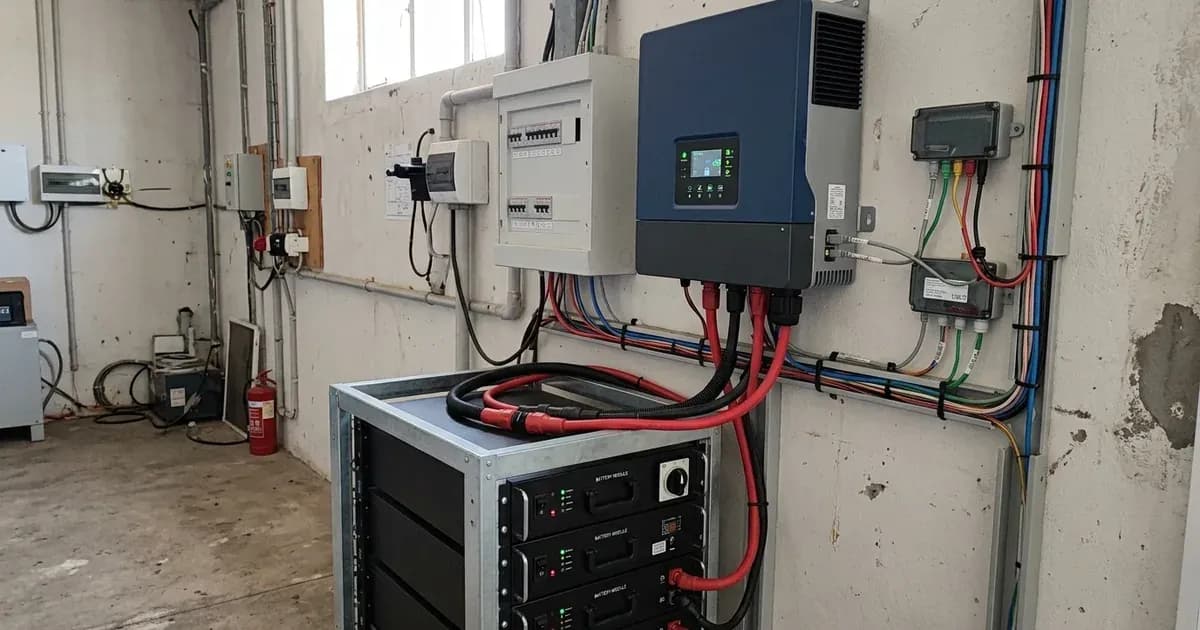
Key Takeaways
- Configure charging voltage to 54±0.5V per official Narada datasheets (recommended charge 20A / 0.2C for 48NPFC100, referenced to 25°C; operating charge window is 0–60°C, where MPINarada thermal derating shows cycle life dropping from 2,500 cycles at 25°C to 1,400 cycles at 45°C); never apply lead-acid equalization profiles (57.6 V exceeds the 56.0±0.5V BMS over-voltage protection, 57V on datasheet revision; never equalize a lithium battery).
- Deye Approved Battery List (DY-LV48-0121) officially approves 48NPFC series models (48NPFC80, 48NPFC100, 48NPFC150, 48NPFC200) under setup code 00 over CAN bus; NESR48100 is documented in Solis Battery Matching global guidance under Lithium Battery LV (inverter limit 135A).
- Growatt Approved LV Battery List (Growatt-LV48-0009) omits Narada; run in User-Defined voltage mode (54.0 V bulk, 52.5 V float, all referenced to 25°C, where high ambient heat derates cycle life from 2,500 cycles at 25°C down to 1,400 cycles at 45°C; never equalize a lithium battery) if closed-loop communication is unavailable.
- String charge current caps scale with parallel bank size: 1C(100A) for 1 module, 0.5C for 2–5 modules, 0.2–0.3C for 6–10 modules, and 0.2C for 10–16 modules (up to 16 modules maximum with 4-bit DIP addressing).
Quick Answer: How to configure your inverter for Narada lithium batteries
To pair Narada LiFePO4 rack batteries (such as the telecom-heritage 48NPFC100 or the solar-focused NESR48100) with a solar inverter, establish closed-loop digital communication where supported. On Deye hybrid inverters, select battery type Lithium and set Lithium setup code to 00 over CAN bus for approved 48NPFC modules (48NPFC80, 48NPFC100, 48NPFC150, 48NPFC200). On Solis low-voltage hybrids, configure the battery selection to Lithium Battery LV for the NESR48100.
If connecting to an inverter platform without closed-loop Narada firmware support (such as Growatt or Voltronic models without confirmed protocol codes), switch to User-Defined voltage mode: configure bulk/absorption charging to 54.0 V, float to 52.5 V (all charge setpoints referenced to 25°C, where MPINarada thermal derating shows cycle life drops from 2,500 cycles at 25°C to 1,400 cycles at 45°C; operating charge window is 0–60°C), low DC cutoff to 45V (comfortably above the 40.5±0.5V BMS low-voltage disconnect floor [datasheet revision: 42V]), and disable equalization entirely (never equalize a lithium battery).
To explore market pricing across lithium battery options, see our guide on lithium battery prices in Pakistan.
Master Inverter Pairing and Settings Table for Narada Batteries
The table below compiles verified closed-loop protocol parameters and manual voltage fallbacks across major inverter platforms (all charge setpoints referenced to 25°C; operating charge window is 0–60°C with thermal derating in high ambient heat, where MPINarada data shows 2,500 cycles at 25°C falling to 1,400 cycles at 45°C; equalization must remain disabled across all profiles, never equalize a lithium battery):
Inverter Platform | Battery Type / Menu Setting | Protocol Code / Profile | Charge Voltage Target | Max Current Limits | Comms Physical Port / Mode |
|---|---|---|---|---|---|
Deye SUN-3/3.6/5/6K-SG04LP1-EU, SUN-5/6/8/10/12K-SG04LP3-EU | Battery Type: Lithium | Protocol: 00 (CAN) | BMS-controlled (54±0.5V target, ref 25°C) | 100A max discharge per 48NPFC100 | CAN Pins 4/5 (48NPFC80/100/150/200 approved) |
Solis S6 LV hybrids | Battery Select: Lithium Battery LV | Profile: Lithium Battery LV | BMS-controlled | Inverter limit (up to 135A) | CAN / RS485 (NESR48100 in Solis global pamphlet) |
Voltronic-platform PK brands | Lithium mode (or User-Defined) | Demand protocol code from dealer | 54.0 V Bulk / 52.5 V Float (ref 25°C, thermal derating in heat) | 20A recommended charge per 48NPFC100 | RS485 / CAN (NESR) or manual voltage mode |
Growatt LV (SPF/SPH) | Absent from Growatt approved list | User-Defined Voltage Mode | 54.0 V Bulk / 52.5 V Float (ref 25°C, thermal derating in heat) | 20A recommended charge per 48NPFC100 | Manual voltage fallback (Float: 52.5 V, Equalize: OFF; never equalize a lithium battery) |
Any inverter, no-comms / user-defined fallback | Battery Type: User-Defined | No digital comms required | Bulk: 54.0 V / Float: 52.5 V (ref 25°C, thermal derating in heat) | 20A (0.2C) recommended, 100A max discharge | Inverter low cutoff ≥ 45V (BMS LVBD: 40.5±0.5V, datasheet: 42V; Equalize: OFF; never equalize a lithium battery) |
Figures as of August 2026.
Step-by-Step Configuration Workflow
1. Inverter Compatibility Realities (Deye, Solis, and Growatt)
Ensure your inverter matches Narada's verified communication lists:
- Deye Low-Voltage Hybrids: Deye's official Approved Battery List (DY-LV48-0121) officially certifies the 48NPFC series (48NPFC80, 48NPFC100, 48NPFC150, 48NPFC200) under setup code 00 over CAN bus. Note that official 48NPFC datasheets list RS485x2 and RJ45 ports only, while NESR48100 features CAN and RS485. If CAN communication is unavailable on your physical battery ports, configure the inverter in user-defined manual voltage mode (54.0 V bulk, 52.5 V float, referenced to 25°C, where thermal derating reduces cycle life in heat, equalization OFF; never equalize a lithium battery).
- Solis Hybrid Inverters: Solis Battery Matching GLOBAL documentation lists the NESR48100 under the "Lithium Battery LV" menu profile (inverter limit 135A, 40–60V battery operating range).
- Growatt Absence: Growatt's official Approved LV Battery List (Growatt-LV48-0009) omits Narada batteries, despite Narada's NESR sheet claiming Growatt integration. Because no documented protocol code is published, switch to User-Defined voltage mode (54.0 V bulk, 52.5 V float, referenced to 25°C, where thermal derating in hot climates reduces cycle life, with equalization disabled entirely; never equalize a lithium battery).
- Voltronic / Inverex Platforms: Narada's NESR datasheet lists Voltronic on its integrated inverter list, but no official menu protocol code is published. Require your dealer to provide the exact protocol number in writing, or operate in manual User-Defined voltage mode.
2. Charging Voltage Configuration: The 54.0 V Ceiling
- Absorption Charge Voltage: Set bulk/absorption charging to 54±0.5V across 48V installations (referenced to 25°C; operating charge window is 0–60°C, where MPINarada thermal derating shows cycle life dropping from 2,500 cycles at 25°C down to 1,400 cycles at 45°C). Recommended charge current is 20A (0.2C) per 48NPFC100 module.
- Float Charging Setpoint: In open-loop operation, maintain float voltage at 52.5 V (commonly reported by installers, referenced to 25°C, subject to thermal derating in hot climates).
- Disable Equalization: Equalization charging must be switched completely OFF (never equalize a lithium battery). Standard lead-acid equalization voltages (57.6 V) exceed Narada's pack over-voltage protection limit (56.0±0.5V in BMS Manual V1.0; 57V on datasheet revisions, referenced to 25°C, where high ambient heat derates cycle life), causing immediate BMS over-voltage disconnects.
3. Parallel String Current Scaling Rules
According to Section 3.14 of Narada BMS Operation Manual V1.0, maximum allowable charging current must follow string current caps as parallel module count increases:
- Single Module (100Ah): Supports 1.0C (100A) maximum.
- 2 to 5 Modules in Parallel: String current cap is 0.5C.
- 6 to 10 Modules in Parallel: String current cap is 0.2–0.3C.
- 10 to 16 Modules in Parallel: String current cap is 0.2C.
- Maximum Expansion: Up to 16 modules may be paralleled in a single string using 4-bit DIP address configuration. Narada allows mixing old and new units only when modules are identical 48V/100Ah LFP chemistry, with a maximum of 3 old units per 10, and old units in service for ≤1 year.
- For calculating system capacity, use our solar battery sizing calculator.
4. Low Voltage Cutoff and Deep Discharge Thresholds
- BMS Low-Voltage Disconnect (LVBD): Narada's internal BMS cuts off discharge at 40.5±0.5V (datasheet revision notes 42V).
- Pack Alarm Floor: The BMS triggers an under-voltage alarm at 45V.
- Inverter Cutoff Recommendation: Set your inverter's low DC cutoff to at least 45V to preserve reserve capacity and prevent the battery from entering dormant sleep mode (triggered when cell voltage drops to 3.1±0.05V/cell).
For troubleshooting communication alarms, consult our guide on Narada battery troubleshooting and BMS comms fixes. Review communication protocols in our guide on lithium battery inverter compatibility errors and understand internal hardware protections in BMS functions and battery protection.
Safety: LiFePO4 Electrical and Environmental Limits
Observe these mandatory safety protocols when installing Narada lithium modules:
- Thermal Operating Windows: Permissible charging temperature is 0–60°C; discharge operates from -20–60°C. Storage is recommended at 0–40°C. Never force-charge below 0°C; the BMS executes charge under-temperature protection at -10±3°C (recovering at 0°C). Charge over-temperature protection triggers at 65±3°C (BMS manual) or 70°C (datasheet revision), with alarm at 55±3°C (recovery at 45–55°C). Discharge over-temperature protection triggers at 70±3°C (alarm at 50 °C).
- High Temperature Cycle Life Degradation: Technical data from MPINarada shows that while the 48NPFC100 delivers 2,500 cycles at 100% DoD at 25°C, cycle life degrades to 1,400 cycles at 45°C. The NESR48100 solar datasheet claims ≥6000 cycles at 25°C.
- Short-Circuit & Over-Current Protection: Internal short-circuit protection trips at 210±10A in ≤500µs. Discharge over-current protection executes at 105A (Level 1, ~5s) and 120A (Level 2, 500ms), with an alarm at 70A. Charge over-current protection triggers at 105A (Level 1, ~4s) and 120A (Level 2, 300ms).
- Physical Handling & Terminals: Kill power first and use insulated tools whenever servicing battery connections; a metal spanner across energized terminals can short hundreds of amperes (short-circuit trip 210±10A in ≤500µs). Each 48NPFC100 and NESR48100 module weighs approximately 40kg in an IP20 enclosure; use a two-person lift when mounting into 19" racks. Battery connections use 2M8 screw terminals (or M6 on MPI variants); tighten connections per the module's silk-screen/manual.
- Certifications: Official certifications include UL1973, UN38.3, and CE-EMC, with MPINarada adding UL1642, UL2054, IEC 62133, and UL9540A.
When to call a technician instead
Contact an authorized Narada distributor or certified solar installer under the following conditions:
- The front-panel ALM LED illuminates continuous red ("Failed alarm" indicating hardware failure such as charge/discharge MOSFET failure, cell voltage <1.75V, module voltage <26V, or internal NTC disconnect).
- The RUN LED flashes rapidly (0.15s ON / 0.15s OFF), indicating "Register failed" due to duplicated DIP ADD addresses or daisy-chain communication faults.
- Cell voltage imbalance triggers the cell over-voltage alarm at 3.60±0.05V or protection at 3.80±0.05V (datasheet revision: 3.5V / 3.6V). Internal balancing starts when Vmax reaches ≥3.40–3.5V with a cell gap of ≥20–30mV (balancing current 150mA on datasheet, 20–200mA in BMS manual); if balancing fails after extended 54V absorption, professional pack balancing is required.
For professional escalation standards, consult our guide on when to call a solar technician.
Figures as of August 2026.
Still showing the fault? Book a technician
If the steps above did not clear it, tell us the inverter or battery and the exact code. We pass it to a technician who covers your city; visit charges are quoted before they come.
How this pays for the site: the technician or verifier pays SolarNevs a fixed introduction fee. Nobody pays to be recommended, and you are free to use our free guides instead.
Frequently asked questions
What is the recommended charging voltage for Narada 48NPFC100 lithium batteries?
The official 48NPFC100 datasheet specifies a charge voltage of 54±0.5V with a recommended charge current of 20A (0.2C), referenced to 25°C. In high ambient heat, MPINarada specifications record cycle life degrading from 2,500 cycles at 25°C down to 1,400 cycles at 45°C; operating charge temperature is 0–60°C. In manual open-loop inverter modes, configure bulk/absorption to 54.0 V, float to 52.5 V (commonly reported by installers, referenced to 25°C, where thermal derating reduces cycle life in heat), low DC cutoff to 45V (comfortably above the BMS 40.5±0.5V low-voltage disconnect floor [datasheet revision: 42V]), and disable equalization entirely (never equalize a lithium battery, because 57.6 V lead-acid equalization exceeds Narada's 56.0±0.5V pack over-voltage protection [57V on datasheet revision]).
How do I pair a Narada 48NPFC100 battery with a Deye hybrid inverter?
On Deye low-voltage hybrid inverters (SUN-3/3.6/5/6K-SG04LP1-EU, SUN-5/6/8/10/12K-SG04LP3-EU), select battery type Lithium and set Lithium setup code 00 for CAN bus communication. Deye Approved Battery List DY-LV48-0121 officially approves 48NPFC80, 48NPFC100, 48NPFC150, and 48NPFC200 modules. If pairing 48NPFC units that only provide RS485 ports, or if CAN comms fail, configure user-defined manual voltage mode (54.0 V bulk, 52.5 V float, 45V cutoff; all setpoints referenced to 25°C, where high ambient heat derates cycle life, with equalization disabled entirely; never equalize a lithium battery).
How do I configure a Solis hybrid inverter for a Narada NESR48100 battery?
On Solis S6 LV hybrids (40–60V battery operating range), select battery option 'Lithium Battery LV' as documented in the Solis Battery Matching GLOBAL pamphlet for the Narada NESR48100 (inverter limit 135A).
Is Narada compatible with Growatt SPF and SPH off-grid inverters?
Narada is absent from Growatt's Approved LV Battery List Growatt-LV48-0009 (10 April 2025), despite Narada's NESR datasheet claiming Growatt integration. Because no documented Growatt protocol code is published, configure user-defined voltage mode with 54.0 V bulk/absorption, 52.5 V float (all setpoints referenced to 25°C, where thermal derating reduces cycle life in hot climates), and disable equalization entirely (never equalize a lithium battery).
What are the maximum charging current limits for Narada parallel strings?
Per Section 3.14 of Narada BMS Operation Manual V1.0, string current caps scale as: 1 module 1C(100A), 2–5 modules 0.5C, 6–10 modules 0.2–0.3C, and 10–16 modules 0.2C (up to 16 modules maximum with 4-bit DIP addressing).
References
- Narada 48NPFC100 Official Datasheet PDF — accessed 23 August 2026
- Narada 48NPFC100 BMS Operation Manual V1.0 PDF — accessed 23 August 2026
- Narada NESR48100-H Datasheet PDF — accessed 23 August 2026
- Deye Approved Battery List DY-LV48-0121 — accessed 23 August 2026
- Solis Battery Matching GLOBAL Pamphlet — accessed 23 August 2026
- Growatt Approved LV Battery List Growatt-LV48-0009 — accessed 23 August 2026
- MPINarada 48NPFC100 Technical Specifications — accessed 23 August 2026
- PowerForum South Africa Community Discussion on Narada Float Voltage — accessed 23 August 2026
Related guides
More from inverter errors & fixes.