Phoenix Battery Care and Lifespan in Pakistan
Updated 7 September 2026 · By SolarNevs Research Desk, Dealer surveys + verified sources · 8 sources · Method ↗
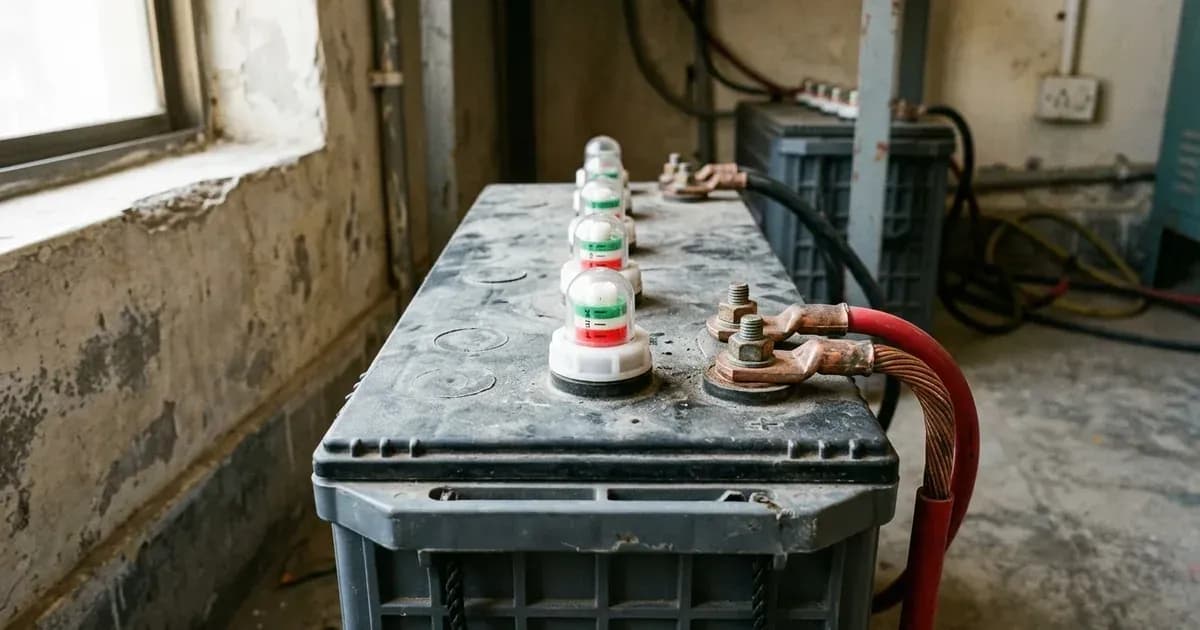
Key Takeaways
- Top up electrolyte wearing eye protection against sulfuric acid splashes, adding only distilled water (never acid, never tap water) to discharged cells before recharging.
- Check specific gravity wearing eye protection because hydrometer testing draws corrosive sulfuric acid out of the cell; Phoenix publishes no figure, and the comparable Osaka tubular datasheet puts full charge at 1.260 at 25°C (referenced to 25°C).
- Avoid routine deep discharges below 50% DoD to maximize cycle longevity in high ambient temperatures (>25°C).
- Equalization deliberately drives cells into the explosive hydrogen gassing region and requires active cross-ventilation in a ventilated space away from sparks and flames; perform it only after a full charge when cell specific gravity spread exceeds 0.030 (tested with eye protection).
How can I extend the life of my Phoenix tubular battery in Pakistan?
Maximizing the operational life of a Phoenix Power Cube tall-tubular battery (such as the TX-1800 or TX-2500) requires disciplined water maintenance wearing eye protection (adding distilled water only, never acid), routine specific gravity measurements with eye protection (as drawing electrolyte pulls acid out), correct inverter absorption voltages (referenced to 25°C with -3 to -5 mV/cell/°C temperature compensation), and avoiding excessive depth of discharge. In Pakistan's climate, unmonitored electrolyte evaporation and chronic undercharging from default AGM inverter settings are the leading causes of early battery failure.
Flooded tall-tubular batteries require consistent electrolyte level checks wearing eye protection (distilled water only, never acid), routine specific gravity measurements with eye protection, and proper inverter charging parameters to deliver their expected service life.
Maintaining Your Phoenix Tubular Battery
Follow these sequential maintenance checks to protect your battery bank:
- Inspect Distilled Water Electrolyte Levels:
- Action: Wear eye protection to guard against corrosive sulfuric acid splashes when checking level indicator floats or unthreading vent caps.
- Meaning: Add distilled water only (never tap water, never acid) to raise the electrolyte level per official Phoenix guidance (no coverage-depth figure is published). Exposed active plate material oxidizes and loses capacity permanently.
- Watering Timing and Frequency:
- Action: Wear eye protection and add only distilled water (never acid, never tap water) to discharged cells prior to recharging, filling to the maximum mark without overfilling.
- Meaning: Adding water to fully charged cells risks acidic overflow as electrolyte expands during charging. Phoenix official care tips highlight that frequent water replenishment suggests overcharging, requiring an inspection of your inverter bulk voltage settings.
- Measure Specific Gravity (SG) per Cell:
- Action: Wear eye protection when using a temperature-corrected hydrometer to test each cell after completing a full absorption charge, because drawing electrolyte out risks corrosive sulfuric acid splashes.
- Meaning: Phoenix does not publish proprietary SG specifications; comparable flooded tall-tubular data (Osaka OPzS reference) specifies 1.260 at 25°C for 100% state of charge (referenced to 25°C; use a temperature-corrected hydrometer). Readings of 1.220 indicate 75% charge, 1.190 indicate 50%, 1.150 indicate 25%, and 1.120 indicate complete depletion. Never test specific gravity immediately after adding water — mixing takes days — and never take a reading from a hot or gassing battery.
- Clean Terminal Posts and Hardware:
- Action: Kill power first and use an insulated tool to inspect bolt-on terminals for corrosion, because a metal tool dropped across a battery bank shorts hundreds of amperes.
- Meaning: Clean dirty terminals using a baking soda mixture (1 tablespoon per cup of water, external cleaning only, rinse and dry). Phoenix official care instructions advise that terminal clamps must fit snugly without hammering. Coat the exterior of tightened connections with petroleum jelly to prevent oxidation.
- Equalize Stratified Cells:
- Action: When cell-to-cell SG readings diverge by more than 0.030 (tested with eye protection as hydrometer testing draws acid out), run an equalization charge in an actively ventilated space away from sparks and open flames, because equalization deliberately drives cells into the explosive hydrogen gassing region. Equalize only after a full bulk and absorption charge, and only with battery temperature watched. Phoenix publishes no equalization spec; the Rolls manual for the same flooded construction gives 2.55 to 2.65 volts per cell, which is 15.3 to 15.9V across a 12V unit (referenced to 25°C; hot ambient conditions require -3 to -5 mV per cell per °C temperature compensation).
- Meaning: Equalization mixes heavy acid sitting at cell bottoms and reverses surface plate sulfation. Treat it as an installer-grade task: inverter equalization ships disabled on Growatt and Axpert-family units, and unnecessary equalization damages healthy cells, so leave it off unless your gravity readings say otherwise.
Phoenix Tubular Battery Maintenance Schedule
Maintenance Task | Frequency | Standard Specification |
|---|---|---|
Distilled Water Top-Up | When discharged, before recharging (no published interval) | Add distilled water only per official Phoenix tips; never tap water, never acid; wear eye protection against corrosive sulfuric acid. |
Specific Gravity Testing | No published interval; read after a full charge and after any equalization | 1.260 at 25°C full charge (Osaka comparable reference; readings referenced to 25°C — correct for temperature); wear eye protection when drawing electrolyte into a hydrometer as it draws sulfuric acid out; never test hot or gassing cells. |
Terminal Inspection & Torque | At each maintenance check (no published interval) | Kill power first and use insulated tools (a spanner across terminals shorts hundreds of amps); clean with baking soda solution; tighten snugly, no hammering (Phoenix publishes no torque figure). |
Equalization Charge | Only when SG spread exceeds 0.030 (inverter EQ default: disabled) | 2.55–2.65 V/cell, i.e. 15.3–15.9V per 12V unit (Rolls comparable reference; referenced to 25°C with -3 to -5 mV/cell/°C temp compensation); requires an actively ventilated space away from sparks and flames as equalization deliberately drives cells into the explosive hydrogen gassing region; inverter EQ menus default to an interval of 30 days and 60–180 min; monitor battery temperature throughout. |
Storage Recharge | Every 30 days | Recharge monthly during storage per official Phoenix tips; store clean and dry in a ventilated space. |
Figures as of August 2026.
Lifespan Expectations and Factors in Pakistan
The operational lifespan of a Phoenix tall-tubular battery depends on operating temperature, depth of discharge, and inverter voltage calibration:
- Retailer Cycle Ratings (no official datasheet exists): Retailer listings rate the TX-1800 at up to 2500 cycles at 20% DoD, 1800 cycles at 50% DoD, and 1250 cycles at 75–80% DoD; the TX-2500 carries a retailer rating of 1250 cycles at 80% DoD.
- Real-World Domestic Lifespan: The retailer cycle figures are paper ratings — no measured Pakistani field-life dataset exists. As buyer guidance, plan for 3 to 4 years of service in a typical domestic setup. Deeper daily discharges shorten paper life sharply: the retailer rating falls to 1250 cycles at 75–80% DoD.
- Temperature Degradation: Ambient temperatures exceeding 25°C reduce backup time and accelerate degradation, and sustained heat can roughly halve battery life; standard charge setpoints are referenced to 25°C, and hot installations require temperature-compensated charging (-3 to -5 mV per cell per °C above 25°C). Review our detailed study on battery life in Pakistan under heat and depth of discharge.
- Depth of Discharge Discipline: Limiting daily discharge to 50% DoD preserves the tubular gauntlets from mechanical shedding. Avoid running the bank until inverter low-voltage shutdown.
- Replacement Math: When planning bank replacements, compare lifetime costs in our analysis of lithium vs tubular batteries in Pakistan.
Avoid string balancing errors and mismatched cable gauges by reviewing our guide on solar battery installation mistakes and cable sizing.
Safety: Working with Flooded Tubular Batteries
Always follow strict safety precautions when maintaining lead-acid battery banks:
- Explosive Hydrogen Gas: Charging produces flammable hydrogen gas, especially during equalization which deliberately drives cells into the hydrogen gassing region. Ensure active cross-ventilation in a ventilated space and prohibit smoking, open flames, or uninsulated tools near the bank.
- Corrosive Sulfuric Acid: Electrolyte contains dilute sulfuric acid. Always wear eye goggles and acid-resistant gloves when watering, testing with a hydrometer (which draws acid out of the cell), or opening cells, and keep water within reach. Add water only, never acid. If acid splashes skin or eyes, flush with water and seek immediate medical evaluation.
- Heavy Lifting Precautions: Phoenix TX-1800 batteries weigh 56kg and TX-2500 units weigh approximately 63kg. Always use two people to move them, and — as official Phoenix tips advise — restrain the battery in place once it is positioned.
- Inverter Stored Voltage and Terminals: Inverter capacitors retain lethal charges for up to 5 minutes after shutdown; kill power first and use insulated tools to prevent shorting hundreds of amperes across terminal posts. PV solar arrays generate high DC voltages whenever exposed to sunlight.
When to call a technician instead
Contact a certified solar technician or an authorized Phoenix service center in these situations:
- Suspected Dead or Failed Cell: If one cell's specific gravity reads far below the others (tested with eye protection as hydrometer draws acid out) and the bank will not reach absorption or equalization voltage (equalization deliberately drives cells into the explosive hydrogen gassing region and requires active ventilation away from sparks and flames), a failed cell is likely.
- Bulging or Leaking Casings: Container swelling or cracked terminal posts require immediate replacement; kill power first and use insulated tools to avoid shorting hundreds of amps.
- Warranty Processing: Phoenix operates 10–11 official customer care offices across Pakistan (Karachi, Lahore, Faisalabad, Gujranwala, Multan, Peshawar, Rawalpindi, Sahiwal, Sukkur, Quetta, Hyderabad; main line +92 (021) 36881827). Phoenix publishes no warranty-claim procedure; coverage is typically 12 months retailer-advertised, with some listings citing 6 months — get the stamped warranty card duration in writing at purchase. Compare current market prices in our Phoenix battery price guide for Pakistan.
For professional maintenance standards, refer to our protocol guide on when to call a solar technician.
Still showing the fault? Book a technician
If the steps above did not clear it, tell us the inverter or battery and the exact code. We pass it to a technician who covers your city; visit charges are quoted before they come.
How this pays for the site: the technician or verifier pays SolarNevs a fixed introduction fee. Nobody pays to be recommended, and you are free to use our free guides instead.
Products mentioned
Frequently asked questions
How long do Phoenix tubular batteries last in Pakistan?
Phoenix publishes no official datasheet. Retailer listings rate the TX-1800 for up to 2500 cycles at 20% Depth of Discharge (DoD), 1800 cycles at 50% DoD, and 1250 cycles at 75-80% DoD; the TX-2500 is listed at 1250 cycles at 80% DoD. In typical Pakistani domestic setups, plan for 3 to 4 years of service.
What kind of water should I add to my Phoenix battery?
Add distilled water only (never acid, never tap water) to your Phoenix tubular battery; tap water introduces minerals that degrade capacity. Always wear protective eye goggles when opening cells because electrolyte is corrosive sulfuric acid. Official Phoenix care guidance advises adding distilled water to discharged cells prior to recharging.
What is the correct specific gravity for a fully charged Phoenix battery?
Phoenix publishes no official specific gravity spec; comparable tubular data (Osaka OPzS datasheet) puts full charge at 1.260 at 25°C (readings referenced to 25°C; use a temperature-corrected hydrometer). The specific gravity ladder is 1.220 for 75% charge, 1.190 for 50%, 1.150 for 25%, and 1.120 for complete discharge. Always wear eye protection when drawing electrolyte into a hydrometer because hydrometer testing draws corrosive sulfuric acid out of the cell, and never test hot or gassing cells.
How often should I check the water level in my Phoenix battery?
Phoenix publishes no official water-check interval. Inspect electrolyte levels periodically, wearing eye protection whenever opening vent caps to guard against sulfuric acid splashes. Add only distilled water (never acid) to discharged cells before recharging. Phoenix official care tips warn that frequent watering needs suggest overcharging — have your charger checked.
When should I equalize a Phoenix tubular battery?
Equalize when cell-to-cell specific gravity differs by more than 0.030 after a full charge (tested with eye protection as hydrometer testing draws acid out). Equalization deliberately drives cells into the explosive hydrogen gassing region, requiring active ventilation in a ventilated space away from sparks and open flames. Phoenix publishes no equalization spec; the Rolls manual for the same flooded construction gives 2.55-2.65 volts per cell, which is 15.3-15.9V across a 12V unit (referenced to 25°C; hot installations need temperature compensation of -3 to -5 mV per cell per °C above 25°C), and only after a full bulk and absorption charge with battery temperature watched. It is an installer-grade job, and inverter equalization ships disabled on Growatt and Axpert-family units.
References
- Phoenix Battery Official Website (About Us) — accessed 23 August 2026
- Phoenix Battery Official Website (Tips) — accessed 23 August 2026
- Osaka OPzS 12V Tubular Datasheet — accessed 23 August 2026
- Rolls Battery User Manual — accessed 23 August 2026
- EnerSys Flooded Battery Manual — accessed 23 August 2026
- Growatt SPF 5000 ES User Manual — accessed 23 August 2026
- Voltronic-family Solar Inverter User Manual — accessed 23 August 2026
- Retailer Listing: Phoenix TX-1800 — accessed 23 August 2026
Related guides
More from inverter errors & fixes.