Exide Battery Care and Lifespan: Water, Gravity, and Maintenance
Updated 6 September 2026 · By SolarNevs Research Desk, Dealer surveys + verified sources · 8 sources · Method ↗
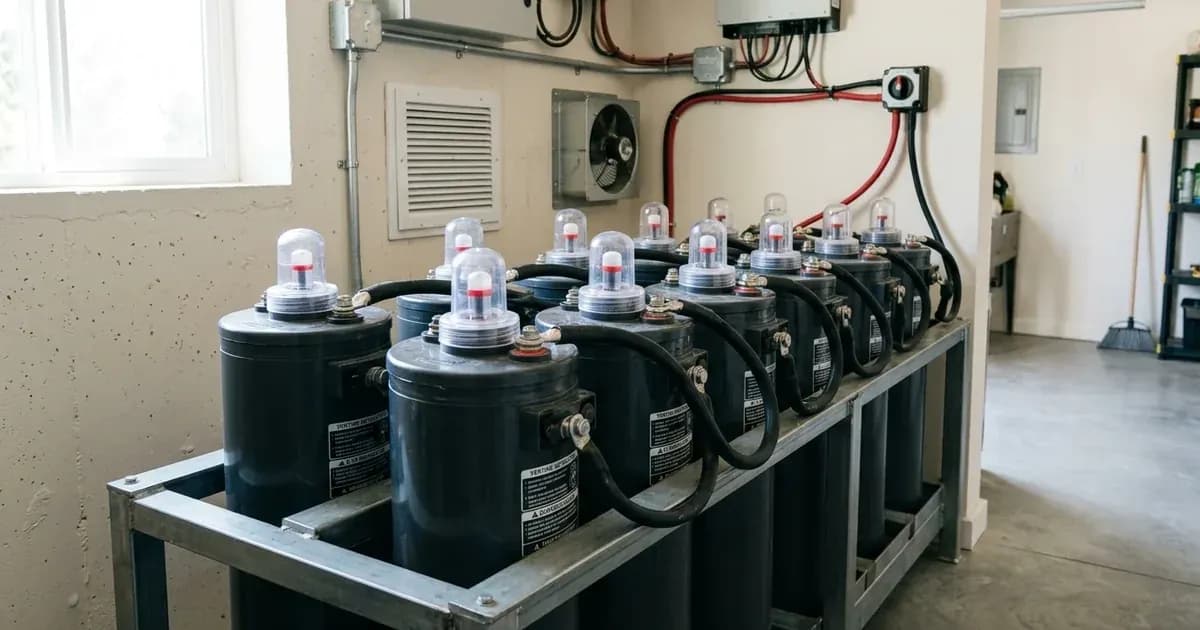
Key Takeaways
- Always wear safety goggles or eye protection when opening cells and top up with pure distilled water only (<125 ppm total solids); never add tap water or sulfuric acid.
- Wear eye protection when using a hydrometer as testing draws acid out; target a full-charge specific gravity of 1.265–1.280 at 25°C based on regional tubular installer practice, and do not allow gravity to drop below 1.180 (80% DoD).
- Normal electrolyte operating temperature is 15°C–38°C and must never exceed 43°C; charge setpoints are 25°C reference values that require inverter temperature derating (−3 to −5 mV/cell/°C above 25°C) to prevent severe heat degradation.
- Equalization deliberately drives cells into the hydrogen gassing region and requires an actively ventilated space away from sparks or flames; apply ~3% of Ah (3 A per 100 Ah) yearly or 59.0 V (14.7 V on a 12 V basis @ 25°C with −3 to −5 mV/cell/°C temp-comp) via Deye 30 days defaults.
- Exide Pakistan publishes no standalone maintenance manual, SG spec, charge-voltage spec, or cycle-life figure; recommendations rest on Exide-group industrial documentation, inverter manuals, and verified installer consensus.
Quick Answer: How to maintain Exide TR tubular batteries for maximum lifespan
To achieve the 3 to 4 years of daily cycling that installer chatter reports (Exide Pakistan publishes no official lifespan figure) from an Exide TR tall-tubular battery bank (such as TR-1800 or TR-2500), inspect electrolyte levels quarterly or per use wearing eye protection and top up with distilled water (<125 ppm total solids; never add acid) at the end of a charging cycle. Configure your solar inverter to the Flooded battery type (58.4 V bulk absorption on a 48 V bank; note that charge setpoints are referenced to 25°C and require temperature compensation of −3 to −5 mV/cell/°C above 25°C) rather than default AGM presets (56.4 V). Limit daily depth of discharge to 80% (SG ≥ 1.180) and maintain electrolyte temperature within 15°C to 38°C (never exceeding 43°C).
To compare current retail pricing across tubular models, consult our guide on Exide battery prices in Pakistan and our tubular battery price comparison table.
Official Documentation Baseline and Sourcing Context
EXIDE Pakistan Limited (incorporated 1953, corporate site exide.com.pk) manufactures the TR flooded tall-tubular line but publishes no public maintenance manual, specific gravity target, charging voltage profile, or cycle-life figures on its corporate or store pages.
To provide homeowners with actionable maintenance parameters, this guide synthesizes verified standards from Exide Technologies industrial tubular manuals (LMX series), Exide India aftercare documentation, inverter engineering manuals (Growatt SPF 3500/5000 ES and Axpert VM III), and installer consensus from regional solar forums.
Master Maintenance Schedule and Operating Limits Table
Maintenance Task | Target Parameter / Specification | Operational Limit / Rule | Documented Source |
|---|---|---|---|
Distilled Water Top-Up | Fill to 1/8" below bottom of vent well | Wear eye protection; add at END of charge; pure distilled water only (<125 ppm total solids), never acid | Exide Industries & LMX Manual |
Specific Gravity (Full Charge) | 1.265–1.280 @ 25°C | Wear eye protection (draws acid out); recharge trigger: SG falls to 1.180 (≈80% DoD); check monthly | DIY Solar Forum 115641 / LMX |
Operating Temperature | 15°C–38°C (normal band) | 43°C absolute maximum (life severely diminished); apply −3 to −5 mV/cell/°C temp-comp above 25°C | Exide Technologies LMX Manual |
Equalization Charging | ~3% of Ah (3 A per 100 Ah) | Drives cells into hydrogen gassing region: ventilated space, no sparks/flames; 59.0 V @ 25°C (temp-comp −3 to −5 mV/cell/°C) every 30 days via Deye | Exide India / Deye Manual |
Terminal Care & Dressing | Snug with correct-size spanner | Kill power first; use insulated tool (spanner across bank shorts hundreds of amps); petroleum jelly / Vaseline on clamps, never grease | Exide India Maintenance Page |
Figures as of August 2026.
Step-by-Step Maintenance and Care Protocols
1. Water Top-Up Rules: Timing and Purity
Flooded tubular batteries consume water during daily charging electrolysis:
- Wear Eye Protection & Add at End of Charge: Always wear safety goggles or eye protection when inspecting or opening cells. Add water when the battery is fully charged. Electrolyte expands during charging; adding water to a discharged battery causes acid to spill over vent caps during subsequent absorption. (Only pre-charge if plates are exposed — just enough to cover them).
- Water Quality Limits (Never Acid): Use pure distilled water or water known free of abnormally high impurities. Exide Technologies LMX specifications limit total solids to <125 ppm, fixed solids to <75 ppm, organics to <50 ppm, iron to <4 ppm, chlorides to <25 ppm, and manganese to <0.007 ppm. Never add tap water or sulfuric acid.
- Filling Boundary: Keep electrolyte above plate separators, filling no higher than 1/8" from bottom of vent well.
2. Specific Gravity Testing and Cell Balance
Specific gravity measured with a hydrometer provides the true chemical State of Charge:
- Eye Protection & Full Charge Target: Always wear eye protection when using a hydrometer, as drawing electrolyte out of the cell presents severe acid splash hazards. Regional installer practice for tall-tubular batteries targets 1.265–1.280 at 25°C (with users of systems such as an Inverex Nitrox targeting 1.275). Industrial motive-power specifications of 1.295–1.345 from Exide Technologies are for traction batteries and are not the target for a home TR bank.
- Discharge Limit: Do not allow specific gravity to fall below 1.180 (representing approximately 80% DoD). Recharge the battery immediately after deep discharge outages.
- Monthly Check & Freshening Charge: Check SG monthly with protective eyewear. Apply a freshening charge if specific gravity falls by ≥0.030, or every 3 months when the battery bank is idle.
- Cell Imbalance Warning: If individual cell gravities vary by ≥0.020 after an equalization charge conducted in an actively ventilated space away from sparks and flames (because equalization deliberately drives cells into the explosive hydrogen gassing region), or individual cell resting open-circuit voltages vary by ≥0.15 V (an LMX industrial-cell trouble sign), or if a cell temperature rises >14°C during normal charge, the lagging cell has suffered internal sulfation or failure.
3. Temperature Management in Pakistani Summers
Extreme summer heat in battery rooms represents the primary cause of premature capacity loss:
- 15°C–38°C Normal Range & 43°C Ceiling: Normal electrolyte operating temperature is 15°C to 38°C. The Exide LMX engineering manual warns that electrolyte temperatures must never exceed 43°C, as battery service life is severely diminished.
- Inverter Temperature Derating: Solar inverters should apply negative temperature compensation of −3 to −5 mV/cell/°C above 25°C (Deye TEMPCO defaults to −5 mV/°C/cell). Voltage setpoints are referenced to 25°C; without temperature compensation, at 45°C a 48 V bank's 57.6 V absorption target should fall by approximately 1.9 V to prevent overcharging, plate corrosion, and water loss.
4. Inverter Pairing and Equalization Discipline
Ensure your inverter charging profile matches flooded tubular requirements:
- Select Flooded Preset (25°C Setpoints): On Growatt SPF 3500/5000 ES and Axpert VM III inverters, configure Program 05 to Flooded (58.4 V bulk absorption on a 48 V bank; note that charge setpoints are 25°C reference values requiring −3 to −5 mV/cell/°C temperature compensation above 25°C in hot installations) rather than the default AGM preset (56.4 V). Float aligns with 54 V-class platform values (Prog 20 on Growatt, Prog 27 on Axpert). Low-DC cutoff (Prog 21 on Growatt, Prog 29 on Axpert) defaults to 42.0 V.
- Equalization Schedule & Gassing Hazard: Equalization deliberately drives cells into the hydrogen gassing region and must only be conducted in an actively ventilated space away from sparks and open flames. Exide India aftercare guidelines prescribe an equalizing charge at ~3% of Ah capacity (3 A per 100 Ah), at least once a year, to lift lagging cells and dissolve sulphate patches. Hybrid inverters (such as Deye SUN-3.6/5/6K-SG03LP1) run automated equalization default every 30 days for 3.0 h at 59.0 V (14.7 V on a 12 V basis; referenced to 25°C with −3 to −5 mV/cell/°C temperature compensation).
For detailed inverter menu setups, consult our guide on Exide battery inverter settings and pairing. If your battery fails to hold charge, see Exide battery not charging and low backup fixes.
Warranty Terms and Realistic Lifespan Expectations
Exide Pakistan's official online store offers a published warranty commitment of 6 months + 6 months exclusive online warranty (Free Replacement) on TR series models (such as TR-1800 185 Ah / 56.5 kg and TR-2500 230 Ah / 66.1 kg). The official listing does not explain the distinction between the two 6-month periods.
While retail chatter claims "3–4 years with monthly maintenance", real-world longevity depends strictly on maintaining water levels, avoiding discharges deeper than 80% DoD, and keeping electrolyte temperatures below 43°C. Review warranty terms and cycle life trade-offs in our guide on battery warranty comparisons: claims vs reality.
Safety: Flooded Battery Handling Precautions
Observe these mandatory safety protocols when maintaining Exide TR batteries:
- Explosive Gas Hazard: Hydrogen and oxygen gas evolve during charge and equalization. Prohibit flames, sparks, and smoking near batteries; never check electrolyte levels with a lighter, and maintain active room ventilation.
- Sulfuric Acid Handling: Sulfuric-acid electrolyte causes severe chemical burns. Wear safety goggles and gloves whenever opening cells, watering, or testing with a hydrometer. Flush with plain water and seek medical help on contact, and neutralize acid spills with sodium bicarbonate (baking soda). Never add acid during topping — add pure distilled water only.
- Terminal and Tool Safety: Disconnect and kill inverter power before servicing terminals. Use insulated tools; never lay metal tools across the battery top, as a spanner dropped across a bank shorts hundreds of amperes and causes severe arcing. Apply petroleum jelly or Vaseline on terminal clamps, never automotive grease.
- Thermal Cutoff: If electrolyte exceeds 43°C, stop charging or discharging and allow the battery to cool.
- Inverter DC Bus Hazard: Inverter capacitors hold lethal voltage up to 5 minutes after shutdown, and PV conductors remain live whenever light hits the panels. Use a DC over-current protector or disconnect on 48 V series banks.
When to call a technician instead
Contact a certified solar technician or battery service dealer under the following conditions:
- Specific gravity remains stuck between 1.220 and 1.240 despite extended charging, or cell-to-cell SG spread varies by ≥0.020 after equalization (which must only be performed in an actively ventilated space away from sparks or flames because equalization drives cells into the explosive hydrogen gassing region).
- Individual cell resting open-circuit voltages vary by ≥0.15 V (LMX industrial trouble sign).
- A battery block exhibits casing bulging, warped walls, or leaking post bushings.
- One battery in a series string runs noticeably hot (temperature rise >14°C during normal charge) or requires excessive water top-ups compared to other cells.
Figures as of August 2026.
Still showing the fault? Book a technician
If the steps above did not clear it, tell us the inverter or battery and the exact code. We pass it to a technician who covers your city; visit charges are quoted before they come.
How this pays for the site: the technician or verifier pays SolarNevs a fixed introduction fee. Nobody pays to be recommended, and you are free to use our free guides instead.
Frequently asked questions
What water should I add to an Exide TR tubular solar battery?
Always wear safety goggles or eye protection and add ONLY pure distilled water or water known free of abnormally high impurities (total solids <125 ppm, fixed solids <75 ppm, organics <50 ppm, iron <4 ppm, chlorides <25 ppm, manganese <0.007 ppm). Never add sulfuric acid or tap water. Add water at the end of a full charge to prevent electrolyte expansion overflow (only pre-charging if plates are exposed — just enough to cover), filling no higher than 1/8" from bottom of vent well.
What is the expected lifespan of an Exide tubular battery in Pakistan?
Exide Pakistan publishes no official cycle-life or year figure. Retail installer chatter estimates 3 to 4 years with monthly maintenance when daily depth of discharge is limited to 80% DoD and electrolyte temperatures remain within 15°C to 38°C (never exceeding 43°C). The official online store commitment provides a 6 months + 6 months exclusive online warranty (Free Replacement) with an unexplained 6-month split.
What specific gravity indicates a fully charged Exide tubular battery?
Always wear safety goggles or eye protection when using a hydrometer as testing draws corrosive acid out of the cell. While Exide Pakistan publishes no proprietary SG specification, community tall-tubular installer practice across South Asia targets a full-charge specific gravity of approximately 1.265 to 1.280 at 25°C (with some inverter owners targeting 1.275), whereas Exide Technologies industrial motive-power specifications (1.295–1.345) should not be targeted for home TR banks. Specific gravity falling below 1.180 indicates deep discharge (≈80% DoD).
How does Pakistani summer heat affect Exide battery life?
Normal electrolyte operating temperature is 15°C to 38°C. According to industrial tubular standards (Exide Technologies LMX manual), electrolyte temperatures must never exceed 43°C, above which battery service life is severely diminished. Inverters should apply negative temperature compensation of −3 to −5 mV/cell/°C above 25°C (Deye TEMPCO defaults to −5 mV/°C/cell).
How often should Exide TR tubular batteries be equalized?
Equalization deliberately drives cells into the hydrogen gassing region and must only be performed in an actively ventilated space away from sparks and open flames. Exide India aftercare guidelines recommend an equalization charge at approximately 3% of Ah capacity (3 A per 100 Ah) at least once a year to lift lagging cells and dissolve sulphate patches, while hybrid inverters (such as Deye) run automated equalization default every 30 days for 3.0 h at 59.0 V (14.7 V on a 12 V basis) for recommended Wet settings. Note that charge voltage setpoints are referenced to 25°C, requiring negative temperature compensation of −3 to −5 mV/cell/°C above 25°C (Deye TEMPCO defaults to −5 mV/°C/cell) in hot ambient conditions.
References
- Exide Pakistan TR-1800 Product Specifications — accessed 23 August 2026
- Exide Pakistan TR-2500 Product Specifications — accessed 23 August 2026
- Exide Technologies Tubular LMX I&O Manual — accessed 23 August 2026
- Exide Industries India Battery Maintenance Guide — accessed 23 August 2026
- Exide Care India Battery Maintenance Protocol — accessed 23 August 2026
- Growatt SPF 3500/5000 ES User Manual — accessed 23 August 2026
- Deye SUN 3.6-6K-SG03LP1-EU Hybrid Inverter User Manual — accessed 23 August 2026
- DIY Solar Forum Tall-Tubular Specific Gravity Discussion (Thread 115641) — accessed 23 August 2026
Related guides
More from inverter errors & fixes.