UK Commercial Solar Farm Decommissioning and Bond Guide
Updated 6 September 2026 · By SolarNevs Research Desk, Dealer surveys + verified sources · 4 sources · Method ↗
Key Takeaways
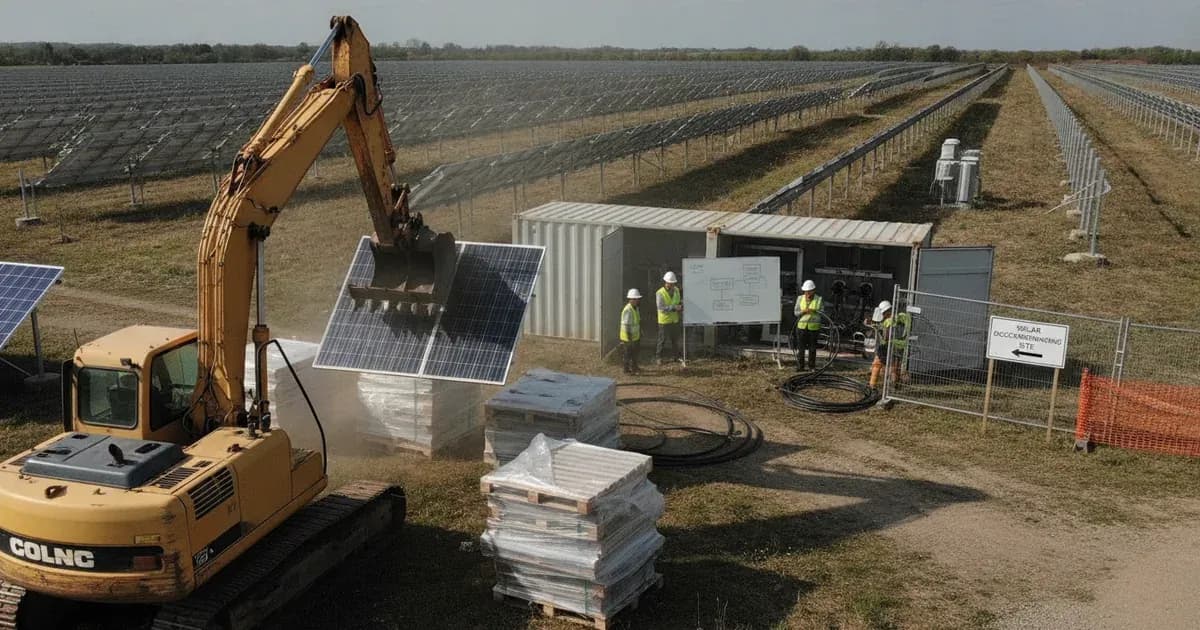
- Commercial solar farms are granted temporary planning consents requiring complete site decommissioning and land reinstatement at end-of-life.
- Local planning authorities secure decommissioning covenants using Section 106 planning obligations.
- Section 106 agreements authorize financial security bonds and escrow funds to guarantee restoration if an operator defaults.
- Planning deeds bind all future landowners and successors in title across the facility operational lifespan.
- EIA screening rules evaluate solar farm land use where development footprints exceed 0.5 hectare.
- All recovered equipment is subject to statutory WEEE producer financing and Environmental Protection Act 1990 duty of care controls.
Section 106 Statutory Authority and Restoration Bonds
Local authorities protect rural land from derelict infrastructure through statutory planning deeds:
- Planning Authority Agreements: A local planning authority may enter into an agreement with any person interested in land in their area for the purpose of restricting or regulating the development or use of the land, either permanently or during such period as may be prescribed by the agreement.
- Financial Guarantees: Any such agreement may contain such incidental and consequential provisions (including financial ones) as appear to the local planning authority to be necessary or expedient for the purposes of the agreement.
- Successor Liability: An agreement made under this section with any person interested in land may be enforced by the local planning authority against persons deriving title under that person.
- Financial restoration bonds typically take the form of cash escrow funds, bank guarantees, or surety bonds established well before decommissioning commences.
Environmental Planning Context and EIA Screening
The full lifecycle of utility-scale energy projects is appraised through statutory planning frameworks:
- Statutory Energy Listing: Scheduled under Industrial installations for the production of electricity, steam and hot water (unless included in Schedule 1).
- Screening Scale: Formal screening by the local planning authority is required where The area of the development exceeds 0.5 hectare.
WEEE Compliance and Material Recovery
Dismantled electrical components must enter certified recycling streams:
- Statutory Equipment Grouping: Equipment is listed alongside gas discharge lamps, LED light sources and photovoltaic panels.
- Financing Legal Duty: Mandates the financing of the costs of the collection, treatment, recovery and environmentally sound disposal of WEEE.
- Producer Audits: Tracks the amount in tonnes of WEEE for which the producer has been responsible for financing the costs of the collection, treatment, recovery and environmentally sound disposal during the relevant compliance period.
Controlled Waste Transfer and Duty of Care under EPA 1990
Removing electrical cabling, steel mounting piles, and inverter kiosks is strictly regulated:
- Statutory Responsibility: Governs the duty of any person who imports, produces, carries, keeps, treats or disposes of controlled waste.
- Escape Prevention: Mandates procedures to prevent the escape of the waste from his control or that of any other person.
- Authorised Carrier Transfer: Dictates that the transfer is only to an authorised person or to a person for authorised transport purposes.
- Written Descriptions: Obligates the provision of a written description of the waste as will enable other persons to avoid a contravention.
Frequently asked questions
How do UK planning authorities enforce solar farm decommissioning?
Authorities enter into Section 106 agreements regulating land use and prescribing financial provisions, enforceable against successors in title.
What financial instruments are used for solar restoration bonds?
Section 106 agreements require escrow accounts, surety bonds, or parent company guarantees to fund complete site restoration after 30 to 40 years.
What EIA screening threshold applies to commercial solar farms?
Under Schedule 2 of the EIA Regulations 2017, screening applies where the area of the development exceeds 0.5 hectare.
What recycling obligations govern decommissioned solar hardware?
Hardware is regulated under the WEEE Regulations 2013 alongside gas discharge lamps and LED light sources, requiring producer-financed recovery.
What duty of care governs waste removal during solar farm decommissioning?
Under Section 34 of the EPA 1990, contractors must prevent waste escape and transfer controlled waste only to authorised persons with written descriptions.
References
- Town and Country Planning Act 1990 Section 106 Planning Obligations — accessed 28 August 2026
- Town and Country Planning (Environmental Impact Assessment) Regulations 2017 Schedule 2 — accessed 28 August 2026
- Waste Electrical and Electronic Equipment Regulations 2013 — accessed 28 August 2026
- Environmental Protection Act 1990 Section 34 Duty of Care as Respects Waste — accessed 28 August 2026
Related guides
More from what to buy — and how not to get cheated.