UK Building Regulations Part S Regulation 44G: Commercial EV Solar Guide
Updated 6 September 2026 · By SolarNevs Research Desk, Dealer surveys + verified sources · 1 source · Method ↗
Key Takeaways
- Regulation 44G is part of S.I. 2021 No. 1392, effective in England (August 2026).
- It applies to new non-residential buildings with more than 10 parking spaces (August 2026).
- Mandates the installation of electric vehicle charge points and cable routes (August 2026).
- Commercial solar PV and carports can directly power these required EV chargers.
What is UK Building Regulations Part S Regulation 44G?
UK Building Regulations Part S Regulation 44G sets out requirements for electric vehicle (EV) charging infrastructure in new commercial and non-residential buildings in England. This regulation was introduced by The Building Regulations etc. (Amendment) (England) (No. 2) Regulations 2021, specifically Statutory Instrument 2021 No. 1392 (August 2026). It ensures that new developments are equipped to support the growing adoption of electric vehicles.
Which Buildings Does Regulation 44G Affect?
Regulation 44G applies to the erection of new buildings that are not residential or mixed-use buildings. The key trigger for its application is the number of parking spaces. If a new non-residential building has, or will have, within its site boundary, more than 10 parking spaces, then the requirements of paragraph S4 of Schedule 1 must be applied (August 2026). This means the regulation targets larger commercial and non-residential developments.
What are the Specific Requirements for EV Charging Infrastructure?
For new non-residential buildings that meet the criteria (i.e., more than 10 parking spaces), Regulation 44G mandates the installation of electric vehicle charge points and cable routes. These requirements fall under "PART S Infrastructure for the charging of electric vehicles" as detailed in paragraph S4 of Schedule 1 (August 2026). The regulation ensures that the necessary physical infrastructure is in place to support EV charging from the outset of a building's construction.
How Does Solar PV Support Regulation 44G Compliance?
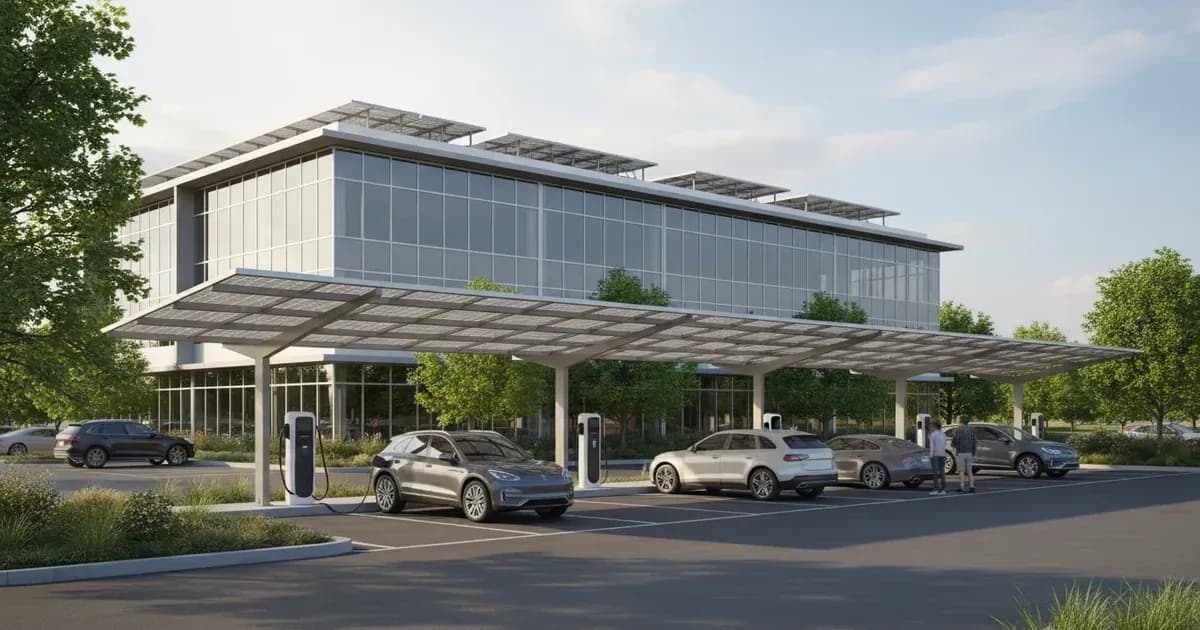
Commercial rooftop solar PV and solar carport canopies offer a direct solution for powering the EV charging infrastructure mandated by Regulation 44G. By generating electricity on-site, businesses can provide renewable energy for their required EV chargers. This approach not only helps meet regulatory obligations but also reduces operational costs and carbon emissions. Integrating solar PV with EV charging infrastructure can enhance a building's energy independence and sustainability profile.
How We Verified These Regulations
We verified the details of Regulation 44G by directly consulting the official UK government legislation. Our information is drawn from "The Building Regulations etc. (Amendment) (England) (No. 2) Regulations 2021," specifically Statutory Instrument 2021 No. 1392, accessed on 23 August 2026. This ensures that the information presented reflects the statutory provisions accurately.
Integrating Solar with EV Charging for Commercial Properties
When planning for Regulation 44G compliance, consider how solar PV can be integrated into your commercial property's design. For new non-residential buildings with more than 10 parking spaces, the requirement to install EV charge points and cable routes presents an opportunity to incorporate renewable energy solutions.
You can explore options such as commercial rooftop solar installations or dedicated solar carports. Solar carports, in particular, can serve a dual purpose: providing shaded parking and generating electricity for EV charging stations. This integration can help you meet the "installing an electric vehicle charge point and cable routes" mandate while also improving your building's energy efficiency.
For guidance on broader solar system considerations, you can refer to our UK Building Regulations Part S Regulation 44D Residential EV Solar Guide for context on EV charging regulations, or our UK MEES Commercial Solar PV and EPC Compliance Guide for commercial solar benefits. Understanding your potential energy needs for EV charging is crucial; you can use a solar sizing tool to estimate system requirements.
Broader Regulatory Context for Commercial Buildings
Regulation 44G is one part of a wider regulatory landscape impacting commercial buildings in the UK. Understanding these interconnected regulations is important for comprehensive compliance and sustainable development. For instance, you might also consider the implications of UK Building Regulations 2010 Regulation 28 Consequential Improvements Guide when undertaking significant renovations. These regulations collectively aim to improve the energy performance and sustainability of the built environment.
Frequently asked questions
What is Regulation 44G of UK Building Regulations Part S?
Regulation 44G, introduced by S.I. 2021 No. 1392, mandates electric vehicle charge points and cable routes for new non-residential buildings in England with more than 10 parking spaces (August 2026).
Which buildings are affected by Regulation 44G?
It applies to the erection of new buildings that are not residential or mixed-use, specifically those with more than 10 parking spaces within their site boundary (August 2026).
What are the requirements for EV charging under Regulation 44G?
New non-residential buildings meeting the criteria must install electric vehicle charge points and cable routes as per paragraph S4 of Schedule 1 (August 2026).
How can solar PV support Regulation 44G compliance?
Commercial rooftop solar PV and solar carport canopies can provide direct on-site renewable power for the required EV chargers, supporting compliance and operational efficiency (August 2026).
References
- The Building Regulations etc. (Amendment) (England) (No. 2) Regulations 2021 — accessed 23 August 2026
Related guides
More from what to buy — and how not to get cheated.