Building Regulations Part L Solar PV SAP 10 Guide
Updated 15 September 2026 · By SolarNevs Research Desk, Dealer surveys + verified sources · 3 sources · Method ↗
Key Takeaways
- Building Regulations Approved Document L establishes legal energy efficiency standards for dwellings and commercial buildings in England.
- Integrating rooftop solar PV directly reduces calculated Target Primary Energy Rates (TPER) and Target Emission Rates (TER) under SAP 10.
- The Boiler Upgrade Scheme (BUS) provides capital support to replace fossil fuel heating systems with low-carbon heat pumps.
- Grants offer £7,500 towards an air source heat pump or ground source heat pump.
- Individual systems are capped at 45kWth capacity, with hybrid gas-electric systems ineligible for grant support.
- Funding is restricted to one grant per property across eligible domestic and commercial premises.
Approved Document L Framework and Standards
The energy conservation of residential buildings in England is governed by strict statutory instruments:
- Regulatory Scope: Building regulation in England setting standards for the energy performance of new and existing buildings.
- Dwelling Standards: Enforced under Approved Document L, Conservation of fuel and power, Volume 1: Dwellings, 2021 edition incorporating 2023 amendments.
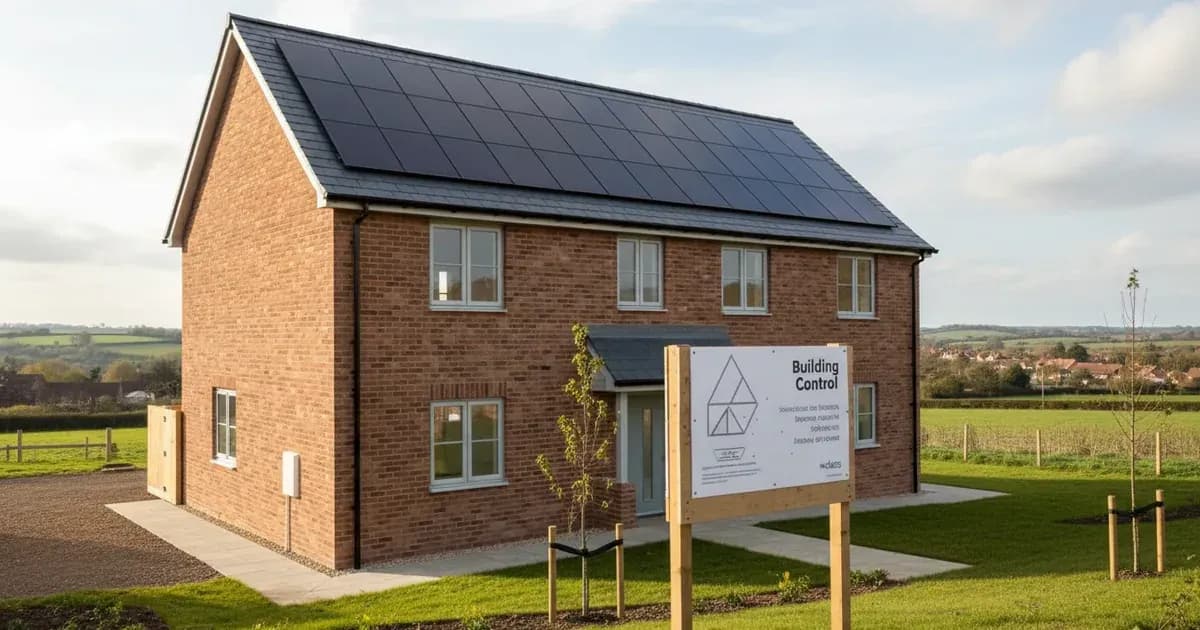
- Under the Standard Assessment Procedure (SAP 10), on-site solar generation offsets electricity import figures, ensuring new homes achieve compliance with tightening primary energy targets.
Boiler Upgrade Scheme: Capital Support
To transition away from fossil fuel reliance, property owners can access government grant funding:
- Scheme Mandate: Through the Boiler Upgrade Scheme, you could get a grant to cover part of the cost of replacing fossil fuel heating systems with a heat pump or biomass boiler.
- Premises Scope: You can use the grant to replace a heating system in your home or a building used for your business.
- Geographic Availability: This scheme is open to people in England and Wales.
- One Grant Rule: You can get one grant per property.
Technology Grants and Capacity Limits
The scheme defines precise financial support tiers for approved renewable technologies:
- Air Source Heat Pumps: Grants provide £7,500 towards an air source heat pump (sometimes called an air-to-water heat pump).
- Ground Source Heat Pumps: Allocates £7,500 towards a ground source heat pump (including water source heat pumps and those on shared ground loops).
- Biomass Boilers: Offers £5,000 towards a biomass boiler.
- Air-to-Air Systems: Grants provide £2,500 towards an air-to-air heat pump.
- Individual Capacity Limit: The maximum capacity is 45kWth for individual systems.
- Hybrid Exclusion: You cannot get a grant for a hybrid heat pump system (for example a combination of gas boiler and air source heat pump).
Frequently asked questions
What is the role of Approved Document L in UK building projects?
It provides statutory guidance setting standards for the energy performance of new and existing buildings in England.
What grant funding supports low-carbon heat pump installations?
The Boiler Upgrade Scheme provides £7,500 towards an air source heat pump or ground source heat pump in England and Wales.
What capacity limit applies to individual heat pump installations under BUS?
The maximum capacity eligible for grant funding is 45kWth for individual systems.
Are hybrid heating systems eligible for Boiler Upgrade Scheme grants?
No, you cannot get a grant for a hybrid heat pump system combining a gas boiler and heat pump.
How many grants can be claimed per property?
The scheme allows exactly one grant per property to replace eligible fossil fuel heating systems.
References
- MHCLG Conservation of Fuel and Power Approved Document L — accessed 28 August 2026
- DESNZ Apply for the Boiler Upgrade Scheme What You Can Get — accessed 28 August 2026
- DESNZ Apply for the Boiler Upgrade Scheme Overview — accessed 28 August 2026
Related guides
More from what to buy — and how not to get cheated.