UK BRE Wind Load Standards and Eurocode 1 Solar Guide
Updated 15 September 2026 · By SolarNevs Research Desk, Dealer surveys + verified sources · 4 sources · Method ↗
Key Takeaways
- Building Regulations Approved Document A governs structural integrity and loadings on UK roofs and structural building elements.
- The Building Safety Regulator actively maintains oversight of building safety and standards under the Building Safety Act 2022.
- Under statutory planning Class J, solar arrays must maintain an edge buffer of at least 1 metre from the external roof boundary.
- On commercial flat roofs, solar equipment must not exceed 1 metre above the highest roof elevation to qualify under permitted development.
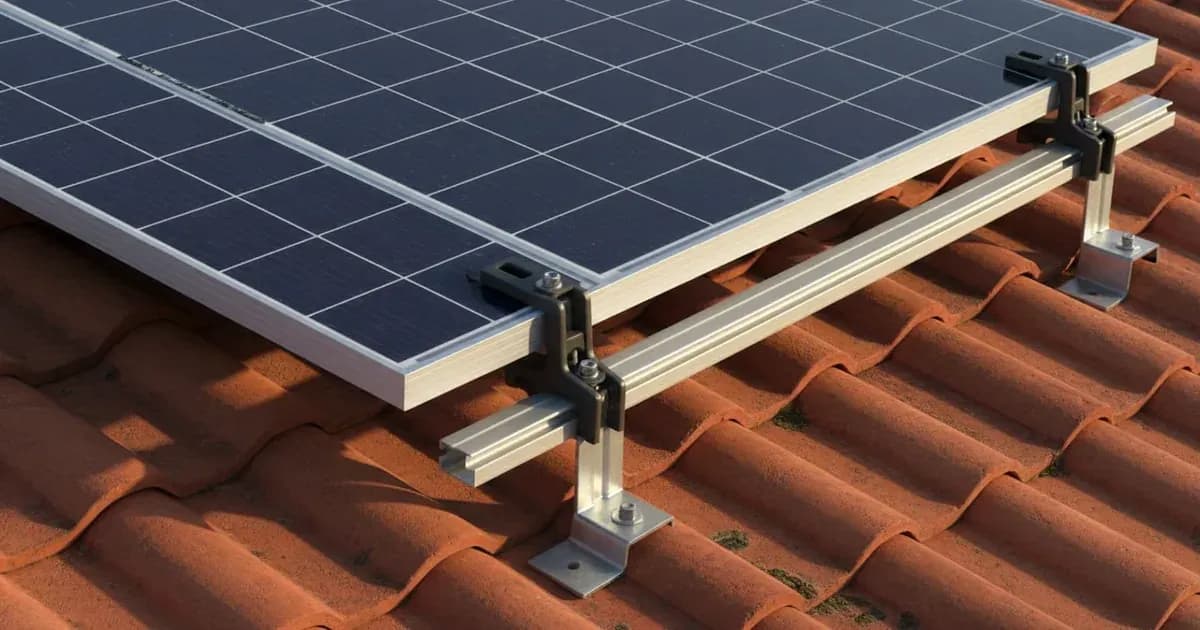
- On pitched roofs, panels must not protrude more than 0.2 metres beyond the plane of the roof slope.
- Designers carry legal duties under the Construction (Design and Management) Regulations to eliminate foreseeable safety risks during erection and maintenance.
Structural Statutory Framework: Approved Document A
Rooftop photovoltaic arrays convert flat and pitched roofs into aerodynamic surfaces subjected to complex turbulent wind forces. Compliance with national standards begins with Approved Document A:
- Regulatory Scope: Statutory guidance provides building regulation in England covering the structural elements of a building.
- Loading Coverage: This edition covers the loadings on a building, and the construction of the structural elements including the foundations, walls, floors, roofs and chimneys.
- Regulatory Supervision: Since April 2023, the Building Safety Regulator has a duty under the Building Safety Act 2022 to keep under review the safety and standards of all buildings in England, which includes advising government on updates to the Approved Documents.
- Publication Reference: Approved Document A: structure Ref: ISBN 978 1 85946 508 0.
Aerodynamic Wind Actions and Spatial Limits
Calculating dynamic wind pressure across roof planes requires understanding aerodynamic vortex shedding along roof perimeters:
Flat Roof Edge and Height Controls
Under Class J of the General Permitted Development Order:
- Edge Setback: Development is not permitted if the solar PV equipment or solar thermal equipment would be installed within 1 metre of the external edge of that roof.
- Maintaining this 1 metre boundary keeps modules outside high-velocity separation bubbles and corner vortices where uplift forces peak.
- Height Ceiling: The highest part of the solar PV equipment must not be higher than 1 metre above the highest part of the roof (excluding any chimney).
Pitched Roof Protrusions
On pitched roofs, aerodynamic drag is controlled by profile restrictions:
- Development is not permitted if equipment would protrude more than 0.2 metres beyond the plane of the roof slope when measured from the perpendicular with the external surface of the roof slope.
Health, Safety, and Designer Responsibilities
Structural wind design directly affects site worker safety during installation and ongoing facility operation:
Designer Duties under the 2015 Regulations
Under Regulation 9 of the Construction (Design and Management) Regulations:
- When preparing or modifying a design the designer must take into account the general principles of prevention and any pre-construction information to eliminate, so far as is reasonably practicable, foreseeable risks to the health or safety of any person carrying out or liable to be affected by construction work, or maintaining or cleaning a structure.
- A designer must take all reasonable steps to provide, with the design, sufficient information about the design, construction or maintenance of the structure, to adequately assist the client, other designers and contractors to comply with their duties under these Regulations.
Work at Height Fall Prevention
Under Regulation 6 of the Work at Height Regulations 2005:
- Where work is carried out at height, every employer shall take suitable and sufficient measures to prevent, so far as is reasonably practicable, any person falling a distance liable to cause personal injury.
- Structural designs must accommodate edge protection systems and secure anchorage for fall arrest equipment.
Frequently asked questions
What building regulation governs structural loadings for UK solar?
Approved Document A covers the structural elements of a building and loadings on foundations, walls, floors, roofs, and chimneys.
What role does the Building Safety Regulator play in structural standards?
Under the Building Safety Act 2022, the Building Safety Regulator keeps building safety and standards under review, advising on Approved Documents.
What setback applies from roof edges for commercial solar?
Permitted development rules require equipment to be installed at least 1 metre from the external edge of the roof to avoid edge wind vortexes.
What height cap applies on flat roofs under Class J?
The highest part of the solar PV equipment must not exceed 1 metre above the highest part of the roof surface.
What legal duty applies to designers under the 2015 CDM Regulations?
Designers must take into account principles of prevention and pre-construction information to eliminate foreseeable health and safety risks.
References
- Building Regulations Approved Document A Structure — accessed 28 August 2026
- Town and Country Planning General Permitted Development Order 2015 Schedule 2 Part 14 — accessed 28 August 2026
- Construction Design and Management Regulations 2015 Regulation 9 — accessed 28 August 2026
- Work at Height Regulations 2005 Regulation 6 — accessed 28 August 2026
Related guides
More from what to buy — and how not to get cheated.