Solar PV EV Charging Hub Integration Guide UK
Updated 6 September 2026 · By SolarNevs Research Desk, Dealer surveys + verified sources · 4 sources · Method ↗
Key Takeaways
- Statutory planning rules under Class OA authorise the installation of solar canopies on non-domestic off-street parking areas.
- Permitted development limits canopy height to a maximum of 4 metres above ground level.
- Canopies must maintain a minimum buffer of 10 metres from the curtilage of any dwellinghouse or block of flats.
- Prior approval from the local planning authority is required to assess siting, design, external appearance, and glare impacts on neighbours.
- Developers must complete construction within a period of 3 years from prior approval determination.
- Installers must register energy devices with the local Distribution Network Operator (DNO) to verify local network capacity and ensure safe grid operation.
Permitted Development Framework: Class OA
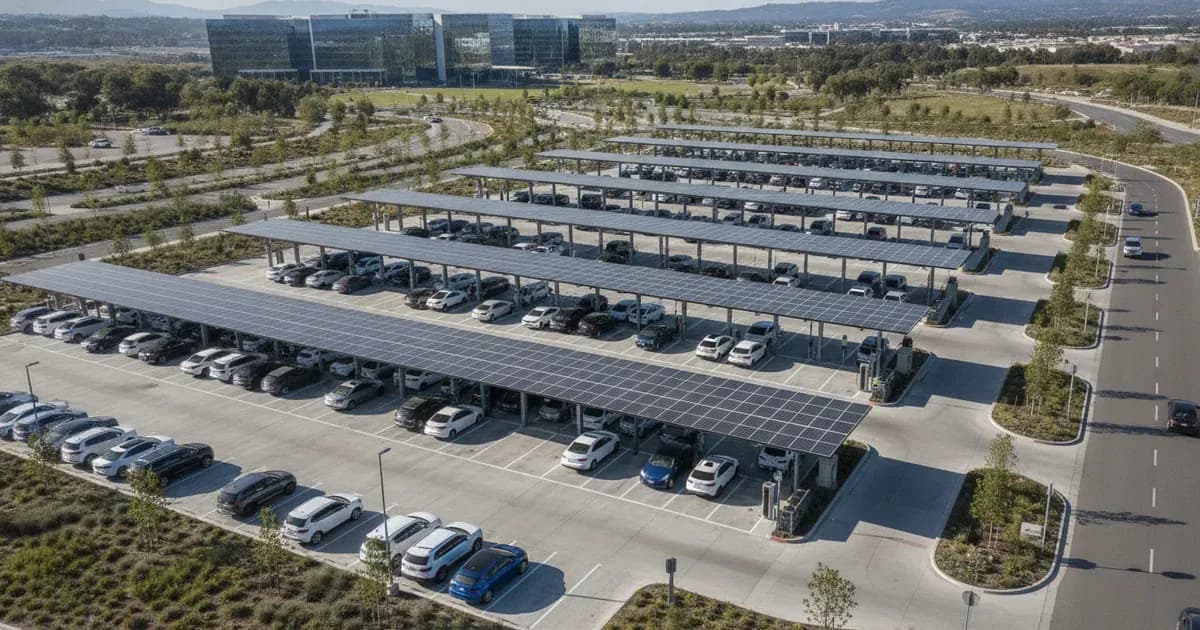
Commercial car parks represent ideal locations for multi-bay EV charging infrastructure paired with overhead solar generation. Under Class OA of Schedule 2 to the General Permitted Development Order, businesses can erect solar canopies without submitting full planning applications:
- Permitted Scope: The installation, alteration or replacement of a solar canopy within an area lawfully used as off-street parking other than for a dwellinghouse or a block of flats.
- Height Restriction: Development is not permitted if any part exceeds 4 metres in height above ground level.
- Residential Boundary Buffer: Development is excluded if any part is within 10 metres of the curtilage of a dwellinghouse or a block of flats.
- Surface Water Management: In the case of development above a permeable surface, provision is made to direct run-off water from the solar canopy to a permeable or porous area or surface within the off-street parking area.
Planning Conditions and Prior Approval
Before initiating erection of a solar canopy charging hub, developers must comply with formal prior approval procedures:
- The developer must apply to the local planning authority for a determination as to whether prior approval is required regarding the solar canopy’s siting, design and external appearance, in particular the impact of glare on the occupiers of neighbouring premises.
- Once approved, development must be completed within a period of 3 years starting with the date on which prior approval is granted or determined not required.
Grid Interconnection and DNO Registration
Connecting high-power EV charging points alongside solar generation requires coordinated electrical planning with the local Distribution Network Operator:
- Registration Obligation: If you are planning to install an energy device in your home or small business, you are required to register your energy device with your Distribution Network Operator ( DNO ), the company that is responsible for bringing electricity to the property where you are installing the device.
- Capacity Assessment: The network operator needs to check if the local electricity network can handle the extra energy that your device will use or produce.
- Contractor Assessment: Installation contractors must examine the energy device and required connection to determine whether the Distribution Network Operator needs to be informed before or after installation.
Under statutory Regulation 22 of the Electricity Safety, Quality and Continuity Regulations 2002, parallel generators must have the necessary and appropriate equipment to prevent danger or interference with the distribution network. While micro-generation not exceeding 16 amperes per phase qualifies for expedited notification, larger commercial charging hubs require formal connection agreements.
Accessibility Standards Under PAS 1899:2022
To help build an inclusive EV charging infrastructure in the UK, PAS 1899:2022 specifies requirements for the provision of accessible public charging for electric vehicles (EVs).
The specification focuses on light duty vehicles such as cars and vans due to their greater spatial needs and requirement for dedicated infrastructure, ensuring charging hubs accommodate disabled drivers through proper kerb levels, turning spaces, and cable management.
Frequently asked questions
What planning class permits commercial solar canopies?
Class OA of Schedule 2 Part 14 permits solar canopies in lawful off-street parking areas other than for dwellinghouses or blocks of flats.
What are the height and boundary limits under Class OA?
Development cannot exceed 4 metres in height above ground level and must not be within 10 metres of a dwellinghouse curtilage.
Why must energy devices be registered with the network operator?
Registering devices helps keep the energy supply safe, allowing the DNO to check if the network can handle the extra energy used or produced.
What drainage rules apply to solar canopies on permeable ground?
Where installed above a permeable surface, provision must direct run-off water to a permeable or porous area within the parking area.
What accessibility standard applies to public EV charging hubs?
PAS 1899 specifies requirements for accessible public charging for electric vehicles, focusing on light duty vehicles like cars and vans.
References
- Town and Country Planning Permitted Development Amendment No 2 Order 2023 — accessed 28 August 2026
- BSI PAS 1899:2022 Electric Vehicles Accessible Charging Specification — accessed 28 August 2026
- DESNZ Guidance on Registering Energy Devices — accessed 28 August 2026
- Electricity Safety Quality and Continuity Regulations 2002 Regulation 22 — accessed 28 August 2026
Related guides
More from what to buy — and how not to get cheated.