UK Solar Powered EV Charging Infrastructure Guide
Updated 15 September 2026 · By SolarNevs Research Desk, Dealer surveys + verified sources · 4 sources · Method ↗
Key Takeaways
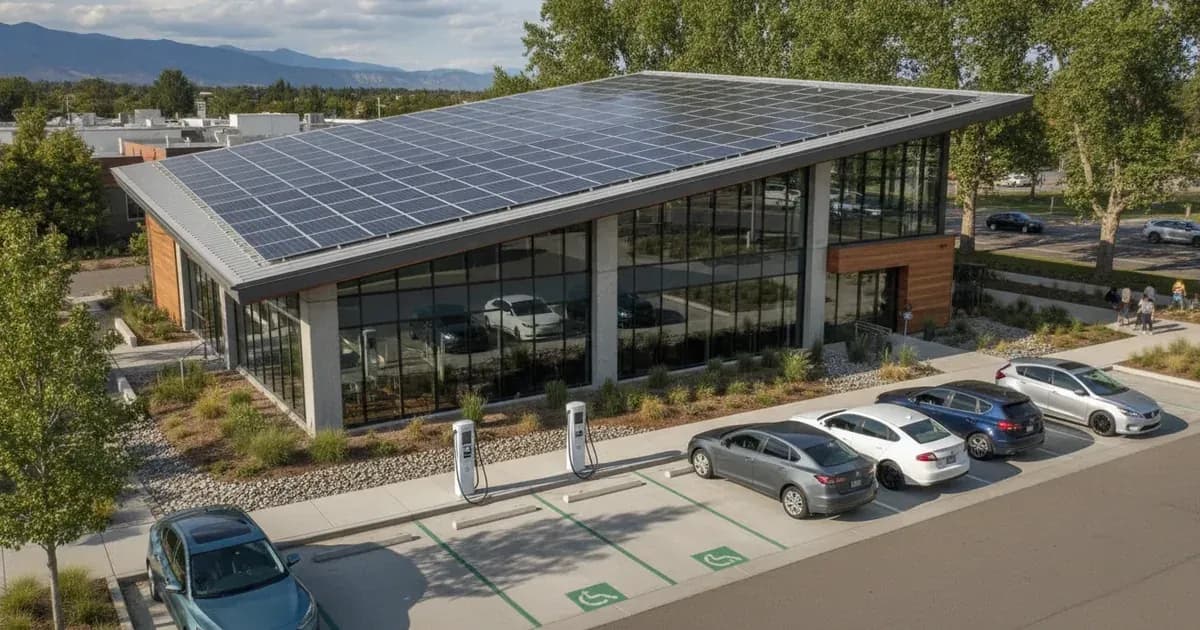
- Pairing commercial solar photovoltaic canopies with electric vehicle (EV) charging stations allows businesses to generate clean transport fuel on-site.
- Smart Energy Management Systems (EMS) dynamically balance solar generation, battery storage, and EV charging speeds.
- Installing charging hardware within off-street parking areas is supported by Class D and Class E permitted development rights.
- Electrical upstands must not exceed 1.6 metres in height, restricted to one upstand per vehicle parking space.
- Public charging installations must satisfy statutory payment accessibility, availability, and maintenance benchmarks.
- Site operators are legally obligated to maintain general fire precautions ensuring employee safety and premises protection.
Microgrid System Architecture: Solar, Storage, and EV Charging
Commercial solar EV hubs integrate power generation, local storage, and high-power DC chargers:
- Solar Generation: Rooftop arrays or canopy structures feed clean power to on-site distribution switchboards.
- Buffer Battery Storage: Stationary batteries absorb midday solar generation and discharge during fleet charging surges, shaving peak grid connection demands.
- Dynamic Load Balancing: Intelligent charge point controllers modulate charging amperage based on building electrical load and available solar surplus.
Permitted Development Framework: Class D and Class E
Deploying EV infrastructure across commercial car parks is streamlined under planning law:
- Wall Outlet Scope: Governs The installation, alteration or replacement, within an area lawfully used for off-street parking, of an electrical outlet mounted on a wall for recharging electric vehicles.
- Highway Setback: Requires that units do not face onto and be within 2 metres of a highway.
- Upstand Permitted Development: Authorizes The installation, alteration or replacement, within an area lawfully used for off-street parking, of an upstand with an electrical outlet mounted on it for recharging electric vehicles.
- Maximum Height Limit: Confirms that upstands must not exceed 1.6 metres in height from the level of the surface used for the parking of vehicles;.
- Single Upstand Rule: Mandates that works do not result in more than 1 upstand being provided for each parking space.
- Reinstatement Duty: Confirms conditions that the development is removed as soon as reasonably practicable; when decommissioned.
Automated and Electric Vehicles Act 2018 Mandates
Public commercial charging points must comply with national consumer accessibility regulations:
- Statutory Powers: Governed under Regulations may impose requirements on operators of public charging or refuelling points in connection with.
- Transparent Access: Regulates the method of payment or other way by which access to the use of public charging or refuelling points may be obtained;.
- Uptime Benchmarks: Mandates compliance with performance, maintenance and availability of public charging or refuelling points;.
Fire Safety and Premises Protection
Operating high-power charging hubs adjacent to solar arrays requires rigorous fire risk management:
- Worker Safety: Dutyholders must take such general fire precautions as will ensure, so far as is reasonably practicable, the safety of any of his employees; and.
- Premises Safety: Requires measures to take such general fire precautions as may reasonably be required in the circumstances of the case to ensure that the premises are safe.
- Building Regulations: Coordinates with Approved Document B (fire safety) volume 1: Dwellings, 2019 edition incorporating 2020, 2022 and 2025 amendments.
Frequently asked questions
What permitted development rules apply to commercial solar EV charging upstands?
Under Class E of the 2015 GPDO, electrical upstands in off-street parking areas must not exceed 1.6 metres in height from the parking surface.
What statutory standards govern payment and access at solar EV charging points?
Under the 2018 AEV Act, regulations impose standards for payment methods, performance, maintenance, and availability.
What general fire precautions apply to solar EV charging forecourts?
Dutyholders must take general fire precautions ensuring employee safety and keeping the premises safe.
How many charging upstands are permitted per parking bay?
Permitted development allows exactly one upstand per parking space.
Under what building regulations are fire safety requirements established?
Fire safety standards are established under Approved Document B Volume 1 for Dwellings.
References
- Town and Country Planning (General Permitted Development) Order 2015 Part 2 — accessed 28 August 2026
- Automated and Electric Vehicles Act 2018 Section 10 — accessed 28 August 2026
- Regulatory Reform (Fire Safety) Order 2005 Article 8 Fire Precautions — accessed 28 August 2026
- Building Regulations Approved Document B Volume 1 Dwellings — accessed 28 August 2026
Related guides
More from what to buy — and how not to get cheated.