UK Commercial EV Charging Hubs and PAS 1899 Guide
Updated 6 September 2026 · By SolarNevs Research Desk, Dealer surveys + verified sources · 2 sources · Method ↗
Key Takeaways
- PAS 1899:2022 was published on 31 October 2022 as the UK's national benchmark for accessible electric vehicle charging infrastructure.
- The specification covers all potential users, including disabled drivers and older motorists.
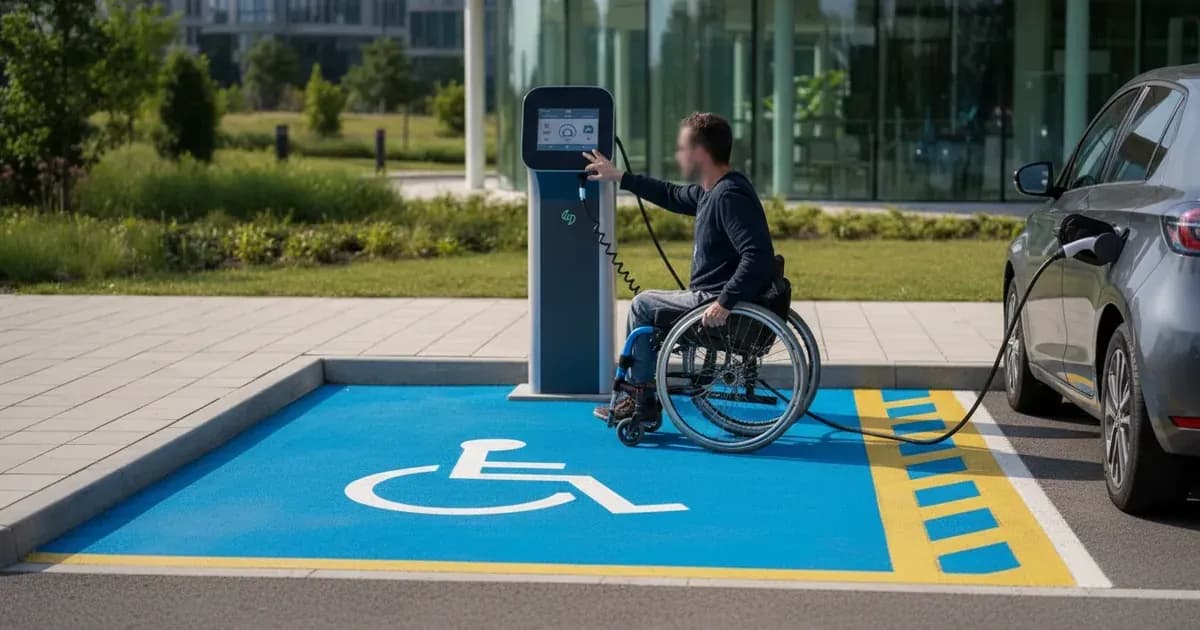
- Key physical design parameters include kerb heights, ground surface materials, chargepoint socket heights, and cable management systems.
- The standard places special emphasis on light duty vehicles (cars and vans) due to their unique spatial requirements.
- Where overhead solar canopies are integrated, Class OA permitted development limits canopy height to 4 metres above ground level.
- Prior approval is required to assess siting, design, and glare impacts on neighbouring premises.
The Purpose of PAS 1899:2022
As public electric vehicle charging hubs expanded across motorways, retail parks, and fleet depots, accessibility advocates identified widespread physical barriers for disabled and mobility-impaired drivers. Heavy unmanaged charging cables, high display screens, tall kerbs, and narrow parking bays frequently prevented wheelchair users from independently charging vehicles.
To establish inclusive design criteria across the United Kingdom:
- Designation: Fast-track Standard PAS 1899:2022 Electric vehicles - Accessible charging. Specification.
- Publication: Formally published on 31 October 2022.
- Mission: To help build an inclusive EV charging infrastructure in the UK, PAS 1899:2022 specifies requirements for the provision of accessible public charging for electric vehicles (EVs).
- User Scope: PAS 1899 specifies requirements for the provision of accessible public chargepoints for electric vehicles to all potential users, including, for example, disabled people and older people.
Environmental and Hardware Engineering Requirements
The specification details technical criteria across the complete physical interface of the charging hub:
1. Surrounding Physical Environment
PAS 1899 governs:
- The physical aspects of the environment surrounding fixed chargepoints (e.g. kerb height, ground type).
- Ground surfaces must be level, non-slip, and free of gravel, steps, or open grates that obstruct mobility equipment.
- Where chargepoints sit on raised walkways, drop kerbs or flush transitions must be provided within the designated charging zone.
2. Public Realm Placement and Clearance
- The location, placement and spacing of chargepoints within the streetscape/public realm and relative to other infrastructure and/or objects.
- Installations must ensure wide pedestrian bypass routes and prevent chargepoints or protection bollards from creating pavement obstructions.
3. Hardware Ergonomics and Cable Handling
PAS 1899 addresses:
- Factors to be taken account of in the design and specification of accessible chargepoints and their more immediate surrounding areas (e.g. height of chargepoint, cables and cable management systems, bollard spacing, interface tilt, colours used, accessibility of language within communications, weight and ease of use of the equipment).
- Counterbalanced suspension systems or sprung reels help manage heavy high-power DC charging cables, preventing cables from resting on the ground where they cause tripping hazards.
4. Vehicle Focus and Accessible Bay Best Practice
- PAS 1899 focuses on light duty vehicles such as cars and vans due to their greater spatial needs and requirement for dedicated infrastructure.
- Best practice is subsequently provided within this PAS, both for enhanced accessibility for all public chargepoints, and for chargepoints specifically located beside accessible parking bays.
Integration with Class OA Solar Canopies
Commercial chargepoint operators increasingly combine accessible charging hubs with overhead solar canopies to provide weather protection and clean on-site energy.
Under Class OA of Schedule 2 to the General Permitted Development Order:
- Permitted development allows the installation, alteration or replacement of a solar canopy within an area lawfully used as off-street parking other than for a dwellinghouse or a block of flats.
- Development is not permitted if any part exceeds 4 metres in height above ground level.
- Developers must secure prior approval regarding the solar canopy’s siting, design and external appearance, in particular the impact of glare on the occupiers of neighbouring premises.
Frequently asked questions
What is PAS 1899:2022?
PAS 1899:2022 is the British Standards Institution fast-track specification for accessible public charging of electric vehicles.
Who is covered under the accessibility scope of PAS 1899?
It specifies requirements for accessible chargepoints for all potential users, including disabled people and older people.
What physical environmental factors does PAS 1899 govern?
It covers surrounding environment factors such as kerb height, ground surface type, chargepoint height, and cable management.
What vehicle classes are prioritized in PAS 1899?
The standard focuses on light duty vehicles like cars and vans due to their greater spatial and infrastructure needs.
What planning rules govern solar canopies over accessible charging bays?
Class OA permits solar canopies in lawful off-street parking areas up to 4 metres in height, subject to prior approval on glare and design.
References
- BSI PAS 1899:2022 Electric Vehicles Accessible Charging Specification — accessed 28 August 2026
- Town and Country Planning Permitted Development Amendment No 2 Order 2023 — accessed 28 August 2026
Related guides
More from what to buy — and how not to get cheated.