UK GPDO 2015 Part 14 Class K Amendment: Stand-Alone Solar on Article 2(3) Land Guide
Updated 16 September 2026 · By SolarNevs Research Desk, Dealer surveys + verified sources · 1 source · Method ↗
Key Takeaways
- The 9 square metre limit for stand-alone solar on Article 2(3) land has been removed by S.I. 2023 No. 1279.
- Stand-alone solar on Article 2(3) land must be 2 metres in height if nearer a highway than the building.
- Prior approval for visual appearance is required for installations near highways on Article 2(3) land.
- These changes apply to England and Wales, amending the Town and Country Planning (General Permitted Development) (England) Order 2015.
What are the Class K Amendments for Stand-Alone Solar on Article 2(3) Land?
The Town and Country Planning (General Permitted Development) (England) Order 2015 (GPDO 2015) governs permitted development rights in England. Schedule 2 Part 14 Class K covers the installation or alteration of stand-alone solar equipment on non-domestic premises. Recent amendments, specifically S.I. 2023 No. 1279, have altered the rules for stand-alone solar installations on land designated as "article 2(3) land."
The key change is the removal of the previous 9 square metre limit for stand-alone solar equipment on article 2(3) land. This amendment allows for larger installations without requiring a full planning application, provided other conditions are met. Additionally, new restrictions have been introduced concerning height and prior approval for installations located near highways.
These amendments are officially titled "Amendments to Class K of Part 14 of Schedule 2" within The Town and Country Planning (General Permitted Development etc.) (England) (Amendment) (No. 2) Order 2023 (S.I. 2023 No. 1279).
How We Verified These Planning Amendments
We verified the details of these amendments by directly consulting the statutory instrument: The Town and Country Planning (General Permitted Development etc.) (England) (Amendment) (No. 2) Order 2023, identified as S.I. 2023 No. 1279. This document was accessed on legislation.gov.uk on 23 August 2026. Our review focused on the specific provisions relating to "Amendments to Class K of Part 14 of Schedule 2" to ensure accuracy in reporting the changes.
Understanding Article 2(3) Land and Its Impact on Solar Development
Article 2(3) land refers to specific types of land where permitted development rights are often more restricted due to environmental or landscape designations. This can include National Parks, Areas of Outstanding Natural Beauty, the Broads, and World Heritage Sites. The amendments to Class K specifically address stand-alone solar equipment on these sensitive sites.
The previous 9 square metre limit for stand-alone solar on article 2(3) land has been removed. This change potentially opens up more opportunities for renewable energy generation in these areas. However, the removal of this size restriction is balanced by new conditions, particularly regarding visual impact and proximity to highways. Developers must understand if their site falls within article 2(3) land to correctly apply these regulations.
Height Restrictions for Stand-Alone Solar Near Highways
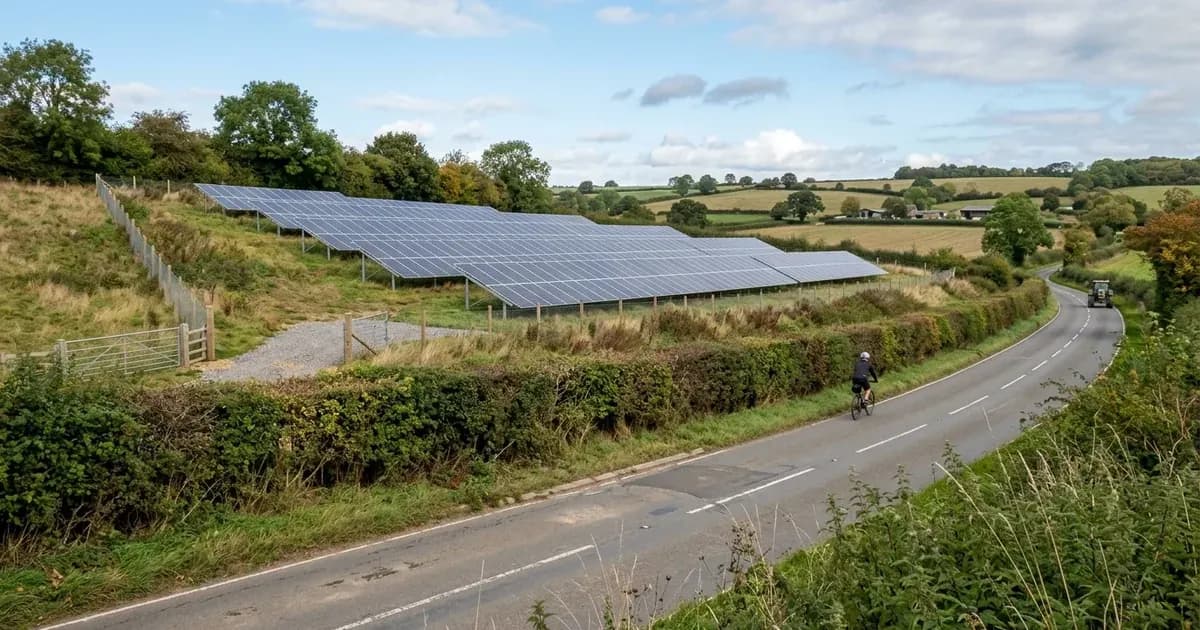
A significant new condition introduced by S.I. 2023 No. 1279 concerns the height of stand-alone solar equipment on article 2(3) land when it is near a highway. If stand-alone solar is installed on article 2(3) land so that it is nearer to any highway which bounds the curtilage than the part of the building which is nearest to that highway, it is limited to 2 metres in height.
This specific height restriction aims to mitigate the visual impact of solar installations on the landscape, particularly from public roads. Developers must carefully assess the proximity of their proposed stand-alone solar equipment to any bounding highways and measure its distance relative to the nearest part of the existing building on the site. Exceeding the 2-metre height limit in such circumstances would require a full planning application.
Navigating the Prior Approval Process for Appearance
For stand-alone solar installations on article 2(3) land that are nearer to a highway than the building, a prior approval process is now mandatory. Before beginning development, the developer must apply to the local planning authority for a determination. This determination assesses whether the prior approval of the local planning authority will be required with respect to the impact of the appearance of the stand-alone solar on that land.
This means that even if the installation meets the 2-metre height limit, its visual appearance must be considered by the planning authority. The authority will assess factors such as the design, materials, and siting of the solar equipment to ensure it is sympathetic to the character of the area, especially given the sensitive nature of article 2(3) land. Failing to secure prior approval before commencing development would render the development unlawful.
For broader context on commercial solar installations, you can consult our guide on UK GPDO 2015 Part 14 Class K Commercial Stand-Alone Solar.
Scope and Application of the Amendments
The Town and Country Planning (General Permitted Development etc.) (England) (Amendment) (No. 2) Order 2023 (S.I. 2023 No. 1279) extends to England and Wales. Any amendments made by this Order have the same application. This means that the changes to Class K for stand-alone solar on article 2(3) land are applicable across both England and Wales.
Developers in these regions must adhere to these updated regulations when planning new stand-alone solar projects on non-domestic premises, particularly those located within designated article 2(3) land. Understanding the specific provisions of the statutory instrument is crucial for compliance.
For information on other types of commercial solar permitted development, you may find our guides on UK GPDO 2015 Part 14 Class J Commercial Solar and UK GPDO 2015 Part 14 Class OA Car Park Solar Canopy useful.
Frequently asked questions
What is the main change for stand-alone solar on Article 2(3) land under Class K?
The primary change introduced by S.I. 2023 No. 1279 is the removal of the 9 square metre limit for stand-alone solar equipment installed on Article 2(3) land (August 2026). This allows for larger installations without requiring a full planning application.
What is the height limit for stand-alone solar near a highway on Article 2(3) land?
Stand-alone solar equipment installed on Article 2(3) land must not exceed 2 metres in height if it is nearer to any highway bounding the curtilage than the nearest part of the building (August 2026). This specific height restriction applies only in proximity to highways.
When is prior approval needed for Class K stand-alone solar on Article 2(3) land?
Prior approval is required for stand-alone solar on Article 2(3) land if the equipment is nearer to a highway than the building itself (August 2026). The local planning authority will assess the impact of the appearance of the stand-alone solar on that land.
Which statutory instrument introduced these amendments to Class K?
The amendments to Class K of Part 14 of Schedule 2 of the GPDO 2015 were introduced by The Town and Country Planning (General Permitted Development etc.) (England) (Amendment) (No. 2) Order 2023, specifically S.I. 2023 No. 1279 (August 2026).
Do these Class K amendments apply across the entire UK?
The Town and Country Planning (General Permitted Development etc.) (England) (Amendment) (No. 2) Order 2023 (S.I. 2023 No. 1279) extends to England and Wales (August 2026). Any amendments made by this Order have the same application scope.
References
Related guides
More from what to buy — and how not to get cheated.