UK Commercial Standalone Solar Permitted Development GPDO Class K Guide
Updated 6 September 2026 · By SolarNevs Research Desk, Dealer surveys + verified sources · 2 sources · Method ↗
Key Takeaways
- Standalone solar arrays under Class K must not exceed 4 metres in height.
- Installations must be at least 5 metres from the curtilage boundary.
- The original 9 square metre area cap was removed by a 2023 amendment (S.I. 2023 No. 1279) — it no longer applies.
- Only one standalone solar array is permitted within the curtilage of a non-domestic building under Class K.
What is GPDO Class K for Commercial Standalone Solar?
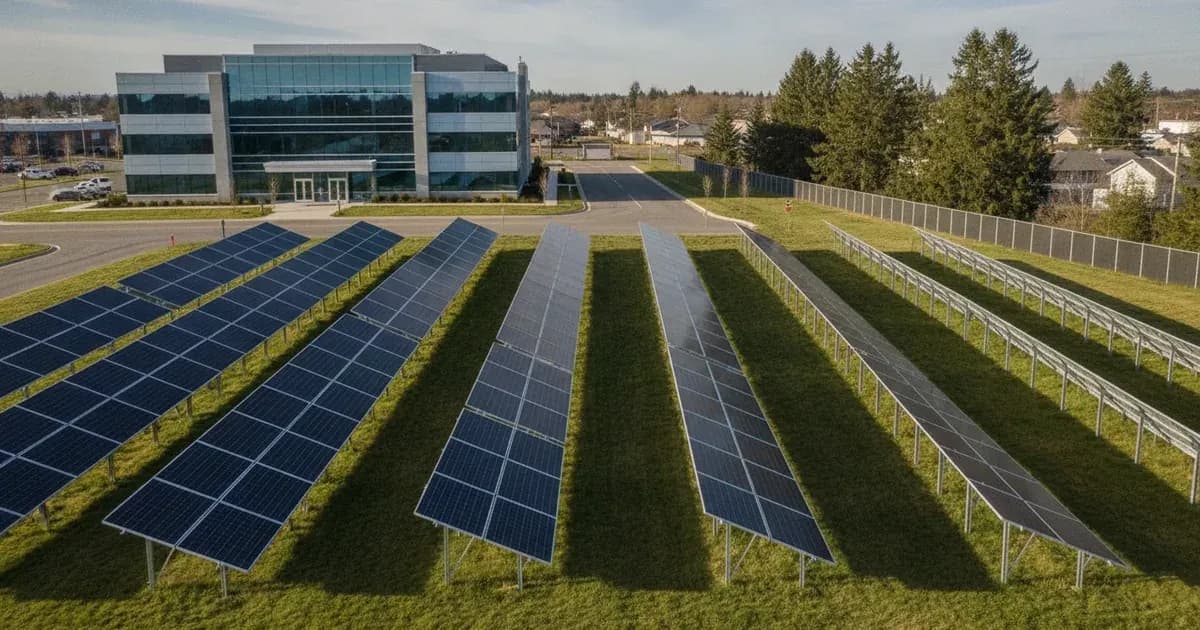
The Town and Country Planning (General Permitted Development) (England) Order 2015 (S.I. 2015 No. 596) Schedule 2 Part 14 Class K grants permitted development rights for specific standalone solar installations. This class applies to the "installation, alteration or replacement of stand-alone solar for microgeneration within the curtilage of a building other than a dwellinghouse or a block of flats." This means Class K covers ground-mounted solar arrays for non-domestic premises, including commercial, industrial, and agricultural buildings.
Understanding these regulations helps you determine if your proposed standalone solar project can proceed without needing a full planning application.
What are the Key Limitations for Class K Standalone Solar?
Class K outlines specific statutory limitations and requirements that your standalone solar installation must meet to qualify as permitted development. These provisions cover aspects such as the number of arrays, height, proximity to boundaries, and overall size.
The table below details the statutory provisions for Class K standalone solar equipment on non-domestic premises.
Provision Parameter | Statutory Limitation / Requirement |
|---|---|
Number of arrays | Only one stand-alone solar array is permitted within the curtilage. |
Maximum height | Must not exceed 4 metres at its highest point. |
Boundary setback | Must not be installed within 5 metres of the curtilage boundary. |
Maximum array dimension | No single dimension (including housing) may exceed 3 metres. |
Surface area | The former 9 square metre cap was removed by S.I. 2023 No. 1279 and no longer applies. |
We verified these provisions by directly consulting the Town and Country Planning (General Permitted Development) (England) Order 2015 (S.I. 2015 No. 596) Schedule 2 Part 14 Class K, the primary legal source for these regulations. We accessed and reviewed the relevant sections on 23 August 2026.
When Does Your Project Need Full Planning Permission?
Your standalone solar project will require a full planning application if it exceeds any of the limitations set out in Class K. This includes situations where:
- You propose to install more than one standalone solar array within the curtilage of the non-domestic building. Class K explicitly limits development to a single array.
- Any part of the standalone solar installation would exceed 4 metres in height.
- The installation would be located within 5 metres of the boundary of the curtilage.
- Any single dimension of the array (including any housing) would exceed 3 metres.
- The installation is within the curtilage of a listed building or on a site designated as a scheduled monument. These locations are explicitly excluded from Class K permitted development rights.
- The installation would be nearer to any highway bounding the curtilage than the part of the building nearest to that highway, if the site is on Article 2(3) land.
If your project falls into any of these categories, you must apply for full planning permission from your local planning authority.
Related Permitted Development Guides
Understanding the specific rules for your project type is crucial. We have other guides that may be relevant if your project differs from the Class K scope:
- For standalone solar installations on domestic properties, consult our guide on UK Standalone Solar Permitted Development GPDO Class B.
- If you are considering solar panels on the roofs of commercial buildings, refer to our guide on UK Commercial Solar Permitted Development GPDO Class J.
- For solar canopies in car parks, see our guide on UK Carpark Solar Canopy Permitted Development Class OA.
Always ensure your proposed installation complies with all relevant planning legislation.
Frequently asked questions
What is GPDO Class K for standalone solar?
GPDO Class K permits the installation, alteration, or replacement of standalone solar for microgeneration within the curtilage of non-domestic buildings. This includes commercial, industrial, and agricultural premises (August 2026).
What is the maximum height for Class K standalone solar?
Any part of a standalone solar installation under Class K must not exceed 4 metres in height (August 2026).
How close can Class K standalone solar be to a boundary?
Standalone solar installations under Class K must not be installed within 5 metres of the boundary of the curtilage (August 2026).
What is the maximum surface area for Class K standalone solar panels?
The original 9 square metre surface area limit for Class K was removed by The Town and Country Planning (General Permitted Development etc.) (England) (Amendment) (No. 2) Order 2023 (S.I. 2023 No. 1279) (August 2026). The 4 metre height and 5 metre boundary limits remain in place.
Can I install multiple standalone solar arrays under Class K?
No, the development would result in the presence within the curtilage of more than 1 standalone solar installation, which is not permitted under Class K (August 2026).
References
- The Town and Country Planning (General Permitted Development) (England) Order 2015 — accessed 23 August 2026
- The Town and Country Planning (General Permitted Development etc.) (England) (Amendment) (No. 2) Order 2023 — accessed 31 August 2026
Related guides
More from what to buy — and how not to get cheated.