UK Domestic Solar Permitted Development GPDO Class A: A Guide for 2026
Updated 15 September 2026 · By SolarNevs Research Desk, Dealer surveys + verified sources · 2 sources · Method ↗
Key Takeaways
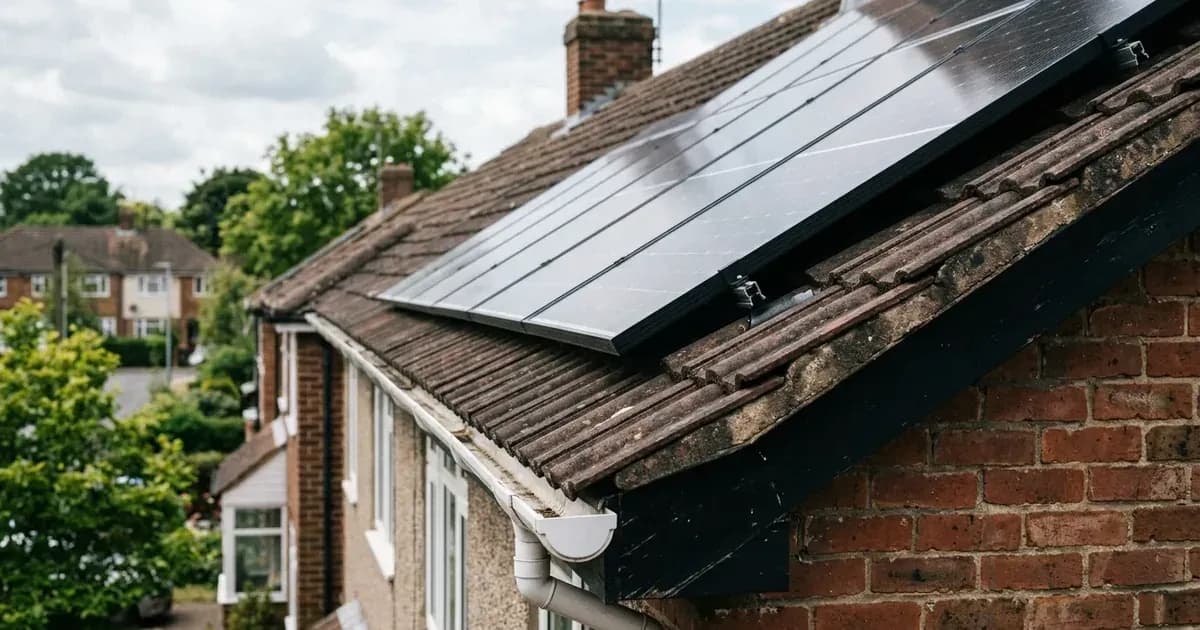
- On a pitched roof or wall, installations must not protrude more than 0.2 metres beyond the plane (August 2026). Flat roofs have a separate 0.6 metre height allowance instead, added by a 2023 amendment.
- Equipment cannot be higher than the highest part of the roof (excluding chimneys) (August 2026).
- Installations on walls fronting a highway in a conservation area are not permitted development (August 2026).
- Solar equipment must be removed as soon as reasonably practicable when no longer needed (August 2026).
What is UK Domestic Solar Permitted Development GPDO Class A?
The Town and Country Planning (General Permitted Development) (England) Order 2015 (S.I. 2015 No. 596) includes provisions for permitted development rights. Specifically, Schedule 2 Part 14 Class A governs the installation of solar PV and solar thermal equipment on domestic premises in England. This class permits "The installation, alteration or replacement of microgeneration solar PV or solar thermal equipment on (a) a dwellinghouse or a block of flats; or (b) a building situated within the curtilage of a dwellinghouse or a block of flats" (August 2026). These rights allow certain solar installations without requiring a full planning application, provided specific conditions and limitations are met.
What are the key limitations for rooftop and wall-mounted solar?
GPDO Class A sets out several limitations that must be observed for an installation to qualify as permitted development. One key limitation concerns the physical dimensions of the equipment. On a pitched roof or a wall, the solar PV or solar thermal equipment must not "protrude more than 0.2 metres beyond the plane of the wall or the roof slope when measured from the perpendicular with the external surface of the wall or roof slope" (August 2026). A 2023 amendment (S.I. 2023 No. 1279) added a separate rule for flat roofs: the equipment must not result in the highest part being more than 0.6 metres higher than the highest part of the roof, excluding any chimney. This ensures that installations do not significantly alter the building's profile.
Another important limitation relates to the height of the installation. The equipment must not "result in the highest part of the solar PV or solar thermal equipment being higher than the highest part of the roof (excluding any chimney)" (August 2026). This prevents solar panels from extending above the existing roofline, maintaining the aesthetic integrity of the building.
Furthermore, specific rules apply to properties located in designated areas. For "land within a conservation area or which is a World Heritage Site, the solar PV or solar thermal equipment would be installed on a wall which fronts a highway" (August 2026) is not permitted development under Class A. This means that if your property is in such an area and the proposed solar installation is on a wall visible from a highway, you will need to seek full planning permission.
When is full planning permission required for domestic solar?
While GPDO Class A grants permitted development rights for many domestic solar installations, certain circumstances require a full planning application. These exclusions are critical for homeowners to understand before proceeding with an installation.
One such exclusion applies to protected sites. If "the solar PV or solar thermal equipment would be installed on a site designated as a scheduled monument" (August 2026), it falls outside the scope of Class A permitted development. Scheduled monuments are nationally important archaeological sites or historic buildings, and any alterations require specific consent.
Similarly, properties with listed building status have stricter regulations. Class A does not apply if "the solar PV or solar thermal equipment would be installed on a building within the curtilage of the dwellinghouse or block of flats if the dwellinghouse or block of flats is a listed building" (August 2026). This means that if your home or block of flats is a listed building, or if the proposed installation is on another building within its grounds (curtilage), you must apply for listed building consent and potentially full planning permission.
As noted previously, installations on walls fronting a highway in a conservation area or World Heritage Site also require full planning permission, as they are specifically excluded from Class A permitted development rights.
What are your responsibilities for visual and amenity impact?
Even when an installation falls within permitted development rights, there are general responsibilities regarding its impact. GPDO Class A stipulates that "solar PV or solar thermal equipment is, so far as practicable, sited so as to minimise its effect on the external appearance of the building" (August 2026). This means you should consider the visual impact of the panels from public viewpoints and aim for a discreet installation where possible.
Additionally, installations must be sited "so as to minimise its effect on the amenity of the area" (August 2026). This refers to the general pleasantness and character of the surrounding environment, ensuring that your solar installation does not negatively impact neighbours or the local community.
Finally, there is a clear mandate for decommissioning. The legislation requires that "solar PV or solar thermal equipment is removed as soon as reasonably practicable when no longer needed" (August 2026). This ensures that disused or obsolete equipment does not remain on properties indefinitely.
How do we verify these planning regulations?
We verify information regarding UK planning regulations by consulting primary statutory sources. For this guide, we referenced the official text of The Town and Country Planning (General Permitted Development) (England) Order 2015 (S.I. 2015 No. 596), specifically Schedule 2 Part 14 Class A, as published on legislation.gov.uk. Our access date was 23 August 2026. We do not publish information that we have not directly verified from official government or regulatory documents.
Where can you find more information on UK solar planning?
Understanding the full scope of permitted development rights can be complex. For further guidance on different types of solar installations in the UK, you can explore our other guides:
- For commercial solar installations, see our guide on UK Commercial Solar Permitted Development GPDO Class J.
- If you are considering standalone solar equipment, refer to our guide on UK Standalone Solar Permitted Development GPDO Class B.
- For information on solar carports, consult our guide on UK Carpark Solar Canopy Permitted Development Class OA.
These resources can help you navigate the specific planning requirements for various solar projects.
Frequently asked questions
What is GPDO Class A for domestic solar?
GPDO Class A permits the installation, alteration, or replacement of microgeneration solar PV or solar thermal equipment on a dwellinghouse or block of flats, or a building within their curtilage (August 2026). This is governed by the Town and Country Planning (General Permitted Development) (England) Order 2015.
What is the maximum protrusion for solar panels under Class A?
For a pitched roof or a wall, solar PV or solar thermal equipment must not protrude more than 0.2 metres beyond the plane when measured perpendicularly (August 2026). For a flat roof, a separate limit applies: the equipment must not be more than 0.6 metres higher than the highest part of the roof, excluding any chimney — this flat-roof allowance was added by a 2023 amendment (S.I. 2023 No. 1279).
Can I install solar panels on a listed building under Class A?
No, GPDO Class A explicitly excludes installations on a building within the curtilage of a dwellinghouse or block of flats if the dwellinghouse or block of flats is a listed building (August 2026). Such installations require full planning permission.
Are there restrictions for solar panels in conservation areas?
Yes, in a conservation area or World Heritage Site, solar PV or solar thermal equipment cannot be installed on a wall that fronts a highway under Class A permitted development (August 2026).
What happens to solar equipment when it's no longer needed?
GPDO Class A mandates that solar PV or solar thermal equipment must be removed as soon as reasonably practicable when it is no longer needed (August 2026).
References
Related guides
More from what to buy — and how not to get cheated.