UK Floating Solar PV Reservoir Anchoring and Safety Guide
Updated 6 September 2026 · By SolarNevs Research Desk, Dealer surveys + verified sources · 4 sources · Method ↗
Key Takeaways
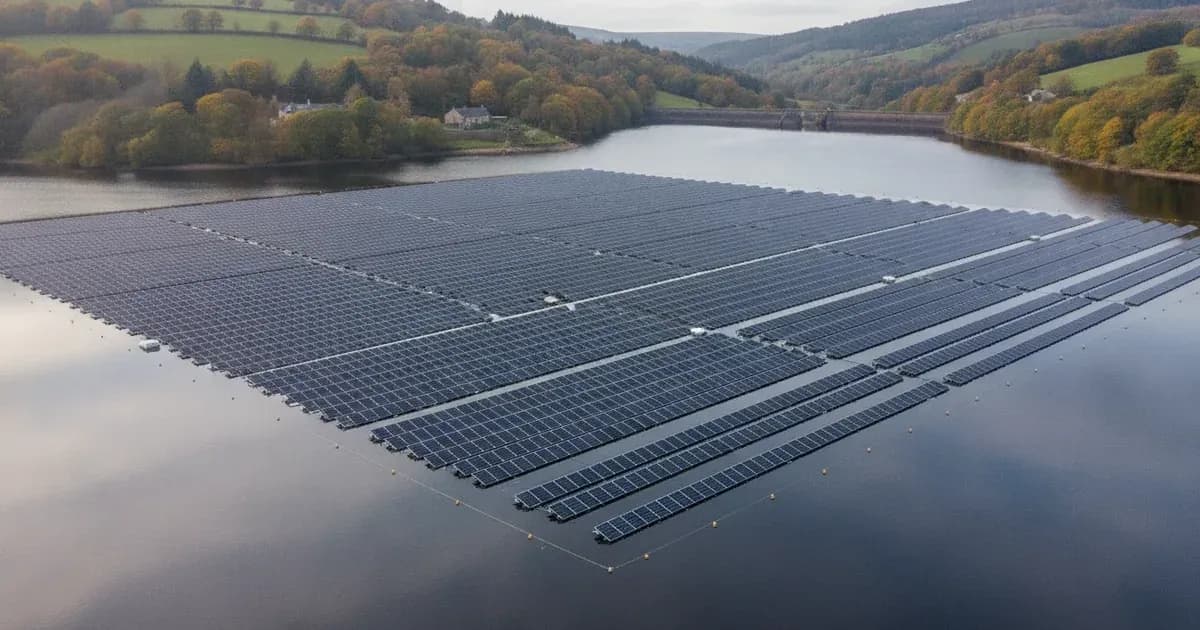
- Floating solar photovoltaic (FPV) arrays deployed on UK water utility reservoirs generate clean energy while reducing algae growth and water evaporation.
- Mooring and tethering systems must dynamically accommodate substantial reservoir water level variations and storm wave forces.
- Electrical equipment operating over open water is subject to statutory adverse environment regulations.
- Installations must prevent danger from weather exposure, natural hazards, temperature fluctuations, and continuous moisture.
- Safe maintenance protocols require certified means of cutting off electrical supply and verified circuit isolation.
- Workplace safety requires competent personnel and systematic maintenance of plant and equipment.
Reservoir Pontoon and Mooring Engineering
Deploying solar modules over freshwater bodies requires specialized mechanical and marine anchoring systems:
- High-Density Polyethylene (HDPE) Floaters: Modular blow-molded HDPE pontoons support module racking, walkways, and inverter platforms with certified buoyancy reserves.
- Tethering and Bank Anchoring: Mooring lines utilizing synthetic elastomeric ropes or stainless-steel cables connect the floating island to concrete shore anchors or deadweight bottom anchors.
- Submerged Cable Routing: Flexible submersible DC strings transition from floating arrays to land-based switchgear using floating pontoon cable bridges.
Statutory Adverse Environmental Protection
Operating electrical plant in direct proximity to water bodies requires compliance with secondary safety legislation:
- Hazardous Environments: Applies to Electrical equipment which may reasonably foreseeably be exposed to.
- Weather and Temperature Stress: Details the effects of the weather, natural hazards, temperature or pressure.
- Constant Moisture: Specifically addresses the effects of wet, dirty, dusty or corrosive conditions; or.
- Construction Integrity: Requires that equipment shall be of such construction or as necessary protected as to prevent, so far as is reasonably practicable, danger arising from such exposure.
- Capability Limit: Section 5 states that No electrical equipment shall be put into use where its strength and capability may be exceeded in such a way as may give rise to danger.
Circuit Isolation and Switching Standards
Conducting maintenance on floating platforms necessitates accessible electrical isolation:
- Isolation Infrastructure: Directs that where necessary to prevent danger, suitable means (including, where appropriate, methods of identifying circuits) shall be available for.
- De-energisation Requirement: Specifies cutting off the supply of electrical energy to any electrical equipment.
- Isolation Capacity: Mandates the isolation of any electrical equipment.
- Definition of Isolation: Confirms that isolation means the disconnection and separation of the electrical equipment from every source of electrical energy.
Water Safety Competency and Maintenance Obligations
Operating floating electrical infrastructure demands specialized safety procedures:
- Competency Mandate: Requires that No person shall be engaged in any work activity where technical knowledge or experience is necessary to prevent danger or, where appropriate, injury, unless he possesses such knowledge or experience, or is under such degree of supervision as may be appropriate having regard to the nature of the work.
- Facilities Maintenance: The 2005 Fire Safety Order mandates that facilities are subject to a suitable system of maintenance and are maintained in an efficient state, in efficient working order and in good repair.
- Workplace Health and Safety: Dutyholders must ensure the provision and maintenance of plant and systems of work that are, so far as is reasonably practicable, safe and without risks to health.
Frequently asked questions
What are the primary engineering challenges of floating solar on UK reservoirs?
Floating arrays must accommodate fluctuating water levels, wave action, and wind loading while ensuring cables and moorings remain securely anchored.
What statutory standards govern electrical equipment operating on water bodies?
Under Regulation 6 of the 1989 Electricity at Work Regulations, equipment exposed to wet conditions or weather must be constructed to prevent danger.
How must floating solar systems be isolated for routine maintenance?
Suitable means must be available for cutting off the electrical supply and achieving isolation from every source of electrical energy.
What competency standards apply to personnel working on floating solar installations?
Personnel must possess technical knowledge or experience necessary to prevent danger or injury, or be under appropriate supervision.
What maintenance duty applies to water utility plant infrastructure?
Under the 1974 Health and Safety at Work Act, dutyholders must maintain plant and systems of work that are safe and without risks to health.
References
- Electricity at Work Regulations 1989 Regulation 6 Adverse Environments — accessed 28 August 2026
- Electricity at Work Regulations 1989 Regulation 5 Strength and Capability — accessed 28 August 2026
- Electricity at Work Regulations 1989 Regulation 12 Isolation — accessed 28 August 2026
- Electricity at Work Regulations 1989 Regulation 16 Competency — accessed 28 August 2026
Related guides
More from what to buy — and how not to get cheated.