UK Commercial Solar Thermal Imaging and Hotspot Detection Guide
Updated 15 September 2026 · By SolarNevs Research Desk, Dealer surveys + verified sources · 4 sources · Method ↗
Key Takeaways
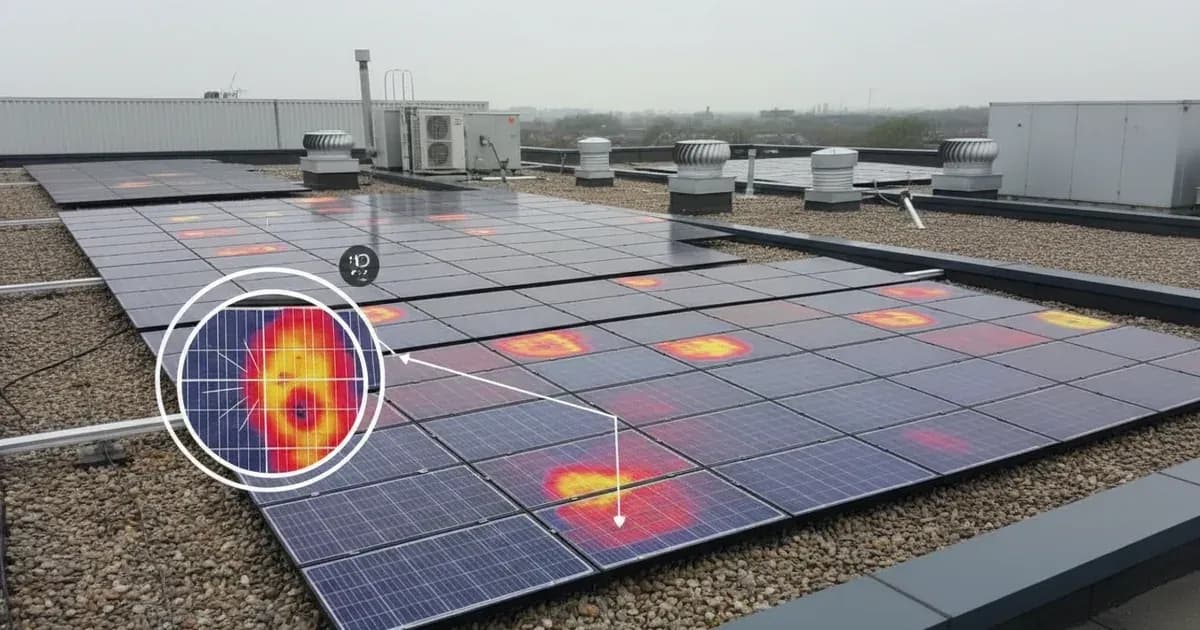
- Infrared thermography is an indispensable non-destructive testing method used to detect localized overheating, bypass diode failures, and module cell defects.
- Overheating solar cells can reach temperatures exceeding safe operating thresholds, risking delamination, backsheet combustion, and electrical fires.
- Commercial solar equipment must never exceed its strength and capability in a manner that creates danger.
- System isolation protocols require verified means of cutting off electrical energy supply before undertaking repair works.
- Testing and maintenance personnel must possess requisite technical competency to prevent injury or hazard.
- Facilities and operating systems must be maintained in efficient working order under statutory workplace safety legislation.
Hotspot Mechanics and Thermographic Inspection Standards
Operating commercial solar arrays under high solar irradiance creates significant thermal stresses:
- Single Cell Hotspots: Localized cell cracking or bird soiling forces affected cells into reverse bias, dissipating current generated by healthy cells as concentrated heat.
- Bypass Diode Failure: Short-circuited bypass diodes in the module junction box result in an entire third of the module overheating uniformly.
- String Combiner Resistance: High-resistance loose crimps or oxidized DC fuses exhibit thermal signatures visible under infrared inspection.
Statutory Safety Framework: Electricity at Work Regulations 1989
Thermographic audits support compliance with national electrical safety mandates:
- Operating Limits: Section 5 states that No electrical equipment shall be put into use where its strength and capability may be exceeded in such a way as may give rise to danger.
- Isolation Provision: Mandates that where necessary to prevent danger, suitable means (including, where appropriate, methods of identifying circuits) shall be available for.
- Supply Cut-off: Explicitly includes cutting off the supply of electrical energy to any electrical equipment.
- Isolation Equipment: Directs the isolation of any electrical equipment.
- Definition of Isolation: Notes that isolation means the disconnection and separation of the electrical equipment from every source of electrical energy.
Adverse Environmental Protection
Thermography identifies degradation driven by environmental exposure:
- Exposure Scope: Covers Electrical equipment which may reasonably foreseeably be exposed to.
- Climatic Variables: Applies to the effects of the weather, natural hazards, temperature or pressure.
- Environmental Factors: Encompasses the effects of wet, dirty, dusty or corrosive conditions; or.
- Protective Standard: Dictates that equipment shall be of such construction or as necessary protected as to prevent, so far as is reasonably practicable, danger arising from such exposure.
Personnel Competency and Maintenance Obligations
Operating and maintaining commercial solar assets requires strict adherence to statutory duties:
- Competency Requirement: Confirms that No person shall be engaged in any work activity where technical knowledge or experience is necessary to prevent danger or, where appropriate, injury, unless he possesses such knowledge or experience, or is under such degree of supervision as may be appropriate having regard to the nature of the work.
- Routine Maintenance: Fire safety law requires that facilities are subject to a suitable system of maintenance and are maintained in an efficient state, in efficient working order and in good repair.
- Employer Duty of Care: The 1974 Health and Safety at Work Act mandates the provision and maintenance of plant and systems of work that are, so far as is reasonably practicable, safe and without risks to health.
Frequently asked questions
What causes thermal hotspots in commercial solar panels?
Hotspots are caused by localized shading, cell microcracks, solder joint failure, or defective bypass diodes causing cells to dissipate power as heat.
What statutory standards govern electrical isolation during thermographic maintenance?
Regulations require suitable means for cutting off electrical supply and isolating equipment from every source of electrical energy.
Who is qualified to conduct commercial solar thermographic inspections?
Personnel must possess technical knowledge or experience necessary to prevent danger or injury, or be under appropriate supervision.
How must equipment exposed to extreme temperature and weather be protected?
Equipment must be constructed or protected to prevent danger arising from weather, natural hazards, or temperature exposure.
What maintenance duty applies to commercial plant equipment?
Dutyholders must maintain plant and systems of work that are, so far as is reasonably practicable, safe and without risks to health.
References
- Electricity at Work Regulations 1989 Regulation 5 Strength and Capability — accessed 28 August 2026
- Electricity at Work Regulations 1989 Regulation 12 Isolation — accessed 28 August 2026
- Electricity at Work Regulations 1989 Regulation 16 Competency — accessed 28 August 2026
- Electricity at Work Regulations 1989 Regulation 6 Adverse Environments — accessed 28 August 2026
Related guides
More from what to buy — and how not to get cheated.