UK Commercial Solar Insurance and LPCB Compliance Guide
Updated 6 September 2026 · By SolarNevs Research Desk, Dealer surveys + verified sources · 4 sources · Method ↗
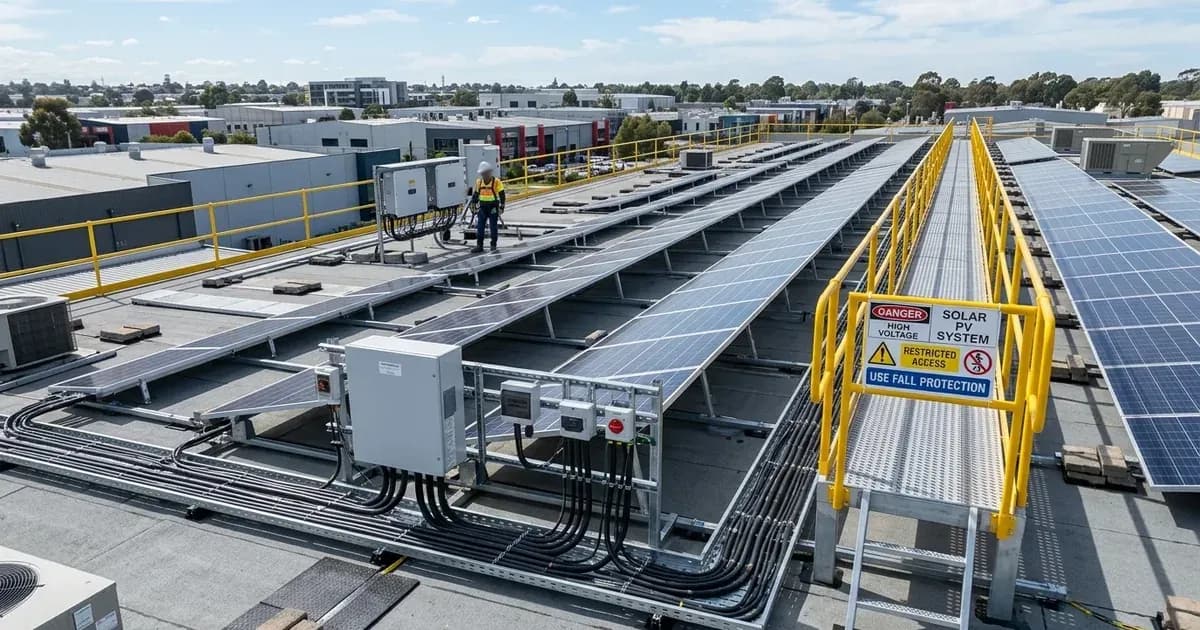
Key Takeaways
- Commercial property insurers in the UK enforce strict underwriting guidelines to mitigate fire risks and property damage from rooftop solar PV installations.
- Underwriters require compliance with Loss Prevention Certification Board (LPCB) guidelines and regular electrical maintenance.
- Electrical equipment must be designed so that strength and capability are never exceeded in ways that create danger.
- Installations must feature certified means of cutting off supply and isolating systems from all power sources.
- Maintenance contractors must demonstrate technical knowledge and experience to prevent electrical danger.
- Commercial building operators are legally required to maintain plant and safety systems in efficient working order and good repair.
Insurer Underwriting Expectations and LPCB Framework
Commercial insurers (such as Aviva, AXA, and Zurich) evaluate solar risks using rigorous criteria:
- Roof Penetration Integrity: Ensuring waterproofing membranes and fire-rated insulation boards are not compromised by mounting fixings.
- DC Arc Fault Detection: Requiring automated arc-fault circuit interrupters (AFCI) on DC circuits to detect dangerous series arcing.
- Thermographic Audits: Annual thermal imaging of combiner boxes, inverters, and modules to catch hotspot cell degradation before combustion occurs.
Electrical Safety and Equipment Integrity
Commercial installations must maintain strict alignment with statutory electrical codes:
- Operating Capability: Regulation 5 mandates that No electrical equipment shall be put into use where its strength and capability may be exceeded in such a way as may give rise to danger.
- Circuit Isolation Means: Confirms that where necessary to prevent danger, suitable means (including, where appropriate, methods of identifying circuits) shall be available for.
- De-energisation Requirement: Specifies cutting off the supply of electrical energy to any electrical equipment.
- Isolation Scope: Mandates the isolation of any electrical equipment.
- Legal Meaning of Isolation: Confirms that isolation means the disconnection and separation of the electrical equipment from every source of electrical energy.
Adverse Environmental Protection
Roof-mounted hardware must withstand harsh outdoor operational conditions:
- Foreseeable Hazard Scope: Covers Electrical equipment which may reasonably foreseeably be exposed to.
- Climatic Variables: Applies to the effects of the weather, natural hazards, temperature or pressure.
- Environmental Degradation: Explicitly includes the effects of wet, dirty, dusty or corrosive conditions; or.
- Mandatory Construction Protection: Dictates that hardware shall be of such construction or as necessary protected as to prevent, so far as is reasonably practicable, danger arising from such exposure.
Facility Maintenance and Employer Duties
Insurers condition policy validity on verified compliance with statutory safety duties:
- Fire Safety Maintenance: Commercial building owners must ensure facilities are subject to a suitable system of maintenance and are maintained in an efficient state, in efficient working order and in good repair.
- Contractor Competency: Requires that No person shall be engaged in any work activity where technical knowledge or experience is necessary to prevent danger or, where appropriate, injury, unless he possesses such knowledge or experience, or is under such degree of supervision as may be appropriate having regard to the nature of the work.
- Workplace Health and Safety: Dutyholders must guarantee the provision and maintenance of plant and systems of work that are, so far as is reasonably practicable, safe and without risks to health.
Frequently asked questions
What standards do commercial property insurers require for solar installations?
Insurers demand certified hardware, adherence to Loss Prevention Certification Board (LPCB) loss prevention guidelines, and documented maintenance records.
What statutory maintenance duty applies to commercial solar facilities?
Under fire safety legislation, equipment must be subject to a suitable system of maintenance in an efficient state, working order, and good repair.
How do isolation requirements protect commercial properties from electrical fires?
Regulations require suitable means for cutting off the electrical supply and isolating equipment from every source of electrical energy.
What qualifications must personnel have to perform commercial solar maintenance?
Personnel must possess technical knowledge or experience necessary to prevent danger or injury, or be under appropriate supervision.
How must equipment exposed to adverse weather and corrosive environments be protected?
Equipment must be of such construction or protected to prevent danger arising from weather, natural hazards, or corrosive conditions.
References
- Electricity at Work Regulations 1989 Regulation 5 Strength and Capability — accessed 28 August 2026
- Electricity at Work Regulations 1989 Regulation 12 Isolation — accessed 28 August 2026
- Electricity at Work Regulations 1989 Regulation 16 Competency — accessed 28 August 2026
- Regulatory Reform (Fire Safety) Order 2005 Article 17 Maintenance — accessed 28 August 2026
Related guides
More from what to buy — and how not to get cheated.