UK High Voltage Private Wire Solar Interconnection Guide
Updated 6 September 2026 · By SolarNevs Research Desk, Dealer surveys + verified sources · 6 sources · Method ↗
Key Takeaways
- Private wire solar connections deliver renewable electricity directly to industrial consumers, reducing network transmission and distribution charges.
- Under Section 4 of the Electricity Act 1989, generating or supplying electricity without a licence is prohibited unless covered by statutory exemption.
- The Electricity (Class Exemptions from the Requirement for a Licence) Order 2001 establishes critical safe harbours, including Class C on-site supply and Class C generation up to 100 megawatts.
- Where private systems interact with the public grid at high voltage, the DNO assessment timeline is 65 days.
- Under ESQCR Regulation 21, switched alternative energy sources must not operate in parallel with the distributor's network unless specifically authorised under Regulation 22.
- Installers must agree specific requirements with the network distributor and install certified protective equipment to prevent network danger.
The Economics and Architecture of High-Voltage Private Wires
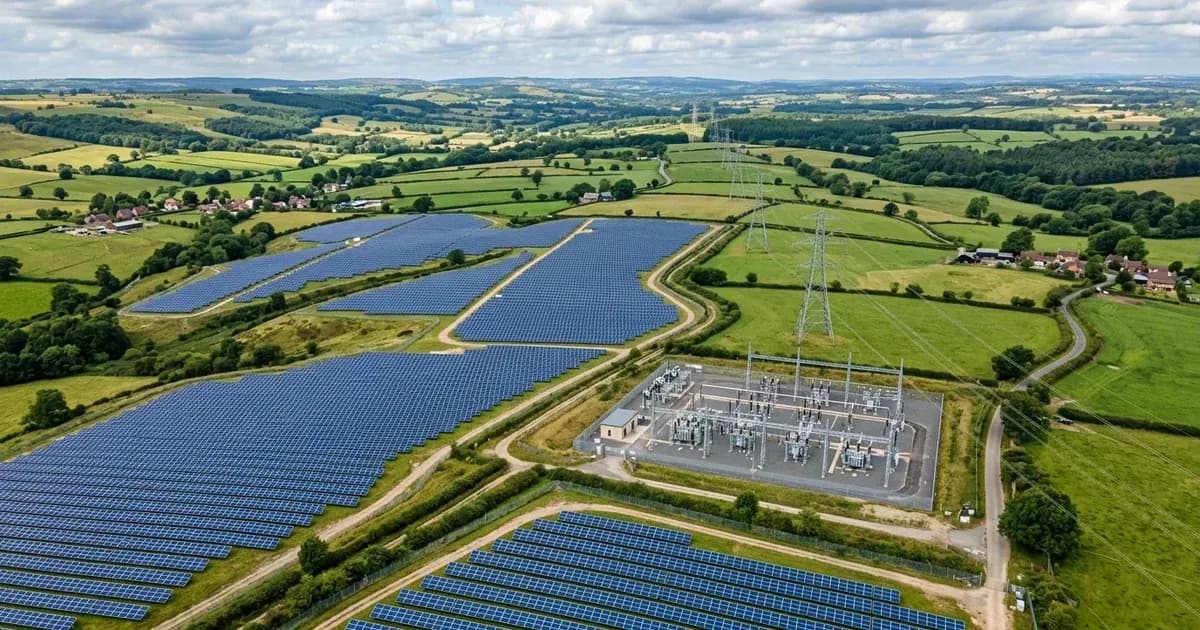
Industrial manufacturing facilities, data centres, and logistics hubs increasingly pair with off-site solar farms via private wire high-voltage (HV) interconnections operating at 11kV or 33kV. By transmitting electricity directly between generation and demand across private land, both parties bypass National Grid transmission network use of system charges and distribution use of system levies.
However, distributing and supplying electricity across property boundaries triggers the regulatory regime overseen by Ofgem under primary UK statute.
Statutory Licensing and the Class Exemptions Order 2001
The foundational legal framework governing private wire power delivery is established under the Electricity Act 1989 and secondary statutory instruments:
Section 4 Prohibition and Section 5 Exemption
Section 4 establishes that any person who generates, distributes, or supplies electricity shall be guilty of an offence unless he is authorised to do so by a licence or exemption. Under Section 5, the Secretary of State may by order grant exemption from these prohibitions.
Safe Harbours Under Statutory Instrument 2001 No. 3270
The Electricity (Class Exemptions from the Requirement for a Licence) Order 2001 provides the legal foundation for commercial private wire projects:
- Class A: Small generators: Exempts small generation assets operating within defined capacity thresholds.
- Class C: Generators not exceeding 100 megawatts: Grants exemption from the requirement to hold a generation licence for generating stations with capacity up to 100 megawatts.
- Class A: Small suppliers: Exempts small suppliers from retail supply licensing.
- Class C: On-site supply: Authorises generators to supply electricity directly to consumers located on the same site or an adjacent site without holding a full electricity supply licence.
DNO Coordination and 65-Day Assessment Windows
Even when the primary energy flow remains within the private wire network, most industrial private wire installations maintain a grid connection for standby import and spill export:
- If an energy device is classified as apply to connect, installers must submit the relevant Engineering Recommendation G99 application form (or G100 if export is limited) to the DNO before installing the device.
- The DNO will be in touch within 45 days for low voltage energy devices and 65 days for high voltage energy devices to approve installation or request engineering amendments.
Technical Safety Controls: ESQCR Regulations 21 and 22
Safety and electrical separation between private wire networks and public infrastructure are strictly regulated under the Electricity Safety, Quality and Continuity Regulations 2002:
Switched Alternative Sources (Regulation 21)
Where an industrial plant operates private generation as a switched alternative to the mains supply (using interlocked changeover switchgear), Regulation 21 requires:
- The operator shall ensure that the source of energy cannot operate in parallel with the distributor's network.
- Where the source is part of a low-voltage consumer's installation, it must comply with British Standard Requirements.
Parallel Grid Interconnection (Regulation 22)
Where private wire systems synchronize with the grid (for instance, exporting surplus private wire solar back to the DNO):
- The operator must agree specific requirements with the distributor who owns or operates the network.
- The operator must install the necessary and appropriate equipment to prevent danger or interference with that network or with the supply to consumers so far as is reasonably practicable.
Frequently asked questions
What is a high-voltage private wire solar system?
A private wire system supplies electricity directly from a solar array to an industrial consumer via a dedicated private cable, bypassing the public distribution network.
What statutory exemptions permit unlicensed private wire electricity supply?
The Electricity (Class Exemptions from the Requirement for a Licence) Order 2001 provides exemptions, including Class C on-site supply and Class A small generation.
What generation capacity limit applies to Class C exempt generating stations?
Under Schedule 2 of the Class Exemptions Order, Class C permits electricity generation for generating stations not exceeding 100 megawatts without a licence.
How long does a DNO take to evaluate high voltage connection applications?
DNOs must respond within 65 days for high voltage energy devices to approve the connection or specify network modifications.
What safety rules govern private generation operating as a switched alternative?
Under ESQCR Regulation 21, switched alternative energy sources must ensure they cannot operate in parallel with the distributor's network and meet British Standards.
References
- Electricity Act 1989 Section 4 — accessed 28 August 2026
- Electricity Act 1989 Section 5 — accessed 28 August 2026
- Electricity Class Exemptions from Requirement for a Licence Order 2001 — accessed 28 August 2026
- Electricity Safety Quality and Continuity Regulations 2002 Regulation 21 — accessed 28 August 2026
- Electricity Safety Quality and Continuity Regulations 2002 Regulation 22 — accessed 28 August 2026
- DESNZ Register Energy Devices in Homes or Small Businesses Guidance — accessed 28 August 2026
Related guides
More from what to buy — and how not to get cheated.