UK Landlord Solar Submetering and Ofgem Maximum Resale Price Guide
Updated 6 September 2026 · By SolarNevs Research Desk, Dealer surveys + verified sources · 7 sources · Method ↗
Key Takeaways
- Landlords in Great Britain cannot profit from reselling electricity to domestic tenants; the price must not exceed what the landlord paid.
- Any electricity meter used for billing tenants must be of an approved pattern or construction, installed in an approved manner, and certified.
- The tenant or the authorised supplier can provide the meter, but its installation location is typically determined by the supplier.
- To claim electricity supplied to tenants is "green," landlords must obtain Guarantees of Origin (GOs) for electricity produced within Great Britain.
Understanding the Maximum Resale Price (MRP) for Landlords in Great Britain
If you are a landlord in Great Britain supplying electricity to your tenants, you must comply with rules set by Ofgem, Great Britain's independent energy regulator. Ofgem's role includes protecting consumers. A key protection is the Maximum Resale Price (MRP) direction.
The MRP ensures that electricity cannot be resold for more than what the reseller originally paid. This includes any standing charges. From 1 January 2003, the maximum price at which gas or electricity may be resold is the same price as that paid by the person who is reselling it, including any standing charges. This rule applies when electricity is used in people's homes. The Electricity Act 1989 governs the supply of electricity in Great Britain.
Submetering Requirements: Certified Meters for Tenant Billing
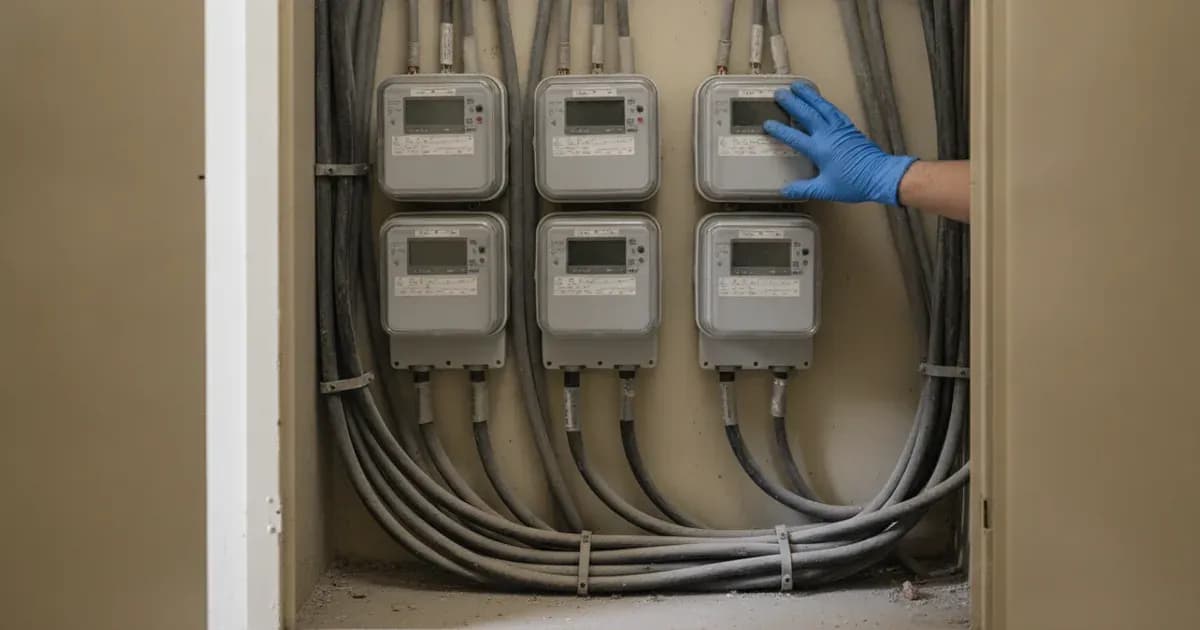
When you supply electricity to a tenant and charge them for it, the quantity of electricity must be accurately measured. This requires an appropriate meter.
No meter shall be used for ascertaining the quantity of electricity supplied by an authorised supplier to a customer unless the meter is of an approved pattern or construction and is installed in an approved manner. Furthermore, the meter must be certified under paragraph 5 of Schedule 7 to the Electricity Act 1989, unless it is an exempt supply and there is a written agreement to dispense with certification.
For meters used for trade, such as for billing tenants, active electrical energy meters are subject to The Measuring Instruments Regulations 2016. These meters must comply with essential requirements for use for trade.
Meter Provision and Installation
The meter may be provided by the customer if the authorised supplier agrees. Otherwise, it shall be provided by the authorised supplier. The meter shall be installed on the customer’s premises in a position determined by the authorised supplier, unless in all the circumstances it is more reasonable to place it outside those premises or in some other position.
An authorised supplier may require the replacement of any meter provided and installed where its replacement is necessary to secure compliance with Schedule 7 of the Electricity Act 1989 or any regulations made under it, or if it is otherwise reasonable in all the circumstances.
Compliance and Faults: What Happens When Rules Are Broken
Compliance with electricity resale and metering regulations is mandatory. Failure to adhere to these rules can lead to penalties or legal action. The table below outlines common issues and their consequences.
Symptom | What it means | What to do |
|---|---|---|
Reselling electricity at a price exceeding the maximum resale price | Charging more than the reseller paid, including standing charges. | The amount of the excess, plus interest if the direction provides, is recoverable by the person to whom the electricity was resold. |
Meter not of approved pattern/construction or not installed in approved manner | The meter does not meet the required standards for accuracy and safety. | The authorised supplier is liable on summary conviction to a fine not exceeding level 3 on the standard scale. |
Meter not certified (where applicable) | The meter has not undergone the necessary certification process. | The authorised supplier is liable on summary conviction to a fine not exceeding level 3 on the standard scale. |
Customer refuses or fails to take supply through an appropriate meter | The tenant does not comply with meter provision and installation requirements. | The supplier may refuse to give or may discontinue the supply. |
Meter not kept in proper order by customer | The customer fails to maintain their own provided meter for correct registration. | The supplier may discontinue the supply of electricity through that meter. |
Meter not kept in proper order by authorised supplier | The supplier fails to maintain a meter they provided for correct registration. | The supplier is in breach of their obligations. |
Intentional alteration of meter register or prevention of due registration | Tampering with the electricity meter to affect readings. | The person is liable on summary conviction to a fine not exceeding level 3 on the standard scale. |
Meter removed or altered during dispute without approval | Non-compliance with dispute resolution procedures regarding meter issues. | The meter should not be removed or altered by the supplier or customer until the dispute is resolved or the meter is examined by a meter examiner. |
Green Power Leases and Guarantees of Origin
If you wish to offer "green" electricity to your tenants, you can use Guarantees of Origin (GOs) to demonstrate that the electricity supplied comes from renewable sources.
Guarantees of Origin can be requested for electricity produced from renewable sources. However, no request for the issue of guarantees of origin may be made in respect of a period of less than one month. Additionally, GOs can only be requested for electricity produced within Great Britain.
To make a duly made request for GOs, you must provide the Authority with all the information and evidence specified in Schedule 1 of The Renewables Obligation Order 2003. The request must also be accompanied by a signed statement confirming that the person making the request is entitled to the issue of guarantees of origin and has not made, and does not intend to make, a request in another Member State or Northern Ireland for GOs in respect of the same electricity.
Your Responsibilities and What You Cannot Do
As a landlord, you have responsibilities regarding the electricity supply and metering for your tenants. You must ensure that any meter used for billing is appropriate, certified, and installed correctly. If you provide the meter, you must keep it in proper order for correctly registering the quantity of electricity supplied. If the customer provides their own meter, they are responsible for keeping it in proper order.
You cannot resell electricity to domestic tenants at a price higher than what you paid for it, including standing charges. You also cannot intentionally alter the register of any meter or prevent it from duly registering the quantity of electricity supplied. Such actions are illegal and carry penalties.
The specific technical standards for meter accuracy and construction are complex and defined in legislation. No meter shall be certified unless the examiner is satisfied that the meter conforms to such standards (including standards framed by reference to margins of error) as may be prescribed. Ensuring compliance with these technical standards requires professional expertise and certified equipment.
What the Published Sources Do Not Tell You
While the regulations provide a framework, some specific details are not explicitly covered in the available public sources:
- Specifics of "green power tenant leases": While Guarantees of Origin (GOs) are detailed for renewable electricity, the precise mechanisms for how these translate into specific lease terms or contractual obligations for tenants are not fully outlined.
- Detailed MRP dispute resolution: The legislation states that excess charges are recoverable by the tenant, but specific steps or resources for tenants to pursue this beyond general advice (e.g., Citizens Advice) are not provided.
- Exact technical standards for MID-certified meters: Beyond the general requirement for "approved pattern or construction" and reference to The Measuring Instruments Regulations 2016, the specific technical standards or detailed margins of error for meters are not fully elaborated.
- Quantified fees for services: The guidance indicates that fees can be charged for services like meter readings and invoicing on top of energy costs, but these fees are not quantified or capped in the provided Ofgem guidance.
- Interaction of solar generation with MRP: The implications of a landlord generating their own solar electricity on-site and supplying it to domestic tenants, particularly how this interacts with the Maximum Resale Price, are not explicitly addressed in the context of the MRP.
Frequently asked questions
What is the Maximum Resale Price (MRP) for electricity in Great Britain?
The Maximum Resale Price (MRP) means that the price at which electricity may be resold cannot exceed the price paid by the reseller, including any standing charges. This rule applies to landlords reselling electricity to domestic consumers from 1 January 2003.
Can a landlord profit from reselling electricity to tenants in Great Britain?
No, landlords in Great Britain cannot profit from reselling electricity to domestic tenants. The Maximum Resale Price (MRP) direction ensures that electricity cannot be resold for more than what the reseller originally paid, including standing charges.
What type of electricity meter must a landlord use for billing tenants in Great Britain?
For billing tenants, an electricity meter must be of an approved pattern or construction, installed in an approved manner, and certified under paragraph 5 of Schedule 7 to the Electricity Act 1989. Meters used for trade, such as for billing, are also subject to The Measuring Instruments Regulations 2016.
Where should an electricity meter be installed on a tenant's premises?
The meter should be installed on the customer’s premises in a position determined by the authorised supplier. However, it may be placed outside those premises or in some other position if it is more reasonable in all the circumstances.
How can a landlord demonstrate that electricity supplied to tenants is from renewable sources?
Landlords can demonstrate this using Guarantees of Origin (GOs). These can be requested for electricity produced from renewable sources within Great Britain, for periods of not less than one month, by providing specific information and a signed statement.
References
- Ofgem — accessed 26 August 2026
- Ofgem Reselling Gas and Electricity — accessed 26 August 2026
- Electricity Act 1989 — accessed 26 August 2026
- Electricity Act 1989 Schedule 7 — accessed 26 August 2026
- The Measuring Instruments Regulations 2016 — accessed 26 August 2026
- Ofgem Resale Gas and Electricity Guidance — accessed 26 August 2026
- The Renewables Obligation Order 2003 — accessed 26 August 2026
Related guides
More from what to buy — and how not to get cheated.