Victron VRM Portal Dashboard: Understanding Features and Troubleshooting Data Issues
Updated 6 September 2026 · By SolarNevs Research Desk, Dealer surveys + verified sources · 1 source · Method ↗
Key Takeaways
- The most common cause for slow VRM Dashboard performance or suspended real-time data is high CPU load on the GX Device.
- Ensure your GX Device runs Venus OS v2.60 or later and has "Two way communication" enabled for real-time data.
- Enabling VE.Bus Inverter controls on the VRM Dashboard is only recommended for small, non-critical systems due to safety implications.
- The VRM Portal Dashboard provides a comprehensive overview of your system, including real-time data, historical graphs, and control options for specific devices.
Why is my Victron VRM Portal Dashboard not showing real-time data or responding slowly?
The most common reason for your Victron VRM Portal Dashboard to experience slow responses, suspended real-time data, or even GX Device reboots is a high CPU load on the GX Device itself. Transmitting data to the VRM Dashboard adds extra load, which can cause an overload if the GX Device is already operating at 100% CPU. The first thing to check is your GX Device's firmware version and internet connection to ensure basic requirements are met.
Diagnosis
Follow these steps to diagnose issues with real-time data and dashboard performance on your Victron VRM Portal.
- Check GX Device Firmware Version:
- Observable Check: Access your GX Device's settings or the VRM Portal's device list to verify the installed Venus OS version.
- What it Means: Real-time data requires a "GX Device with Venus OS v2.60 or later". If your device runs an older version, it may not support full real-time functionality.
- Action: Update your GX Device to Venus OS v2.60 or a newer version if necessary.
- Verify Internet Connection:
- Observable Check: Confirm that your GX Device has a stable and good internet connection. This can often be seen in the GX Device's network settings or by observing data transmission indicators.
- What it Means: A "good internet connection" is a fundamental requirement for the GX Device to send data to the VRM Portal every two seconds.
- Action: Troubleshoot your internet connection if it is unstable or weak.
- Confirm "Two way communication" Setting:
- Observable Check: Navigate to your VRM Portal settings, select your installation site, then go to "Settings -> VRM Portal". Check if "Two way communication" is enabled.
- What it Means: "Settings -> VRM Portal -> Two way communication must be enabled" for real-time data to function correctly and for control features to be accessible.
- Action: Enable "Two way communication" if it is currently disabled.
- Monitor GX Device CPU Load:
- Observable Check: If your GX Device supports it, monitor its CPU usage. This might be available through the Remote Console or specific diagnostic menus.
- What it Means: If the "CPU load on GX Device is too high", the dashboard may "automatically suspend real-time data". Similarly, "transmitting data to VRM Dashboard causes extra load on CPU, leading to overload if system is already operating at 100% CPU", resulting in slow responses or reboots.
- Action: Identify and address any processes contributing to high CPU load on the GX Device. This may involve reducing the number of connected devices or optimizing system configuration.
Cause/fix table section
Symptom detail | Likely cause | Fix |
|---|---|---|
Dashboard automatically suspends real-time data | CPU load on GX Device is too high | Reduce CPU load on the GX Device; ensure adequate system resources. |
Slow response on Remote Console, slow data updates, or reboots of GX Device | Transmitting data to VRM Dashboard causes extra load on CPU, leading to overload if system is already operating at 100% CPU | Optimize GX Device processes to lower CPU usage; ensure a stable internet connection. |
Real-time data not updating every two seconds | GX Device not running Venus OS v2.60 or later | Update GX Device firmware to Venus OS v2.60 or newer. |
Real-time data not updating every two seconds | Poor or unstable internet connection | Troubleshoot and stabilize the internet connection for the GX Device. |
Real-time data not updating or controls unavailable | "Two way communication" setting is disabled | Enable "Two way communication" in the VRM Portal settings under "Settings -> VRM Portal". |
Understanding VRM Portal Dashboard Features and Controls
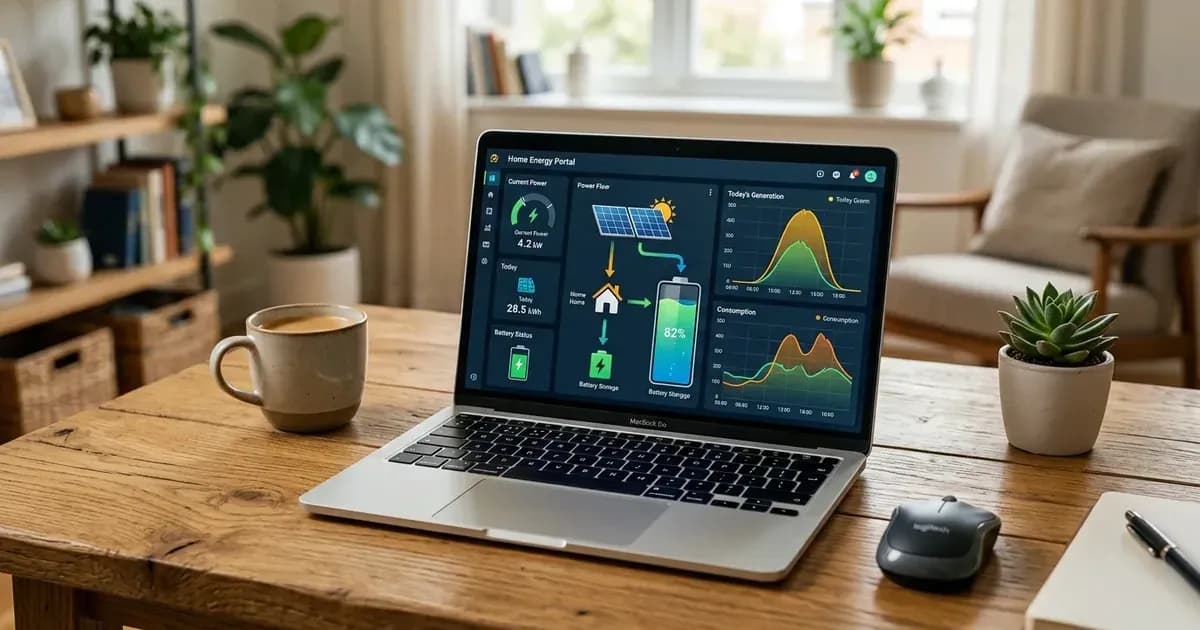
The Victron VRM Portal Dashboard serves as the "Main page showing all installation information at a glance." It provides various features to monitor and manage your Victron Energy system remotely.
Real-Time Data Monitoring
The dashboard displays "Real time data" with "Data updates sent every two seconds straight from installation to browser." To ensure this functionality, your system requires a "GX Device with Venus OS v2.60 or later, good internet connection, sufficient CPU resources," and that "Settings -> VRM Portal -> Two way communication must be enabled."
Remote Control Capabilities
The VRM Portal allows you to "Control devices in VRM," offering control over "some Victron devices (ESS, relay switches) from the VRM dashboard." Access to these controls "Requires the 'real time data' connection to your installation."
VE.Bus Inverter Controls
"VE.Bus Inverter controls" can be made available on the VRM Dashboard, requiring an "additional step to enable in Settings for that specific VRM Installation." However, Victron Energy provides a strong recommendation: it is "ONLY recommended to enable this easy system shutdown control for small systems in non-critical environments." Conversely, it is "STRONGLY recommended to leave this feature disabled for large mission critical systems, or where there are multiple users with access to the Admin controls." These controls are "Only available for VE.Bus models" and "is not available for VE.Direct, or VE.Can inverters." They are also "Not available when using a Digital Multi Control, or VE.Bus BMS v1 in the system."
ESS Controls
The VRM Dashboard allows you to manage "ESS modes," enabling you to "Switch settings between 'Optimized with BatteryLife', 'Optimized without BatteryLife', 'Keep batteries charged' and 'External control'." You can also "Adjust minimum state of charge." Any changes to ESS settings provide a "5 seconds to cancel any change in settings before it is sent to the device." Note that "Setting the minimum state of charge will not be possible when the ESS is set to 'keep batteries charged' as that mode will override and charge the battery to 100% when possible."
Battery Block Display
The "Battery block purpose" is "To show all available batteries, for installations having multiple batteries." "For each of the configured battery, the VRM Portal will show its name, the voltage, current, and state of charge." To configure this, you must "Configure the battery settings on the GX Device, in the Menu → Settings → System Setup → Battery Measurements," "Meet all the requirements for the Real time feature," and ensure "Two or more batteries must be configured."
Historical Data Visualization
The dashboard provides historical data in two main forms:
- Bar Graph: This shows "a bar graph for kWh production and consumption, together with a blue line showing state of charge."
- Line Diagram: If kWh production/consumption data is not available, the dashboard shows "a line diagram." The parameters displayed depend on the installed products. For a battery monitor, it shows "Voltage on the left axis and SOC on the right access." For an inverter or solar charger, it displays "Output power on the left axis, Battery voltage on the right axis."
Schematic Visualization
The "Schematic visualisation" on the dashboard is dynamic; "The information shown adapts itself to the system installed." For example, "For systems without an inverter/charger, separate blocks of information are shown, without connected lines and 'moving ants'."
Safety: Remote Control Considerations
When considering enabling remote control features, particularly for VE.Bus Inverters, it is crucial to understand the safety implications. Enabling "easy system shutdown control for VE.Bus Inverters" is "ONLY recommended [...] for small systems in non-critical environments." For any "large mission critical systems, or where there are multiple users with access to the Admin controls," it is "STRONGLY recommended to leave this feature disabled." This precaution helps prevent unintended system shutdowns or unauthorized access that could compromise system stability or safety.
When to call a technician instead
While many VRM Portal Dashboard issues can be resolved with basic checks and setting adjustments, some situations warrant professional assistance. If you consistently experience high CPU load on your GX Device despite optimizing settings, or if the GX Device frequently reboots, a technician can diagnose underlying hardware or complex network configuration problems. Similarly, if firmware updates fail or if you encounter issues with device control that cannot be resolved through the VRM interface, a qualified Victron Energy installer can provide specialized troubleshooting and support.
Frequently asked questions
What are the requirements for real-time data on the Victron VRM Portal Dashboard?
Real-time data requires a GX Device running Venus OS v2.60 or later, a stable internet connection, sufficient CPU resources on the GX device, and 'Two way communication' enabled in the VRM Portal settings.
Why might my VRM Dashboard be slow or suspend real-time data?
Slow responses or automatic suspension of real-time data often occur if the CPU load on your GX Device is too high. Transmitting data to the VRM Dashboard adds to this load, potentially causing an overload if the system is already operating at 100% CPU.
Can I control my Victron devices from the VRM Portal Dashboard?
Yes, the VRM Portal Dashboard offers control over some Victron devices, including ESS modes and relay switches. Access to these controls requires an active 'real time data' connection to your installation.
How do I enable or disable VE.Bus Inverter controls on the VRM Dashboard?
VE.Bus Inverter controls can be made available on the VRM Dashboard by enabling them in the settings for that specific VRM Installation. However, Victron Energy recommends this only for small systems in non-critical environments due to the potential for easy system shutdown.
What information does the battery block show on the VRM Portal Dashboard?
For each configured battery, the VRM Portal will show its name, the voltage, current, and state of charge. This feature is designed for installations with multiple batteries and requires specific configuration on the GX Device.
References
- Victron VRM Portal Dashboard Manual — accessed 23 August 2026
Related guides
More from what to buy — and how not to get cheated.