Growatt Error 303: PE Abnormal and Grounding Fault Resolution
Updated 18 September 2026 · By SolarNevs Research Desk, Dealer surveys + verified sources · 2 sources · Method ↗
Key Takeaways
- Growatt Error 303 indicates that the potential between incoming neutral and protective earth has exceeded safety thresholds, blocking inverter startup.
- The alarm is typically triggered when the voltage difference between neutral (N) and protective earth (PE) exceeds the allowable threshold, typically >20-30V.
- The primary causes are a broken or loose protective earth conductor, high-resistance earth connections, or shared neutral voltage drop on upstream circuits.
- Rectification requires verifying protective conductor continuity, securing terminal screws, and confirming proper system grounding in compliance with British electrical standards.
Why does a Growatt inverter display Error 303?
Before initiating power export, a Growatt solar inverter continuously validates the safety of its alternating current connections. Among these automated safety tests is a measurement of the electrical potential between the incoming neutral conductor and the protective earth (PE) terminal. If the inverter senses that the neutral-to-earth potential has drifted above safe limits, it blocks power conversion, illuminates its red fault indicator, and displays Error 303 (NE/PE abnormal).
This critical safety interlock prevents the metal casing of the inverter and the solar array mounting structure from becoming energized with hazardous touch voltages. For British domestic installations, earthing arrangements and protective bonding requirements are governed by standards outlined in our UK solar electrical installation guide.
When Error 303 appears, the inverter is usually functioning correctly by refusing to energize a circuit with compromised earthing integrity. The underlying problem almost always lies in the external alternating current wiring, an unbonded junction box, a loose screw terminal, or an elevated neutral voltage from the local electricity distribution network.
Root causes of PE abnormal and neutral-earth voltage drift
Growatt technical service bulletins identify three primary physical mechanisms that cause Error 303 to lock out inverter operation:
Failure Mode | Electrical Mechanism | Typical Symptom | Corrective Action |
|---|---|---|---|
Disconnected Earth | Poor or missing PE connection along the AC supply run | Neutral-to-earth voltage floats erratically | Inspect PE conductor continuity; restore physical earth bond |
High Neutral Potential | Voltage difference between neutral (N) and protective earth (PE) exceeds threshold (typically >20-30V) | Voltage rises under heavy household electrical loading | Verify neutral wiring integrity; balance phase loading |
Utility Grounding Defect | Faulty neutral wiring or grid-side grounding issue on DNO main | Voltage elevation observed across all property circuits | Check DNO supply head; report floating neutral to network operator |
Terminal Looseness | Mechanical vibration loosening screw terminal clamps | Intermittent Error 303 trips during daily temperature cycles | Check the PE to make sure the PE line contacts properly |
For installations incorporating domestic battery storage or export limitation hardware, maintaining a solid earth reference is equally vital for sensitive control electronics; see our battery storage fire safety guide and Smart Export Guarantee guide.
Step-by-step diagnostic workflow
To triage and resolve Error 303, electricians follow a structured three-step diagnostic procedure:
Step 1: Measure voltage between neutral and earth at AC terminals
During an active fault state, test the potential between the alternating current supply lines:
- Access the inverter AC plug or adjacent rotary isolator terminals.
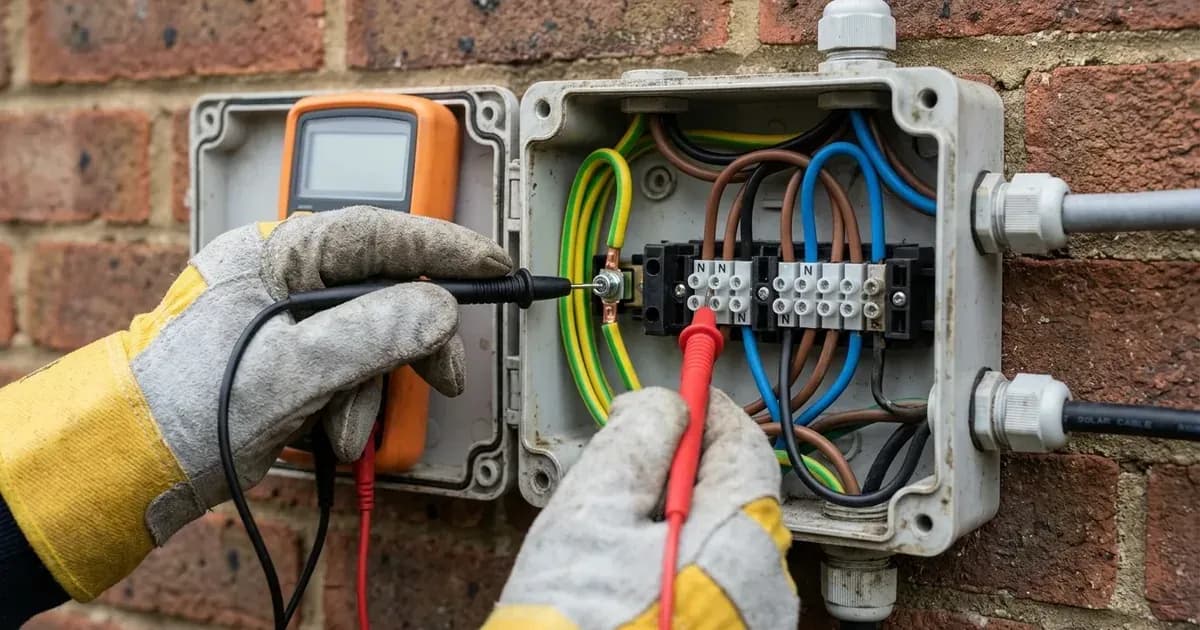
- Measure voltage between N and PE at inverter AC terminals using an approved digital multimeter.
- If the reading exceeds the safety threshold (typically >20-30V), the neutral is floating or carrying excessive return current.
- Record the reading with the inverter disconnected from the grid connector to determine whether the voltage originates from the supply network or internal circuitry.
Step 2: Inspect protective earth conductor continuity and terminations
Confirm that the protective earthing conductor maintains a low-resistance return path to the main earthing terminal:
- Turn off the AC supply breaker in the consumer unit and isolate the inverter DC switch.
- Inspect PE conductor continuity and connections from the inverter chassis back to the distribution board.
- Check the PE to make sure the PE line contacts properly within the AC plug terminals.
- Secure or repair PE and neutral connections, ensuring terminal screws are torqued firmly without pinching insulation.
Step 3: Verify neutral conductor integrity and circuit loading
Inspect the neutral path for high-resistance joints or improper bonding:
- Verify neutral wiring integrity at the solar generation breaker and neutral busbar inside the consumer unit.
- Check whether operating heavy household appliances causes the neutral-to-earth voltage to spike, indicating an undersized or loose neutral conductor.
- Ensure proper system grounding per local standards to guarantee that earth fault protection operates reliably.
After completing physical repairs:
- Re-insert the AC connector into the inverter base and lock the retaining collar.
- Re-energize the AC consumer unit breaker and external rotary isolator.
- Turn the inverter DC switch to ON.
- Restart inverter after correction and observe whether the startup countdown proceeds without fault.
For grid connection notification rules and protection requirements, see our micro-generator grid connection guide.
Safety: earthing and touch-voltage hazards
Working on circuits with suspected earthing anomalies requires extreme caution, as the lack of a reliable ground path can cause metallic enclosures to become live:
- Hazardous touch voltages: If the protective earth conductor is broken while an internal ground fault exists, touching the inverter chassis or mounting rail can result in a fatal shock.
- Proving dead: Before touching any protective earth or neutral terminal, confirm the absence of voltage across all conductors with an approved voltage indicator.
- Qualified personnel only: Maintenance and repair of PV systems, high-voltage DC, and AC components must only be performed by certified professionals with valid electrical qualifications.
When to contact an MCS-certified technician
Homeowners should never attempt to tighten electrical connections inside consumer units or measure live terminal voltages. If Error 303 appears on your Growatt inverter, contact a qualified solar installer.
Escalate to a professional technician under the following conditions:
- Error 303 appears immediately upon startup: If the error triggers during the initial connection countdown, the earth loop impedance is unacceptably high.
- Neutral-to-earth voltage remains elevated: A neutral voltage exceeding 20-30V despite verified internal connections points to an open neutral on the utility distribution network, requiring immediate DNO escalation.
- The fault persists after rewiring: If all external wiring, consumer unit terminations, and supply voltages are proven correct, internal sensing components may have degraded.
In case of persistent hardware failure where external earthing integrity is verified, the only authorized path for repair is contacting the official Growatt Service Department at service@growatt.tech.
Frequently asked questions
What does Error 303 mean on a Growatt inverter?
Error 303 indicates NE abnormal or PE abnormal, meaning the inverter detected an abnormal voltage potential between the incoming neutral and protective earth conductors, blocking operation.
What causes Growatt Error 303 to trigger?
The alarm triggers when the voltage difference between neutral (N) and protective earth (PE) exceeds threshold limits, typically >20-30V, caused by a poor or missing PE connection or faulty grid-side neutral wiring.
How do you test for Error 303?
A qualified electrician measures voltage between N and PE at the inverter AC terminals, inspects PE conductor continuity back to the consumer unit, and verifies neutral wiring integrity.
Does Error 303 indicate an internal inverter fault?
In the vast majority of cases, Error 303 is an external earthing or wiring defect within the household electrical installation or DNO supply network, rather than an internal inverter failure.
References
- Growatt Technical Support: Error 303 PE Abnormal Grounding Diagnostics — accessed 29 August 2026
- Growatt MOD XH BP Inverter Error Description and Triage Guide — accessed 29 August 2026
Related guides
More from inverter errors & fixes.