Solar Battery Storage Capacity Sizing Guide UK
Updated 18 September 2026 · By SolarNevs Research Desk, Dealer surveys + verified sources · 4 sources · Method ↗
Key Takeaways
- Domestic energy storage sizing requires aligning usable battery capacity with Ofgem Typical Domestic Consumption Values (TDCV) rather than arbitrary rule-of-thumb estimates.
- Compact domestic storage modules offering 5.12 kWh capacity operate at 51.2 V with a 100 Ah rating and 50 A continuous current, delivering an ideal footprint for low-demand properties.
- Mid-size residential systems featuring 9.5 kWh capacity utilize 184 Ah cell packs supporting up to 100 A charge and discharge currents, covered by a 12-year warranty.
- Higher-demand households can start with 13.5 kWh base capacity delivering 6.0-12.0kW nominal AC power, expandable with up to two Expansion Batteries and backed by a 15 Year warranty.
- Ofgem multi-rate consumption benchmarks allocate 58% of domestic load to peak daytime hours and 42% to off-peak night hours, providing the foundational split for sizing overnight battery charging.
Sizing Fundamentals: Matching Storage Capacity to Consumption Profiles
Correctly sizing a residential battery energy storage system (BESS) in Great Britain is one of the most critical engineering decisions in renewable home design. An undersized battery depletes prematurely during early evening peak demand periods, forcing the household to purchase expensive grid electricity. Conversely, an oversized battery adds unnecessary upfront capital cost, increases hardware physical weight, and may remain underutilized during winter months when solar generation declines.
Rather than relying on unverified installer rules of thumb, rigorous system sizing links domestic load benchmarks established by the Office of Gas and Electricity Markets (Ofgem) directly to the technical capabilities of proven domestic battery hardware. Modern lithium iron phosphate battery hardware, exemplified by GivEnergy systems, is engineered across distinct capacity tiers: 5.12 kWh, 9.5 kWh, and 13.5 kWh base platforms.
Evaluating which capacity tier fits a given domestic installation requires examining three technical dimensions:
- Annual household electricity consumption baselines and diurnal load distributions.
- DC bus architecture, cell ampere-hour (Ah) ratings, and continuous charge and discharge current limits (A).
- Future load expansion, modular stacking capabilities, and manufacturer warranty coverage periods.
Comparing Modular Domestic Battery Capacities
Residential properties exhibit varied space constraints, load profiles, and installation requirements. Comparing technical specifications between compact, mid-size, and high-capacity domestic storage units clarifies how physical and electrical ratings influence system design.
Compact Sizing Tier: 5.12 kWh Usable Capacity
For smaller properties, modern flats, or two-person households, compact battery units provide an unobtrusive storage solution. The GivEnergy 5.12kWh Gen 3 battery is a compact, high-performance LiFePO₄ storage module built to pair with the third-generation GivEnergy inverter range. With improved thermal performance, a strengthened enclosure, and a more intelligent BMS, it provides reliable storage for small to medium-sized homes. This 5.12 kWh LiFePO₄ battery for Gen 3 inverter systems operates across a nominal DC bus voltage of 51.2 V with a 100 Ah rated capacity.
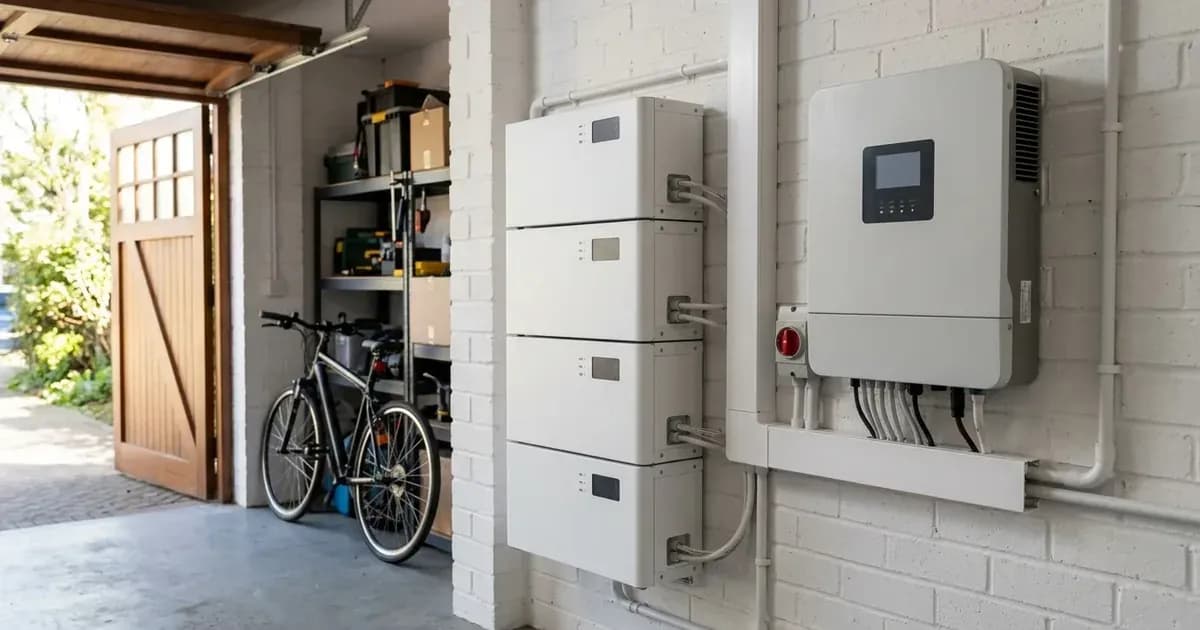
Electrically, the compact 5.12 kWh unit supports a maximum continuous charge and discharge current of 50 A. This current limit provides steady power delivery suited for routine baseload domestic appliances (such as refrigeration, LED lighting, home entertainment, and internet routing). From a mechanical perspective, the unit has an equipment weight of 42 kg with an IP65-rated enclosure for indoor/outdoor installation and a compact, wall-mountable design, allowing straightforward installation within utility spaces or garages without requiring specialized structural reinforcement.
Mid-Size Residential Tier: 9.5 kWh Usable Capacity
The 9.5 kWh capacity tier represents the most widely deployed residential storage scale in the United Kingdom, striking a balance between solar capture potential and overnight load support. The GivEnergy Giv-Bat 9.5 Gen 3 delivers 9.5 kWh of usable energy capacity, powered by a robust 184 Ah cell bank. It delivers increased power handling, improved thermal management, and a strengthened enclosure, making it ideal for medium to large residential systems. This 9.5 kWh LiFePO₄ battery optimised for Gen 3 systems features high charge/discharge rates for flexible operation.
With a maximum continuous charging and discharging current of 100 A, the 9.5 kWh unit provides double the electrical throughput of smaller modules. This higher current capability allows the battery to absorb rapid surges in rooftop solar generation during bright intervals and discharge smoothly to support simultaneous domestic heating or cooking loads without tripping inverter thresholds. The chassis physical weight is 72 kg, reflecting the increased cell density and ruggedized thermal management architecture, and the unit is backed by a 12-year warranty.
High-Capacity Integrated Tier: 13.5 kWh Base Architecture
For larger properties, multi-occupant homes, or properties operating domestic heat pumps, integrated storage platforms offer superior continuous power delivery and substantial capacity headroom. The All in One 2 features a streamlined, modular design , making it easy to install, handle, and expand, operating across 230V (180V-270V) Nominal grid voltage. Homeowners can start with 13.5 kWh and increase capacity with up to two Expansion Batteries as your energy needs grow.
The integrated inverter-battery architecture delivers 6.0-12.0kW nominal AC power (catalogued as 6.0-12.0kW Nominal AC power), enabling whole-home backup and uninterrupted support for heavy inductive loads. During unexpected grid failure events, with a lightning-fast 20ms switchover, your essential appliances stay on during outages, ensuring critical consumer circuits remain energized without rebooting delicate electronics. For properties anticipating increased electrical demand, the platform allows homeowners to expand capacity with up to two Expansion Batteries, backed by a comprehensive 15 Year warranty.
Domestic Battery Specification Matrix
Metric / Parameter | Compact Tier (5.12 kWh) | Mid-Size Tier (9.5 kWh) | High-Capacity Tier (13.5 kWh) |
|---|---|---|---|
Hardware Model | Giv-Bat 5.12 Gen 3 | Giv-Bat 9.5 Gen 3 | All in One 2 |
Base Storage Capacity | 5.12 kWh | 9.5 kWh | 13.5kWh Capacity |
Nominal DC Voltage | 51.2 V | Low-Voltage DC Bus | Integrated AC / HV Bus |
Ampere-Hour Rating | 100 Ah | 184 Ah | High-Capacity Prismatic Pack |
Continuous Current Limit | 50 A | 100 A | 6.0-12.0kW Nominal AC power |
Physical Hardware Weight | 42 kg | 72 kg | Integrated Heavy Chassis |
Backup Switchover Latency | Inverter Dependent | Inverter Dependent | 20ms switchover |
Expansion Potential | Modular Stacking | Modular Stacking | Up to two Expansion Batteries |
Manufacturer Warranty | Standard GivEnergy Term | 12-year warranty. | 15 Year warranty |
Matching Storage Capacity to Ofgem Domestic Consumption Profiles
To size battery capacity accurately, installers must evaluate property electricity consumption against official regulatory benchmarks. Ofgem establishes Typical Domestic Consumption Values (TDCVs) for Great Britain, updating these figures periodically to reflect actual national consumption patterns across two primary metering profiles: Profile Class 1 (single-rate electricity meters) and Profile Class 2 (multi-rate meters, historically termed Economy 7).
Profile Class 1: Single-Rate Domestic Benchmarks
Under Profile Class 1, electricity is charged at a uniform unit rate throughout the day. Ofgem's 2023 decision letter establishes the following domestic annual consumption tiers:
- Low Consumption: 1,800 kWh annually (typical for small 1-2 person apartments or highly efficient modern homes).
- Medium Consumption: 2,700 kWh annually (the national benchmark for standard 2-3 bedroom semi-detached houses).
- High Consumption: 4,100 kWh annually (typical for larger 4-5 bedroom detached homes with higher occupancy).
Profile Class 2: Multi-Rate Diurnal Consumption
For households equipped with multi-rate smart metering or time-of-use tariffs, Ofgem establishes specific Profile Class 2 annual consumption values:
- Low Consumption: 2,200 kWh annually.
- Medium Consumption: 3,900 kWh annually.
- High Consumption: 6,700 kWh annually.
Crucially, Ofgem's determinations specify how electrical energy is consumed across day and night periods:
- Peak Daytime Usage: 58% of total annual consumption occurs during daytime hours.
- Off-Peak Night Usage: 42% of total annual consumption occurs during overnight off-peak hours.
This 58% day to 42% night split provides essential empirical guidance for energy storage design. In a Medium multi-rate home consuming 3,900 kWh annually, the daytime demand represents 58% of the total load. Sizing a battery storage system to absorb surplus midday solar generation or low-cost overnight energy directly addresses this daytime demand block.
Ofgem Consumption and Storage Sizing Matrix
Domestic Consumption Profile | Ofgem Annual Demand Tier | Annual Electricity Volume | Recommended Storage Architecture | Operational Rationale |
|---|---|---|---|---|
Profile Class 1 (Single-Rate) | Low | 1,800 kWh | 5.12 kWh Module | Sufficient capacity to store modest midday solar output and cover evening baseload without excess unutilized capacity. |
Profile Class 1 (Single-Rate) | Medium | 2,700 kWh | 9.5 kWh Module | Matches standard domestic demand curve; 100 A throughput easily supports evening cooking and lighting loads. |
Profile Class 1 (Single-Rate) | High | 4,100 kWh | 13.5 kWh Base Unit | Provides robust headroom for high domestic loads; can start with 13.5 kWh and expand if heat pumps are added. |
Profile Class 2 (Multi-Rate) | Low | 2,200 kWh | 5.12 kWh Module | 58% daytime share requires approximately 3-4 kWh of stored energy to offset peak rates. |
Profile Class 2 (Multi-Rate) | Medium | 3,900 kWh | 9.5 kWh Module | Comfortably absorbs off-peak 42% night charging to bridge the 58% daytime peak period. |
Profile Class 2 (Multi-Rate) | High | 6,700 kWh | 13.5 kWh + Expansion | High annual load demands substantial storage capacity; supports up to two Expansion Batteries for total resilience. |
Charge and Discharge Dynamics: Current Limits and Response Speed
Battery sizing cannot be evaluated purely on stored kilowatt-hours; the rate at which power enters and leaves the battery pack determines real-world performance. A battery with ample kilowatt-hour capacity that suffers from a restrictive current bottleneck will fail to power heavy domestic appliances, forcing the consumer unit to draw supplementary power from the grid.
Continuous Current Throughput (50 A vs 100 A)
The 5.12 kWh battery operates with a maximum continuous current of 50 A at 51.2 V. While this electrical output comfortably handles continuous loads such as refrigeration, lighting, and computing, simultaneous activation of high-draw appliances (such as an electric kettle, induction hob, or washing machine) will exceed the 50 A threshold. In an AC-coupled or hybrid arrangement, any power demand above the battery's 50 A limit must be imported from the grid.
In contrast, the 9.5 kWh battery module features a maximum continuous charging and discharging rating of 100 A supported by its 184 Ah cell pack. By doubling continuous current throughput, the 9.5 kWh system supports heavy domestic electrical loads directly from stored chemical energy. Furthermore, when high solar irradiance occurs during clear summer spells, a 100 A charge rate captures peak generation surges without throttling rooftop panels.
High-Power Inverter Integration and 20ms Resilience
At the high-capacity end of the residential spectrum, integrated systems like the All in One 2 eliminate low-voltage DC cable current constraints by coupling high-capacity cells with a powerful inverter section delivering 6.0-12.0kW nominal AC power. This high power rating allows the system to run multiple heavy domestic appliances concurrently without grid assistance.
Moreover, power quality and continuity are safeguarded by the system's rapid response capability. During sudden grid outages or voltage sags, the platform executes a 20ms switchover. This 20ms transition is sufficiently fast to keep domestic appliances, desktop computers, and heating pumps running smoothly without disconnection.
Modular Stacking, Expansion Strategy, and Warranty Longevity
A frequent pitfall in domestic battery installations is treating storage sizing as a static, one-time calculation. Household electricity requirements evolve over time as homeowners adopt electric vehicles, install air-source heat pumps, or expand living areas.
Designing for Scalability
Choosing a modular battery platform allows homeowners to adapt storage capacity to evolving lifestyle demands:
- Initial Phasing: Budget-conscious homeowners can begin with a single 5.12 kWh or 9.5 kWh battery module, verifying real-world self-consumption before adding secondary units.
- High-Demand Scalability: Properties starting with a 13.5 kWh integrated platform can seamlessly add up to two Expansion Batteries, systematically tripling available on-site energy storage without replacing the primary power electronics or consumer unit switchgear.
Evaluating Warranty Lifespans
Energy storage hardware represents a substantial domestic investment that must be protected over long operating cycles. GivEnergy provides robust warranty coverage across its domestic portfolio:
- The 9.5 kWh residential module includes a 12-year warranty, reflecting confidence in its 184 Ah lithium iron phosphate cell chemistry.
- The integrated All in One 2 platform provides an extended 15 Year warranty, delivering comprehensive long-term protection for both the energy storage cells and integrated power electronics.
Sizing Gaps, Seasonal Mismatch, and Tariff Optimization
While sizing a battery to match Ofgem consumption benchmarks ensures strong economic returns, system designers must account for real-world environmental and seasonal variables:
- Seasonal Generation Asymmetry: Solar photovoltaic yield in the United Kingdom varies dramatically between seasons. A 9.5 kWh battery will easily cycle to 100% state-of-charge purely from solar generation between April and September. However, during November, December, and January, rooftop solar generation alone is insufficient to fill the battery. Homeowners must utilize smart time-of-use tariffs to recharge their storage units using low-cost overnight off-peak electricity (capitalizing on the 42% night consumption profile).
- Degradation Buffering: All lithium-based chemical cells experience gradual capacity fade over extended operational lifespans. System sizing should incorporate a conservative operational buffer so that as the battery approaches the end of its 12-year warranty or 15 Year warranty period, the retained capacity continues to satisfy domestic evening consumption requirements.
- Thermal Siting Factors: Installing batteries in unheated outdoor outbuildings or garages can impact charging efficiency during sub-zero British winter spells. Modern GivEnergy units incorporate cell heating elements, but installers must consider ambient temperature ranges when selecting mounting locations.
Frequently asked questions
What battery capacity is suitable for a low-consumption UK household?
A 5.12 kWh battery module operating at 51.2 V with 100 Ah capacity comfortably covers the evening electricity requirements of a Low Profile Class 1 household consuming 1,800 kWh annually.
Is a 9.5 kWh battery appropriate for medium domestic consumption?
Yes, a 9.5 kWh storage unit with 184 Ah capacity and 100 A current rating matches the demand pattern of a Medium Profile Class 1 household consuming 2,700 kWh annually.
When should a homeowner consider a 13.5 kWh or larger system?
Homes with High single-rate demand of 4,100 kWh or multi-rate demand reaching 6,700 kWh benefit from starting with 13.5 kWh capacity and expanding with up to two Expansion Batteries.
How does domestic day and night electricity consumption split under UK multi-rate profiles?
Ofgem multi-rate benchmarks establish that domestic electricity demand divides into 58% peak daytime consumption and 42% off-peak night consumption.
References
- GivEnergy Giv-Bat 5.12 Gen 3 Specification — accessed 29 August 2026
- GivEnergy Giv-Bat 9.5 Gen 3 Specification — accessed 29 August 2026
- GivEnergy All in One 2 Specification — accessed 29 August 2026
- Ofgem Decision on Typical Domestic Consumption Values 2023 — accessed 29 August 2026
Related guides
More from sizing, net billing & installation.