Maryland SREC Market and RPS Compliance Guide
Updated 17 September 2026 · By SolarNevs Research Desk, Dealer surveys + verified sources · 2 sources · Method ↗
Key Takeaways
- Maryland's Renewable Portfolio Standard requires electricity suppliers to acquire SRECs or pay penalties.
- One SREC is generated for every 1,000 kilowatt-hours (1 MWh) of metered solar generation registered in PJM-EIS GATS.
- Maryland SRECs have a three-year compliance shelf life from their generation date.
- The 30% federal Section 25D tax credit can be combined with SREC generation for qualifying residential solar and battery installations.
Understanding Maryland's Solar Renewable Energy Credit (SREC) Market
Policy & Market Parameter | Maryland Standard / Requirement | Operational & Financial Role |
|---|---|---|
SREC Generation Ratio | 1 SREC per 1,000 kWh (1 MWh) | Minted from metered solar generation registered in PJM-EIS GATS |
Compliance Shelf Life | 3 statutory years | Usable by electricity suppliers across generation year plus 2 years |
Regulatory Framework | Maryland PSC & Clean Energy Jobs Act | Enforces supplier RPS obligations and Alternative Compliance Penalties |
Federal Tax Credit | 30% Section 25D (IRS Form 5695) | Covers solar arrays, battery storage, and panel upgrades with indefinite carryforward |
Inverter Grid Certification | UL 1741-SB | Mandates smart inverter grid support under Maryland PSC Rule 20.50 |
Array Safety Requirement | NEC module-level rapid shutdown | Enables emergency responders to de-energise rooftop PV modules |
Maryland operates a Solar Renewable Energy Credit (SREC) market as part of its Renewable Portfolio Standard (RPS). This market incentivizes solar energy generation by requiring electricity suppliers to acquire SRECs. If suppliers do not meet their SREC obligations, they must pay Solar Alternative Compliance Penalties. This system is governed by the Maryland Public Service Commission (PSC) and the Maryland Clean Energy Jobs Act.
How SRECs are Generated and Tracked
Policy / Technical Component | Rule or Specification | Operational Requirement |
|---|---|---|
Credit Ratio | 1 SREC per 1,000 kWh (1 MWh) | Metered generation registered and tracked in PJM-EIS GATS |
Compliance Lifespan | 3-year statutory shelf life | Usable to meet RPS obligations across current year plus two years |
Federal Tax Credit | 30% under Section 25D | Claimed via Form 5695 with indefinite carryforward of unused amounts |
Eligible Equipment | PV, batteries & main panel upgrades | Upgrades necessary for solar qualify for 30% tax credit basis |
Inverter Standard | UL 1741-SB & MD PSC Rule 20.50 | Smart inverter grid support and utility interconnection compliance |
Array Safety | NEC module-level rapid shutdown | Emergency responder de-energisation at the individual module level |
Solar facilities in Maryland generate SRECs based on their metered electricity production. For every 1,000 kilowatt-hours (1 MWh) of electricity generated, one SREC is created. This generation must be registered and tracked within the PJM Environmental Information Services Generation Attribute Tracking System (GATS). GATS is the official registry for these credits, ensuring transparency and verification of solar energy production.
Once generated, Maryland SRECs maintain a statutory three-year compliance shelf life from the date of generation. This means that an SREC generated today can be used by an electricity supplier to meet their compliance obligations for the current year or any of the next two years.
Stacking Federal Tax Credits with SRECs
Homeowners in Maryland can combine the benefits of SREC generation with federal tax incentives. Qualifying residential solar and battery installations are eligible for the 30% Section 25D federal tax credit. This credit is claimed on IRS Form 5695. A significant advantage of this credit is its nonrefundable nature with an indefinite carryforward provision: unused Section 25D tax credit amounts carry forward to offset future federal tax liability indefinitely.
Furthermore, certain associated costs for solar installation also qualify for the Section 25D tax credit basis. For example, main service panel upgrades necessary for the solar installation can be included when calculating the total amount eligible for the 30% credit.
Interconnection and Safety Standards
To participate in Maryland's SREC market and connect to the grid, solar installations must adhere to specific technical and safety standards. Inverter systems must be certified to UL 1741-SB, which specifies requirements for grid support functions often referred to as "smart inverter" capabilities. Additionally, installations must comply with Maryland PSC Rule 20.50 interconnection rules, which govern how distributed generation systems connect to the utility grid.
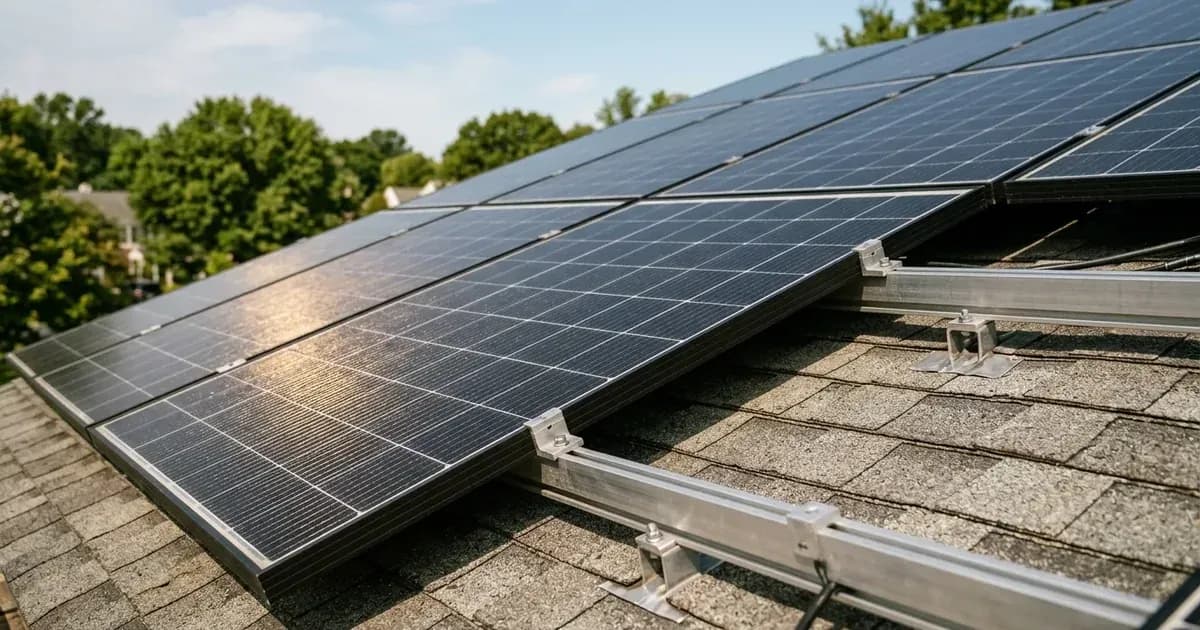
Rooftop solar arrays also have mandatory safety requirements. They must incorporate module-level rapid shutdown compliant with National Electrical Code (NEC) standards. This feature allows firefighters and emergency personnel to quickly de-energize the solar array at the module level, enhancing safety during emergencies.
During any electrical work, especially involving the main electrical panel, electricians must follow mandatory lockout tagout safety procedures. This critical practice ensures that electrical circuits are de-energized and locked to prevent accidental re-energization, protecting workers from electrical hazards.
What you can check yourself, and what you cannot
As a homeowner, you can monitor your solar system's energy production to track SREC generation. Many inverter systems and monitoring platforms provide real-time data on kilowatt-hour output. You can also verify your system's registration in PJM-EIS GATS to ensure SRECs are being properly generated and accounted for.
However, tasks related to system installation, interconnection, and compliance with specific electrical codes (like NEC rapid shutdown or UL 1741-SB certification) require the expertise of accredited installers and licensed electricians. Modifying inverter settings, especially those related to grid protection or interconnection, should only be done by qualified professionals, as improper changes can breach your connection agreement or compromise system safety. Electrical main service panel upgrades and wiring must always be performed by licensed electricians following safe electrical lockout practice.
What the published sources do not tell you
The provided information outlines the statutory requirements and market rules for Maryland SRECs and the Section 25D tax credit. However, it does not detail the current market price for SRECs, which fluctuates based on supply and demand. It also does not specify the exact process or platforms for selling SRECs, though it notes that aggregator broker fees (typically 5% to 10%) apply when monetizing SRECs through commercial brokerage platforms. Specific utility interconnection procedures beyond Maryland PSC Rule 20.50 are also not provided, as these can vary by utility within Maryland.
Frequently asked questions
How do solar facilities generate SRECs in Maryland?
Solar facilities in Maryland generate one SREC for every 1,000 kilowatt-hours (1 MWh) of metered generation. This generation must be registered in the PJM Environmental Information Services Generation Attribute Tracking System (GATS).
What is the compliance lifespan for Maryland SRECs?
Maryland SRECs maintain a statutory three-year compliance shelf life from the date of generation. This means they can be used to meet compliance obligations for three years after they are created.
Can I combine Maryland SRECs with the federal solar tax credit?
Yes, homeowners claiming qualifying residential solar and battery installations receive the 30% Section 25D federal tax credit on Form 5695. This credit can be stacked with SREC generation.
What are the inverter requirements for solar installations in Maryland?
Inverter systems must be certified to UL 1741-SB and comply with Maryland Public Service Commission (PSC) Rule 20.50 interconnection rules. This ensures smart inverter functionality and grid compatibility.
Do main service panel upgrades qualify for the Section 25D tax credit?
Yes, main service panel upgrades necessary for a solar installation qualify for inclusion in the Section 25D tax credit basis. This can reduce the overall cost of your solar project.
References
- Maryland PSC Clean Energy Jobs Act SREC Guidance — accessed 27 August 2026
- PJM-EIS GATS SREC Tracking System — accessed 27 August 2026
Related guides
More from schemes, subsidies & financing.