Ohio SREC Market and Certified Facility Registration Guide
Updated 18 September 2026 · By SolarNevs Research Desk, Dealer surveys + verified sources · 1 source · Method ↗
Key Takeaways
- Ohio solar system owners can mint and trade Solar Renewable Energy Certificates (SRECs).
- Facilities must be certified by the Public Utilities Commission of Ohio (PUCO).
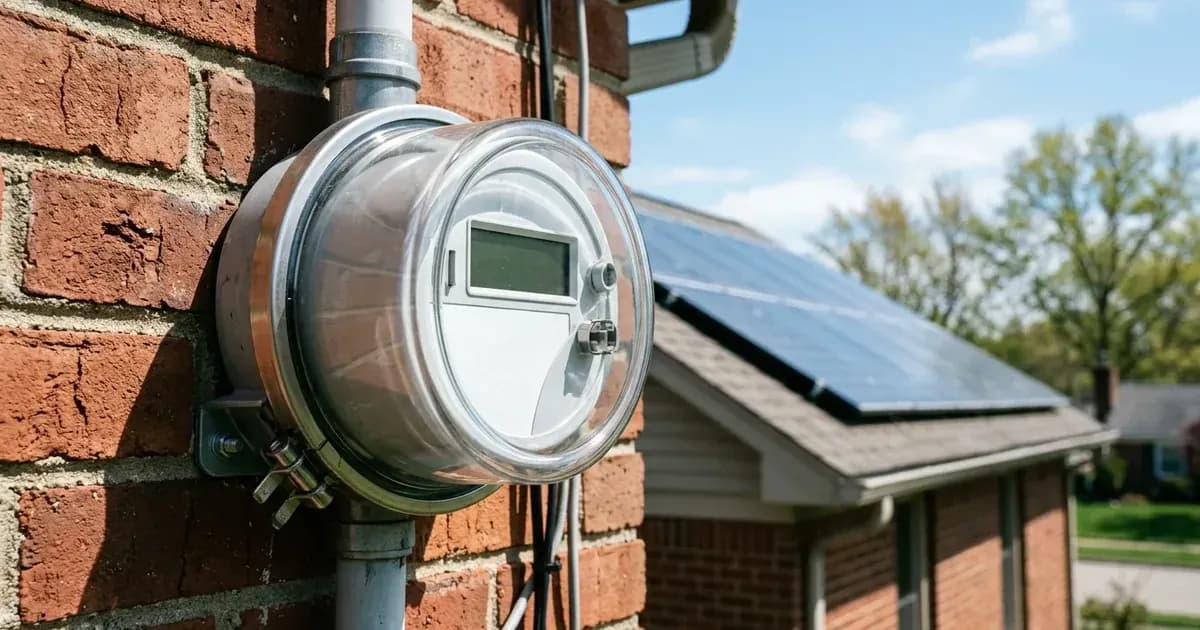
- Revenue-grade metering is mandatory for SREC production.
- Federal Section 25D tax credits can be combined with SREC revenue.
Understanding Ohio's Solar Renewable Energy Certificate (SREC) Market
The Ohio SREC market provides a mechanism for solar system owners to generate additional revenue from their clean energy production. In Ohio, "solar system owners to mint and trade Solar Renewable Energy Certificates based on certified generation." These certificates represent the environmental attributes of one megawatt-hour (MWh) of electricity generated by a solar facility.
The Public Utilities Commission of Ohio (PUCO) governs this market under the Ohio Alternative Energy Portfolio Standard (AEPS). SRECs are tracked and managed through the PJM Environmental Information Services (PJM-EIS) GATS system, which ensures transparent and verifiable credit minting.
How Ohio SRECs Work: From Generation to Revenue
The process of generating and selling Ohio SRECs involves several key steps, starting with the physical generation of solar electricity and ending with the sale of the certificates.
First, your solar photovoltaic (PV) system generates electricity. This generation must be accurately measured by a certified meter. For SREC production, "systems registered for SREC production require revenue-grade metering complying with ANSI C12 standards." This ensures that the reported generation is precise and verifiable.
Once electricity is generated and measured, "solar generation is recorded in the PJM Environmental Information Services GATS tracking system." This system acts as a registry where SRECs are minted based on your verified generation data. Each MWh of solar electricity generated typically corresponds to one SREC.
These SRECs then become tradable commodities. They can be sold to electricity suppliers or other entities that need to meet renewable energy obligations under Ohio's AEPS. "SRECs created in the registry retain compliance validity over statutory multi-year vintage cycles," meaning they can be banked and sold over a period, providing flexibility for system owners.
Steps to Register Your Solar Facility for SRECs in Ohio
Registering your solar facility to participate in the Ohio SREC market involves specific requirements and approvals. Following these steps ensures your system is eligible to mint and trade SRECs.
Step / Registration Milestone | Governing Entity / System | Technical & Compliance Requirement |
|---|---|---|
| Public Utilities Commission of Ohio (PUCO) | Obtain state certification meeting Ohio renewable generation standards |
| Certified Meter Manufacturer / Electrician | Install ANSI C12 compliant revenue-grade meter to accurately record generation |
| PJM-EIS GATS | Establish tracking account to record generation and mint tradable SRECs |
| Local Electric Distribution Utility | Secure formal written Permission to Operate (PTO) prior to credit generation |
| Accredited Electrical Contractor | Install lockable visible-break manual disconnect (Tier 2+), millisecond anti-islanding, and frame earthing |
- PUCO Facility Certification: The initial and most crucial step is to obtain state certification. "Generating facilities must obtain state certification from the Public Utilities Commission of Ohio." This certification confirms that your facility meets Ohio's standards for renewable energy generation.
- Revenue-Grade Metering Installation: Your system must be equipped with a meter capable of accurately measuring your solar electricity generation. As noted, "systems registered for SREC production require revenue-grade metering complying with ANSI C12 standards." This meter will be used to report your generation data.
- PJM-EIS GATS Account Creation: After PUCO certification, you will need to establish an account with the PJM Environmental Information Services (PJM-EIS) GATS tracking system. This is where your SRECs will be minted and managed. "Solar generation is recorded in the PJM Environmental Information Services GATS tracking system."
- Utility Interconnection Approval: Before your system can generate credits, you must receive formal approval from your utility. "Customer generation must receive formal written Permission to Operate prior to credit generation." This ensures your system is safely and properly connected to the grid.
- Compliance with Technical Standards: Certain technical standards must be met. For instance, "Tier 2 and larger installations require an exterior, lockable, visible-break manual disconnect switch adjacent to the meter." Additionally, "grid-tied inverters must automatically isolate within milliseconds during distribution grid outages" for anti-islanding protection. Safety is also paramount: "verify earth continuity and bond all solar array frames to the main electrical installation earthing terminal."
Combining SRECs with Federal Tax Credits
For homeowners, participating in the Ohio SREC market can be combined with federal tax incentives, enhancing the overall financial benefit of installing solar.
"Homeowners claiming qualifying residential solar and battery installations receive the 30% Section 25D credit on Form 5695." This federal tax credit applies to the cost of installing new, qualified residential clean energy property, including solar PV systems. The credit is 30% of the eligible expenses, with no maximum limit for systems placed in service after 2022.
It is important to note that "residential battery energy storage systems qualify for the federal 30% Section 25D tax credit with no solar requirement." This means that even if you install a standalone battery system, you may be eligible for the federal tax credit. This allows for significant savings on the upfront cost of your solar and storage investments, which can then be supplemented by ongoing SREC revenue.
What you can check yourself, and what you cannot
While you can monitor your system's performance and SREC generation through your PJM-EIS GATS account, certain aspects of SREC registration and system maintenance require professional involvement.
You can regularly check your revenue-grade meter readings and compare them against your PJM-EIS GATS records to ensure accurate reporting. You can also track the market value of SRECs to inform your selling decisions.
However, you cannot perform the initial PUCO facility certification yourself; this is an administrative process handled by the Public Utilities Commission of Ohio. Installation of revenue-grade metering and ensuring compliance with electrical codes, such as the requirement for "an exterior, lockable, visible-break manual disconnect switch adjacent to the meter" for larger installations, must be done by qualified, accredited installers. Similarly, verifying "earth continuity and bond all solar array frames to the main electrical installation earthing terminal" is a task for a certified electrician. Any modifications to your grid-tied inverter settings, especially those related to "anti-islanding inverter protection" that ensure the inverter "automatically isolate within milliseconds during distribution grid outages," should only be done by an authorised service professional.
What the published sources do not tell you
The provided official documentation outlines the core mechanisms and requirements for the Ohio SREC market and federal tax credits. However, specific details that can impact your experience are not included.
For instance, the precise market value of Ohio SRECs is not fixed; it fluctuates based on supply and demand within the PJM region. While official scheme guidelines mentions "Ohio SRECs can also be sold into adjacent PJM state compliance markets depending on interstate trading eligibility rules," it does not detail these specific interstate trading rules or the current eligibility criteria, which can vary.
Official scheme guidelines also does not specify the exact application process or timelines for obtaining PUCO facility certification, nor does it detail the specific requirements for different tiers of installations beyond the mention of a disconnect switch for "Tier 2 and larger installations." Furthermore, while it states that "SRECs created in the registry retain compliance validity over statutory multi-year vintage cycles," the exact duration of these cycles or how they are determined is not specified. For the Section 25D tax credit, while the 30% rate is noted, the specific definitions of "qualifying residential solar and battery installations" or the detailed instructions for completing IRS Form 5695 are not provided. This article provides general information and is not tax advice; consult a tax professional for specific guidance.
Frequently asked questions
What is an Ohio SREC?
Ohio allows solar system owners to mint and trade Solar Renewable Energy Certificates based on certified generation. These certificates represent the environmental attributes of one megawatt-hour of solar electricity.
How do I register my solar facility for SRECs in Ohio?
Generating facilities must obtain state certification from the Public Utilities Commission of Ohio (PUCO). After certification, solar generation is recorded in the PJM Environmental Information Services GATS tracking system.
Do I need special metering for Ohio SRECs?
Yes, systems registered for SREC production require revenue-grade metering complying with ANSI C12 standards to accurately measure and verify solar generation.
Can I claim federal tax credits alongside Ohio SRECs?
Yes, homeowners claiming qualifying residential solar and battery installations receive the 30% Section 25D credit on Form 5695, which can be stacked with SREC revenue.
Do battery storage systems qualify for federal tax credits in Ohio?
Residential battery energy storage systems qualify for the federal 30% Section 25D tax credit with no solar requirement, as per IRS Form 5695 instructions.
References
- PUCO Renewable Portfolio Standard Certification — accessed 27 August 2026
Related guides
More from schemes, subsidies & financing.