AEP Ohio and Duke Energy Solar Net Metering Guide
Updated 17 September 2026 · By SolarNevs Research Desk, Dealer surveys + verified sources · 2 sources · Method ↗
Key Takeaways
- Ohio investor-owned utilities, including AEP Ohio and Duke Energy Ohio, mandate 1:1 net metering for the generation component of exported electricity.
- Any excess generation credits you accumulate roll forward indefinitely to offset future charges.
- Solar systems with certified inverters and capacities up to 25kW qualify for a Level 1 simplified interconnection review.
- You must obtain formal written Permission to Operate (PTO) from your utility before energising your solar system to the grid.
What is Net Metering for AEP Ohio and Duke Energy Customers?
Net metering allows you to receive credit for the excess electricity your solar panels generate and send back to the grid. For customers of AEP Ohio and Duke Energy Ohio, the Public Utilities Commission of Ohio (PUCO) mandates that investor-owned utilities provide 1:1 net metering credits for the generation component of exported electricity. This means that for every kilowatt-hour (kWh) your system exports, you receive a credit equal to the generation rate you would pay for imported electricity.
Any excess generation credits you accumulate on your monthly bill do not expire. These "Excess generation credits roll forward indefinitely to offset future electric energy generation charges." This ensures that the energy you produce is fully valued, even if you generate more than you consume in a given month.
How Net Metering Works in Ohio
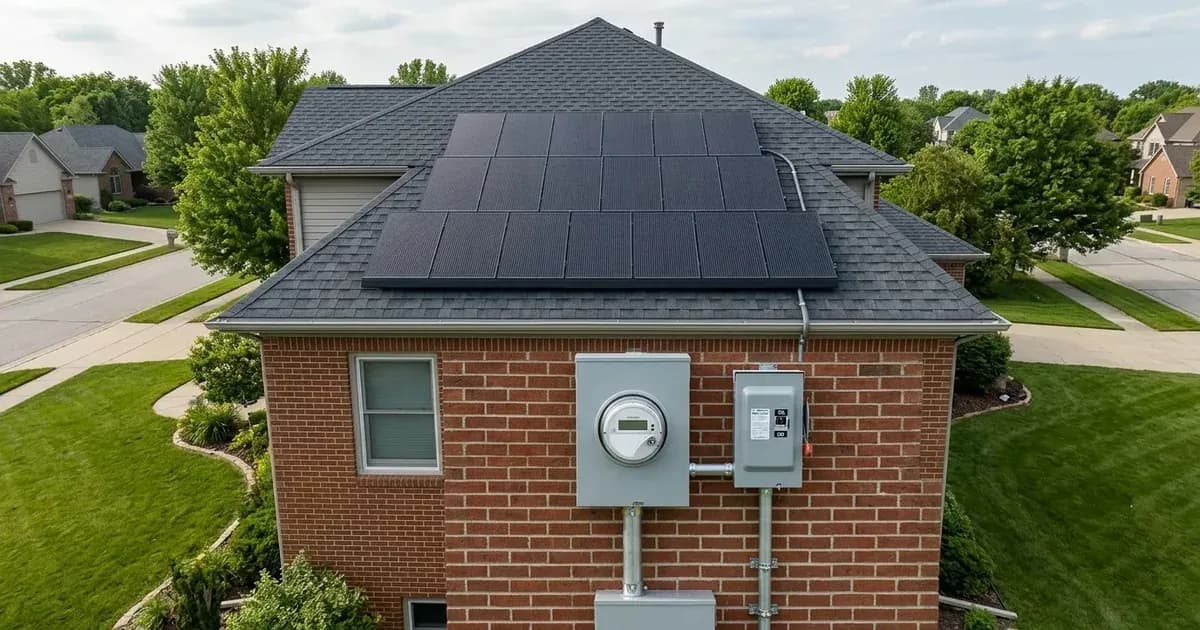
When your solar panels produce more electricity than your home consumes, the surplus power flows back into the utility grid. A special meter, known as a bidirectional smart revenue meter, records this outflow. When your panels produce less than your home needs (e.g., at night or on cloudy days), you draw power from the grid as usual.
The bidirectional meter tracks both the electricity you draw from the grid and the electricity you send back. At the end of your billing cycle, your utility calculates your net consumption. If you've exported more than you've imported, the excess generation credits are applied to your next bill. If you've imported more, you pay for the net amount consumed, minus any rolled-over credits.
Ohio's Interconnection and Equipment Requirements
Connecting your solar system to the grid in Ohio involves specific technical and administrative steps to ensure safety and grid stability.
Interconnection Application Levels
The process for connecting your system depends on its size:
Category | Requirement | What it means |
|---|---|---|
Level 1 Simplified Interconnection | "Simplified Level 1 review applies to certified inverter systems up to 25kW in capacity." | This expedited process is for smaller residential and commercial systems, making it quicker to get approval. |
Tier 2 and Larger Installations | "Tier 2 and larger installations require an exterior, lockable, visible-break manual disconnect switch adjacent to the meter." | Larger systems have additional safety requirements, including an accessible manual disconnect for utility personnel. |
Required Equipment and Standards
Your solar installation must meet several technical standards:
- Bidirectional Smart Meter: "The utility installs a certified bidirectional smart revenue meter to record import and export power flows." This meter is crucial for accurately tracking your net energy usage.
- Smart Inverter Standards: "Inverters must be certified to UL 1741-SB standards supporting autonomous voltage and frequency regulation." UL 1741-SB is a standard for "smart" inverters, which can interact with the grid to maintain stability.
- Anti-Islanding Protection: "Grid-tied inverters must automatically isolate within milliseconds during distribution grid outages." This safety feature prevents your solar system from feeding power into a de-energised grid section, protecting utility workers.
- AC Disconnect Switch: For larger systems, an "exterior, lockable, visible-break manual disconnect switch adjacent to the meter" is required. This allows utility personnel to safely disconnect your system from the grid.
- Earthing and Bonding: "Verify earth continuity and bond all solar array frames to the main electrical installation earthing terminal." Proper earthing and bonding are critical for electrical safety, protecting against shocks and equipment damage.
Permission to Operate (PTO)
Before you can energise your solar system and begin net metering, you must receive formal approval from your utility. "Customer generation must receive formal written Permission to Operate from the utility prior to grid energization." Operating your system without PTO is a violation of utility rules and can lead to penalties, system disconnection, or safety hazards for utility workers. Your installer will typically handle the PTO application process on your behalf.
Federal Tax Credit for Solar and Battery Storage
While net metering is a state-level incentive, federal tax credits can significantly reduce the cost of your solar installation. "Homeowners claiming qualifying residential solar and battery installations receive the 30% Section 25D credit on Form 5695." This tax credit applies to the cost of your solar panels, inverters, mounting equipment, and installation labor.
It is also important to note that "Residential battery energy storage systems qualify for the federal 30% Section 25D tax credit with no solar requirement." This means you can claim the 30% federal tax credit for a standalone battery storage system, even if it is not paired with solar panels. This is general information, not tax advice; consult a tax professional for specific guidance.
What you can check yourself, and what you cannot
As a homeowner, you can monitor your system's performance through an inverter's display or a monitoring app. You can also review your utility bills to track your net metering credits. However, any work involving the electrical wiring, inverter settings, or utility connection points must be performed by a qualified and accredited installer.
Never attempt to modify your inverter's grid-protection settings, as these are set by your installer according to your connection agreement and utility requirements. Changing these settings can compromise grid safety and breach your interconnection agreement. For any issues beyond basic monitoring, contact your solar installer or utility.
What the published sources do not tell you
While the Public Utilities Commission of Ohio (PUCO) sets the overarching net metering rules, specific details can vary by utility. For example, "AEP Ohio and Duke Energy Ohio require customer systems to be sized within 120% of historical annual consumption." This sizing limit is not universally published by PUCO but is a utility-specific requirement. Always check with your specific utility for any such local requirements that may affect your system design or interconnection application. Utility-specific forms and detailed interconnection agreements are often found on their respective websites, not in general regulatory documents.
Frequently asked questions
What is net metering in Ohio for AEP Ohio and Duke Energy customers?
Ohio investor-owned utilities, including AEP Ohio and Duke Energy Ohio, provide net metering credits for the generation component of exported electricity. This means you receive 1:1 credit for the power your solar system sends to the grid.
Do excess solar credits roll over in Ohio?
Yes, for AEP Ohio and Duke Energy Ohio customers, excess generation credits roll forward indefinitely. These credits can offset future electric energy generation charges on your bill.
What is Level 1 interconnection for solar in Ohio?
Level 1 simplified review applies to certified inverter systems up to 25kW in capacity. This expedited process is for smaller residential and commercial solar installations.
Is a smart meter required for net metering in Ohio?
Yes, the utility installs a certified bidirectional smart revenue meter to record both the power you import from and export to the grid. This meter is essential for accurate net metering.
When can I energise my solar system in Ohio?
You must receive formal written Permission to Operate (PTO) from your utility (AEP Ohio or Duke Energy Ohio) prior to grid energization. Operating before PTO can lead to penalties and safety issues.
References
- AEP Ohio & Duke Energy Ohio Net Metering Tariffs — accessed 27 August 2026
- PUCO Ohio Administrative Code Chapter 4901:1-10 — accessed 27 August 2026
Related guides
More from schemes, subsidies & financing.