North Carolina Duke Energy Solar Net Metering Bridge Rate Guide
Updated 18 September 2026 · By SolarNevs Research Desk, Dealer surveys + verified sources · 1 source · Method ↗
Key Takeaways
- New solar installations in North Carolina under Duke Energy must take service under an approved time-of-use rate schedule.
- The Bridge Rate allows residential customers to maintain monthly netting credits.
- A minimum monthly basic facilities charge applies to grid-connected solar customers.
- Formal written Permission to Operate (PTO) from Duke Energy is mandatory before energising your system.
Understanding Duke Energy's Bridge Rate Net Metering in North Carolina
Policy & Technical Parameter | Duke Energy NC Bridge Rate Standard | Operational & Financial Role |
|---|---|---|
Bridge Rate Framework | Time-of-use (TOU) monthly netting | Offsets grid consumption across DEC and DEP service areas |
Expedited Interconnection | Systems up to 20 kW AC | Qualifies for standard expedited residential interconnection review |
AC Disconnect Switch | Exterior lockable visible-break switch | Required for Tier 2 and larger systems adjacent to the meter |
Inverter Grid Protection | Anti-islanding automatic isolation | Disconnects generation within milliseconds during grid outages |
Minimum Monthly Bill | Basic facilities charge | Mandatory recurring charge for all grid-connected solar accounts |
Federal Clean Energy Credit | 30% tax credit under Section 25D | Applicable to residential solar PV and standalone battery storage |
Grid Energisation | Written Permission to Operate (PTO) | Mandatory formal utility authorization prior to system operation |
For residential customers in North Carolina connecting new solar installations to the Duke Energy grid, the North Carolina Utilities Commission (NCUC) has established specific rules under the Bridge Rate. This framework applies to both Duke Energy Carolinas (DEC) and Duke Energy Progress (DEP) service areas. The Bridge Rate option allows eligible residential customers to maintain monthly netting credits under time-varying schedules. This means that the electricity you export to the grid can offset the electricity you import, but the value of that electricity can change throughout the day.
How Monthly Netting and Time-of-Use Rates Work
Under the Bridge Rate, new net metering interconnections must take service under an approved time-of-use rate schedule. This is a fundamental shift from traditional net metering. Surplus solar generation exported to the distribution grid is netted against consumption within billing periods.
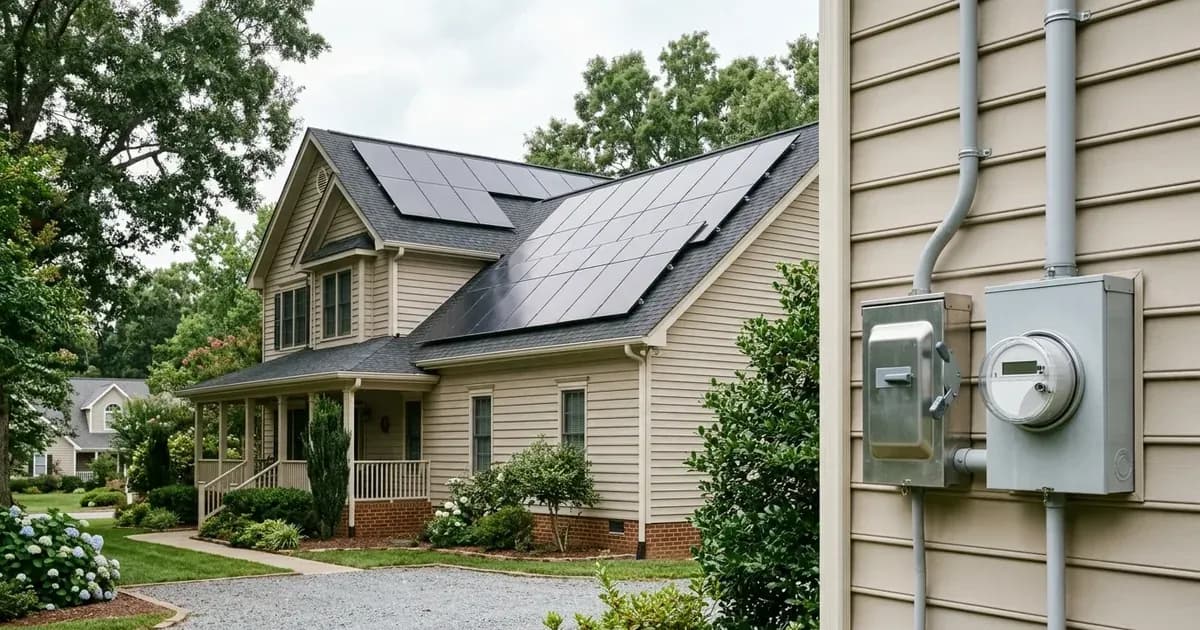
The utility installs a certified bidirectional smart revenue meter to record import and export power flows. This meter precisely tracks how much electricity your solar system sends to the grid and how much you draw from it. The time-of-use schedule means that electricity exported during peak demand times might be credited at a different rate than electricity exported during off-peak times. Similarly, the cost of electricity imported from the grid will vary depending on the time of day it is consumed.
Minimum Monthly Bill and Other Requirements
Grid-connected solar customers are subject to a minimum monthly basic facilities charge. This charge ensures that all customers contribute to the fixed costs of maintaining the grid, regardless of their solar generation.
For installations, specific safety and operational requirements must be met:
- Tier 2 and larger installations require an exterior, lockable, visible-break manual disconnect switch adjacent to the meter. This provides a safe way for utility personnel to isolate your system from the grid.
- Grid-tied inverters must automatically isolate within milliseconds during distribution grid outages. This anti-islanding inverter protection is crucial for the safety of utility workers and to prevent damage to the grid.
- Verify earth continuity and bond all solar array frames to the main electrical installation earthing terminal. This ensures electrical safety and proper grounding of the system.
Federal Tax Credits for Solar and Battery Storage (Section 25D)
Homeowners in North Carolina, like those across the United States, can benefit from federal tax incentives. Homeowners claiming qualifying residential solar and battery installations receive the 30% Section 25D credit on Form 5695. This credit significantly reduces the upfront cost of installing solar panels and associated equipment.
Furthermore, residential battery energy storage systems qualify for the federal 30% Section 25D tax credit with no solar requirement. This means you can claim the tax credit for a standalone battery storage system, even if you do not install solar panels at the same time. This can be beneficial for homeowners looking to improve energy resilience or take advantage of time-of-use rates.
Disclaimer: This information is for general guidance only and not tax advice. Consult a qualified tax professional for advice specific to your situation.
Permission to Operate (PTO) Workflow
Before you can energise your solar system and begin exporting electricity to the Duke Energy grid, you must obtain formal written Permission to Operate from Duke Energy. This PTO mandate is a critical step in the interconnection process. It confirms that your installation has passed all necessary inspections and meets Duke Energy's technical and safety standards. Operating your system without PTO can lead to penalties and disconnection.
North Carolina systems up to 20kW AC qualify for standard expedited residential interconnection review. This streamlined process helps to accelerate the approval timeline for smaller residential systems.
What you can check yourself, and what you cannot
As a homeowner, you can monitor your smart bidirectional revenue meter to understand your import and export patterns. You can also review your monthly utility bills to track your net metering credits and minimum charges. Ensuring your exterior disconnect switch is accessible and not obstructed is also a homeowner's responsibility.
However, any work involving the electrical wiring, inverter settings, or the utility meter itself must be performed by a qualified and accredited installer. Changing inverter grid-protection settings yourself can breach your connection agreement and compromise safety. Always consult your installer or Duke Energy for technical issues or before making any changes to your system.
What the published sources do not tell you
While the general framework for Duke Energy's Bridge Rate and federal tax credits is publicly available, specific details can vary. For instance, the precise time-of-use rate schedules, including peak and off-peak hours and their associated rates, are determined by Duke Energy and can change. These specific tariff details are typically found on Duke Energy's official website or in your customer agreement, rather than in general statutory documents.
Similarly, while the federal Section 25D tax credit is a fixed percentage, its interaction with state or local incentives, if any, is not detailed in the federal instructions. The exact process and timeline for obtaining Permission to Operate can also vary based on the complexity of your installation and Duke Energy's current workload, and is not specified in general regulations.
Frequently asked questions
What is the Duke Energy Bridge Rate for solar customers in North Carolina?
The Bridge Rate option allows eligible residential customers to maintain monthly netting credits under time-varying schedules. This applies to new net metering interconnections in Duke Energy Carolinas and Duke Energy Progress service areas.
Are grid-tied solar systems in North Carolina subject to a minimum monthly charge?
Yes, grid-connected solar customers are subject to a minimum monthly basic facilities charge. This applies to residential customers under the Bridge Rate tariff.
How does the federal Section 25D tax credit apply to solar and battery storage in North Carolina?
Homeowners claiming qualifying residential solar and battery installations receive the 30% Section 25D credit on Form 5695. Residential battery energy storage systems also qualify for the federal 30% Section 25D tax credit with no solar requirement.
What is required before energising a new solar system connected to Duke Energy's grid?
Customer generation must receive formal written Permission to Operate from Duke Energy prior to grid energisation. This ensures the system meets all safety and interconnection standards.
What type of meter is used for net metering with Duke Energy in North Carolina?
The utility installs a certified bidirectional smart revenue meter to record import and export power flows. This meter is essential for calculating monthly netting credits under the Bridge Rate.
References
- Duke Energy Carolinas and Progress Net Metering Tariffs — accessed 27 August 2026
Related guides
More from schemes, subsidies & financing.